Tag: book review

  • Book Review: The Life Impossible by Matt Haig

    Book Review: The Life Impossible by Matt Haig


    Rating: 4/5


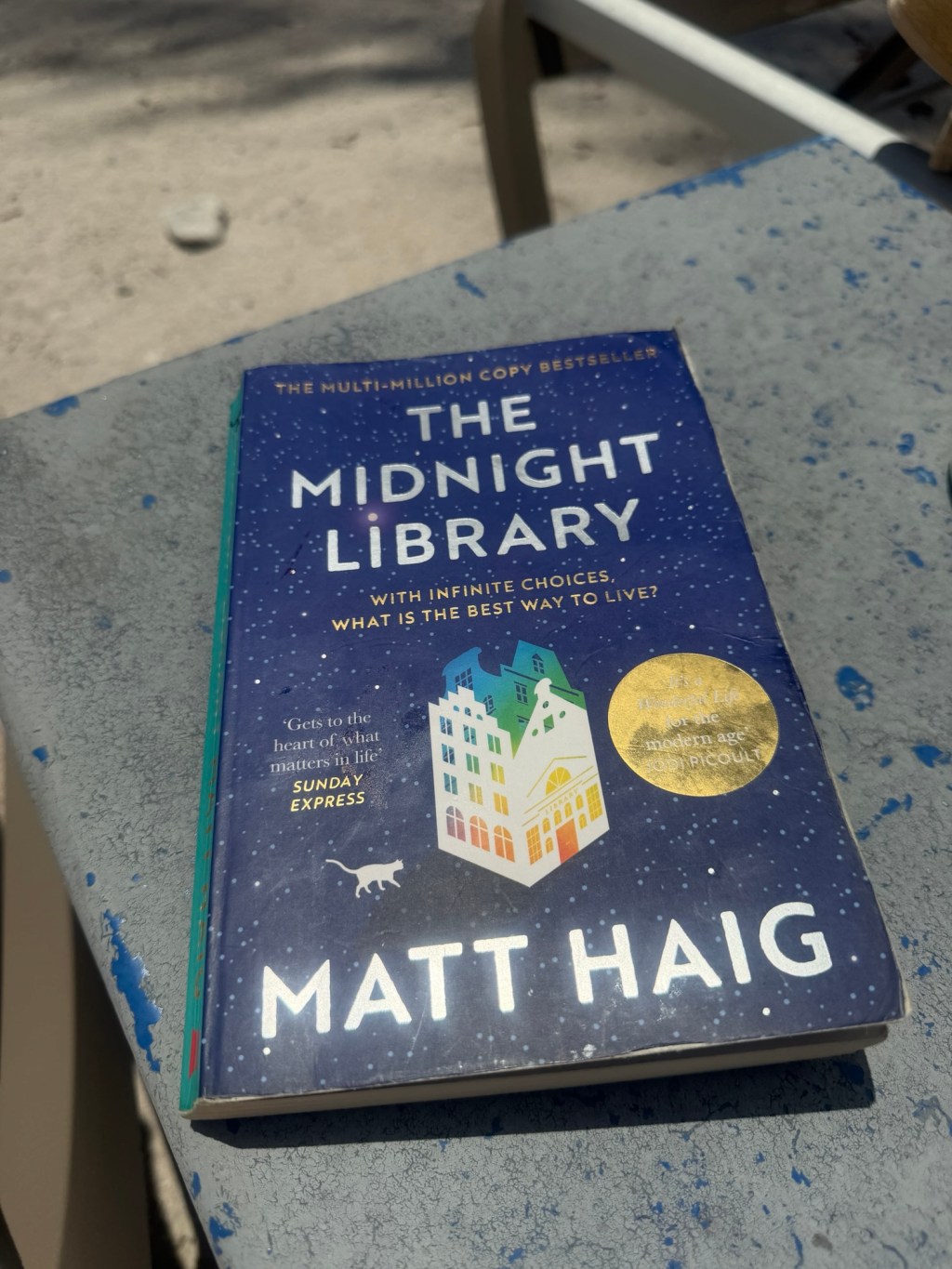
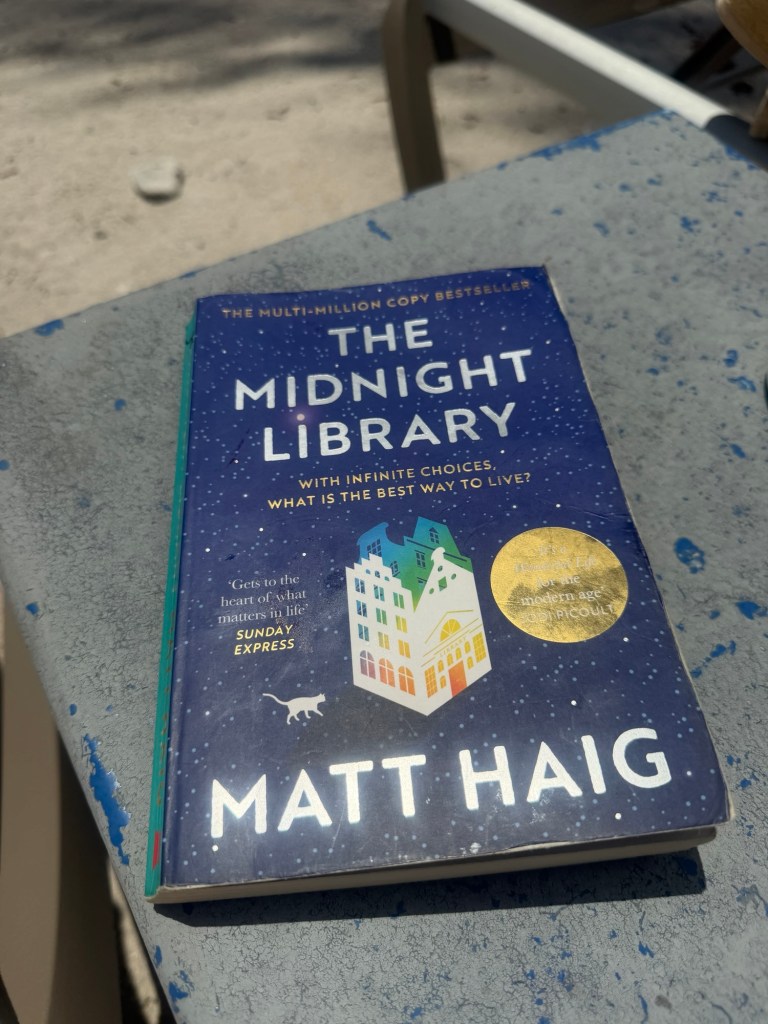
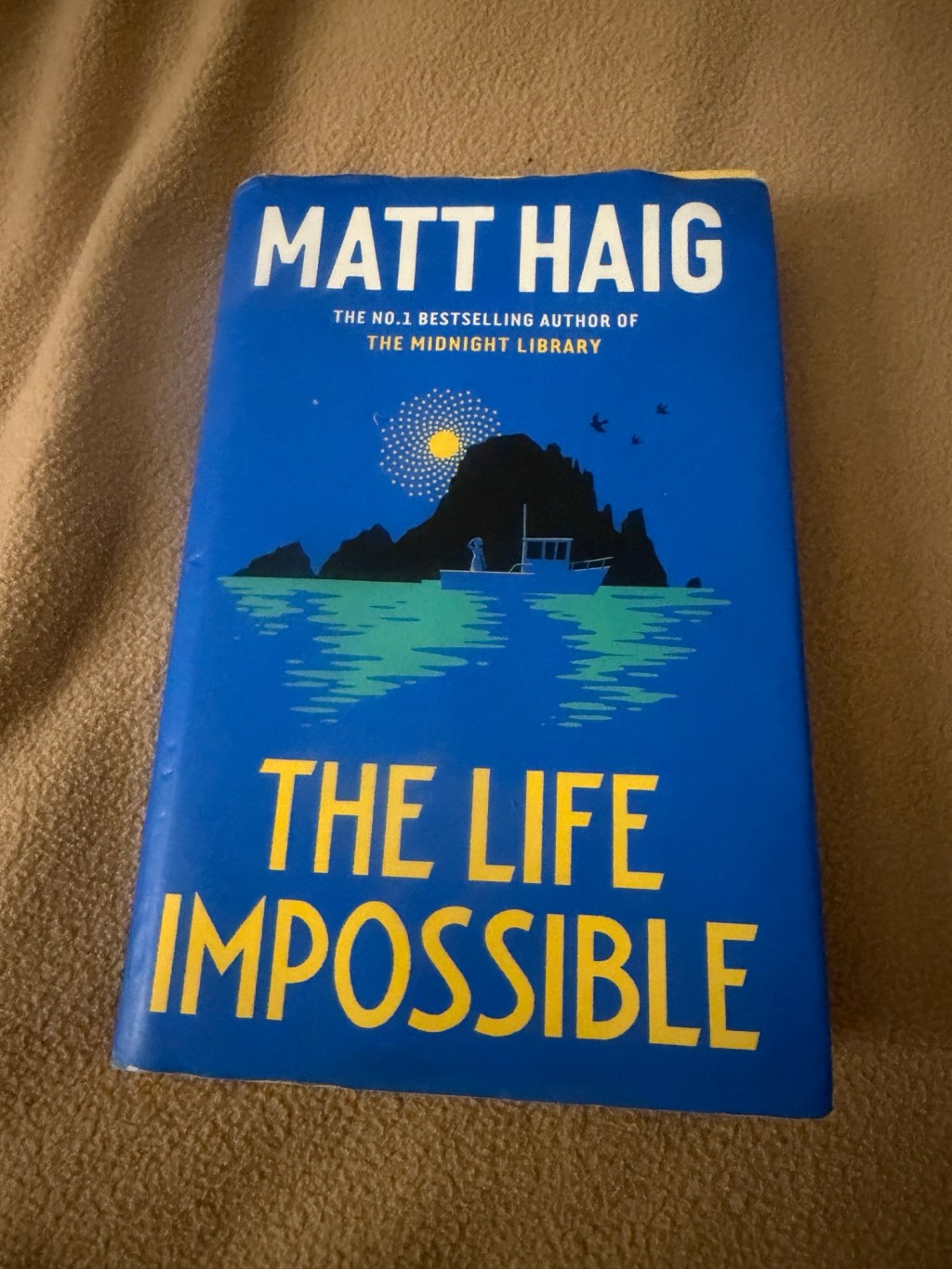
    There’s something about a Matt Haig novel that feels like a warm cup of tea on a grey afternoon. You know you’re in safe hands from the first page. After falling head over heels for The Midnight Library, I couldn’t wait to pick up The Life Impossible.
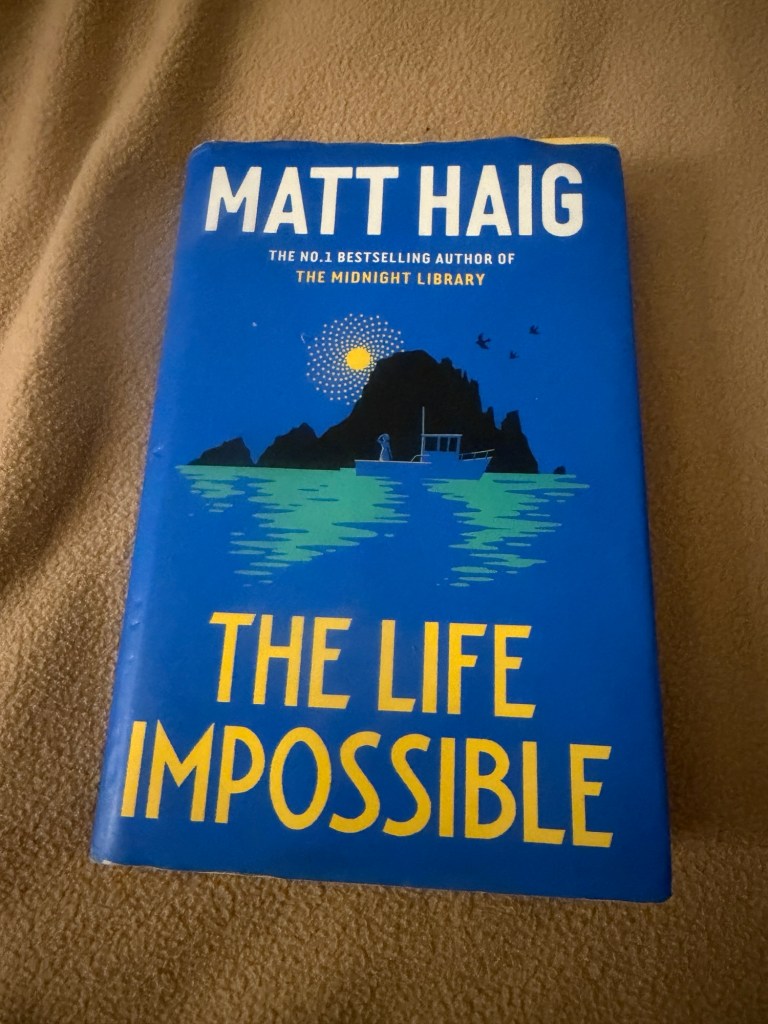
    While it didn’t quite reach the same heights for me, it’s still a lovely, uplifting read that I’d happily recommend.


    What’s It About


    The story follows Grace Winters, a retired maths teacher in her seventies. She’s living a quiet and rather lonely life, shaped by grief and regret. Then, out of the blue, she inherits a house on the Spanish island of Ibiza from an old colleague she barely knew. Curious, and with not much to lose, Grace sets off to find out why.
    What she finds there is far from ordinary. Without giving too much away, the island holds secrets, and Grace’s trip becomes a journey of discovery about the world, about the natural world around her, and about herself. It’s a story about second chances, and about the idea that it’s never too late to start living again.


    Matt Haig’s Gentle Magic


    What I love most about Matt Haig is his writing style. It’s witty, warm and almost mystical. It’s simple without ever being dull, and there’s an otherworldly quality that makes you feel as if you’ve stepped into a different realm for a while.
    His books are also refreshingly clean. There’s no sex, no graphic violence and none of the darkness that fills so many modern novels. Instead you get a gentle, kind and hopeful way of storytelling that leaves you feeling better than when you started. In a world that can feel heavy, that’s a real gift. The Life Impossible is full of that same comfort, and I found it a genuinely uplifting book to curl up with.


    A Heroine Worth Celebrating
    For me, the real highlight was Grace herself. How often do we get an ageing female lead going on a proper adventure? Not nearly often enough. Older women are so often pushed into the background in fiction as the grandmother, the neighbour or the wise side character. Here, Grace is the heart of the story.
    She’s funny, stubborn, sceptical and deeply human. Seeing the world through her eyes was a joy. Her journey sends a lovely message too: age doesn’t mean your story is over, and there’s still room for wonder, change and growth at any stage of life. I think many readers, especially women of a certain age, will see themselves in her.


    A Delightful Concept
    The concept is beautiful. It mixes real-life emotion, like grief, loneliness and regret, with something magical and hard to explain. Haig has a talent for taking big questions about life, purpose and happiness and wrapping them in a story that feels light and easy to read. The setting adds to it as well. The island feels vivid and sun-soaked, a world away from grey skies at home.


    Why Not Five Stars


    As much as I enjoyed it, it didn’t grab me in quite the same way as The Midnight Library. That book had an emotional punch and a simple, brilliant idea that stayed with me long after I finished it. The Life Impossible, lovely as it is, didn’t hit me as hard.
    I also found parts of the story hard to believe. At times the more fantastical elements stretched my imagination a little too far, and I couldn’t always fully buy into what was happening.
    Then again, I suppose that’s the beauty of Matt Haig’s work. He doesn’t set out to write something realistic. He asks you to suspend disbelief, let go and trust the magic. If you can do that, it’s a charming and rewarding journey.


    Who Should Read It


    I’d recommend The Life Impossible to:


    • Fans of The Midnight Library and Matt Haig’s other books
    • Anyone looking for a gentle, feel-good read with no sex or violence
    • Readers who enjoy a touch of magic or fantasy in an everyday setting
    • Anyone who loves stories with an older female lead
    • Book clubs, since there’s plenty to discuss about grief, second chances and what makes a life worth living


    Final Thoughts


    The Life Impossible is a warm, hopeful and beautifully written novel with a wonderful heroine at its heart. It isn’t quite The Midnight Library, and it asks you to take a big leap of faith, but it’s a charming, heartwarming book that I’m very glad I read. It’s perfect for a cosy weekend or a holiday by the pool.
    My rating: 4 out of 5
    Have you read The Life Impossible? Did you love it as much as The Midnight Library, or did one win you over more than the other? Let me know in the comments below. I’d love to hear what you thought.
    You can buy the book here
    https://link.amazon/B07Zds95

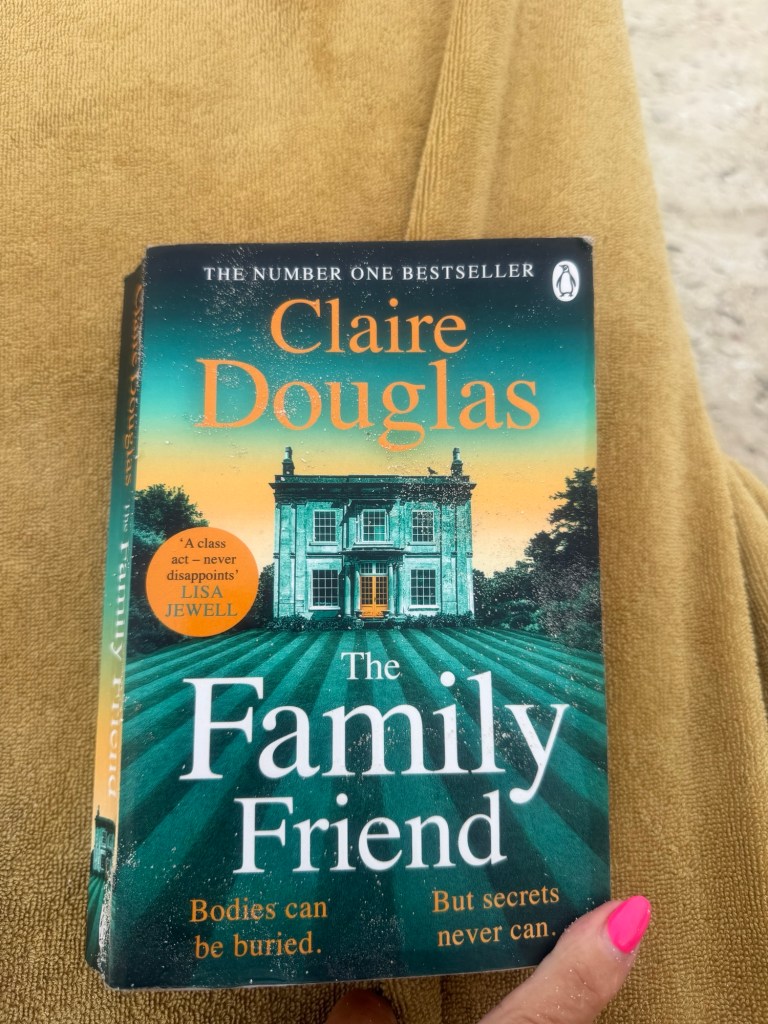
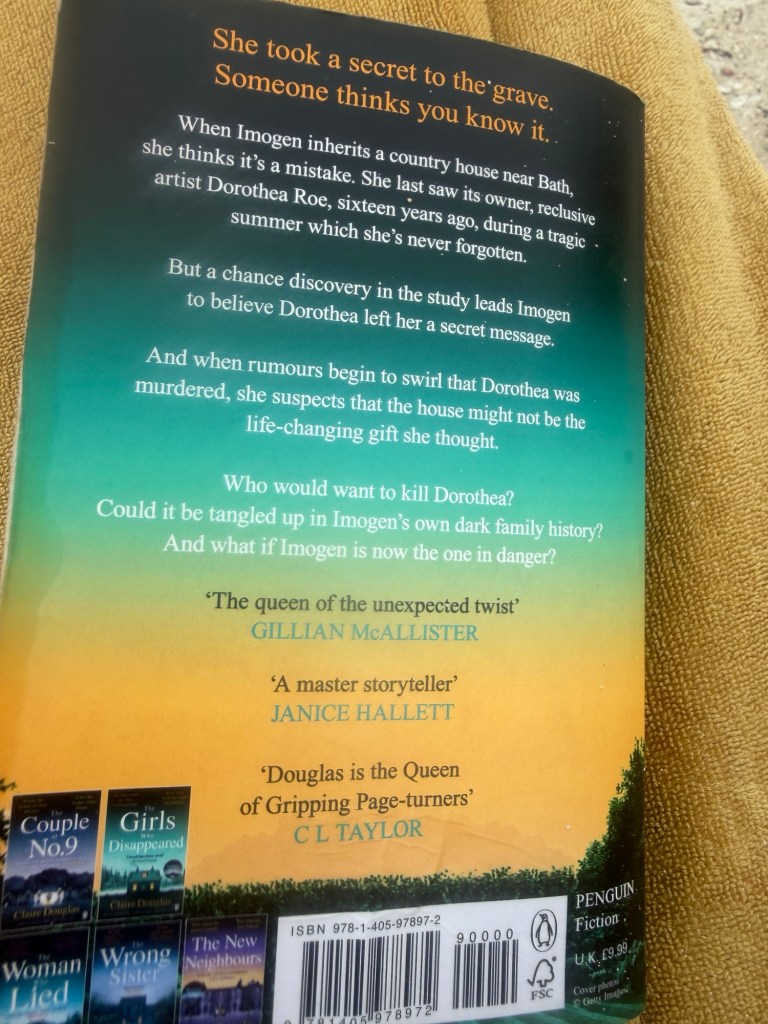
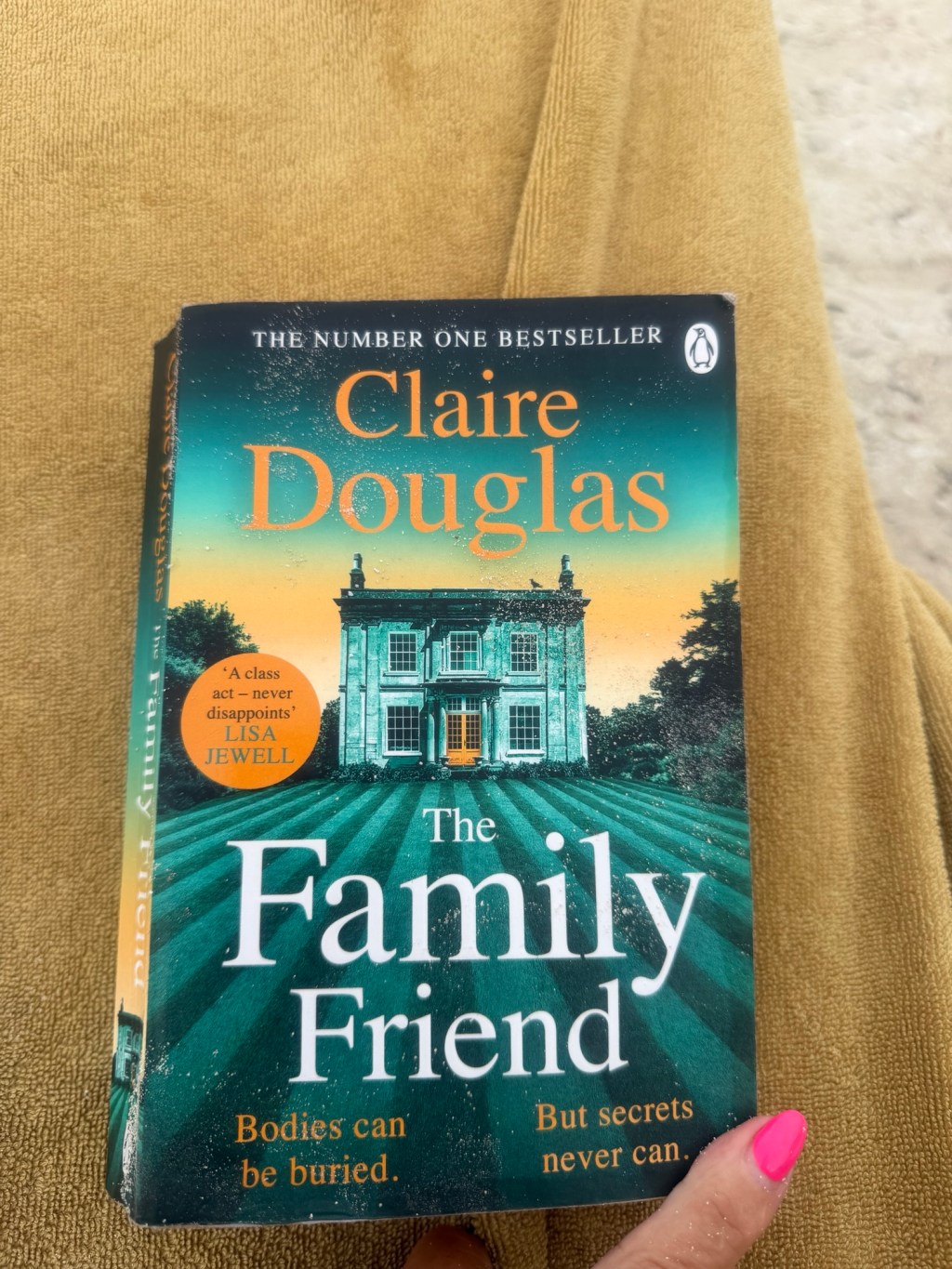
  • Book Review: The Family Friend by Claire Douglas — 4/5

    Book Review: The Family Friend by Claire Douglas — 4/5


    Great concept, but it missed the mark — and ultimately didn’t live up to its promise.


    A gripping start
    I’m a long-time Claire Douglas fan, so this went straight to the top of my holiday reading pile, and for the first half it absolutely earned its place there. Douglas is brilliant at that slow creep of unease: a new friendship that feels a little too convenient, a family with more going on beneath the surface than they’d like to admit, and that constant nagging sense that someone isn’t being honest. The short, punchy chapters made it almost impossible to put down. “Bodies can be buried. But secrets never can.” — the tagline sets the tone perfectly, and early on the book delivers on it.
    Where it lost me
    Somewhere past the halfway mark, the plot started stretching credibility. The twists kept coming, but the more they piled up, the harder it became to believe the characters would realistically behave the way they do. A few decisions had me raising an eyebrow rather than gasping, and by the final act I felt like something was missing — more emotional depth, or maybe just tighter plotting. The premise was genuinely clever; the execution just didn’t quite get there.
    The ending
    No spoilers, but the resolution didn’t land for me. It felt rushed, with a couple of threads tied off too neatly and others left oddly unsatisfying. After such a strong build-up, I wanted a much bigger payoff.
    Final verdict — 4 out of 5
    Still a solid, very readable thriller, and I’d happily recommend it for a holiday or a rainy weekend. Douglas writes tension better than most, and even a weaker outing from her is more entertaining than plenty of others in the genre. Just don’t go in expecting the ending to be the best part.
    Rating: ★★★★☆ (4/5)
    Have you read The Family Friend? I’d love to know if the ending worked better for you than it did for me — let me know in the comments.

    You can buy the book here https://link.amazon/B05TqPXyy
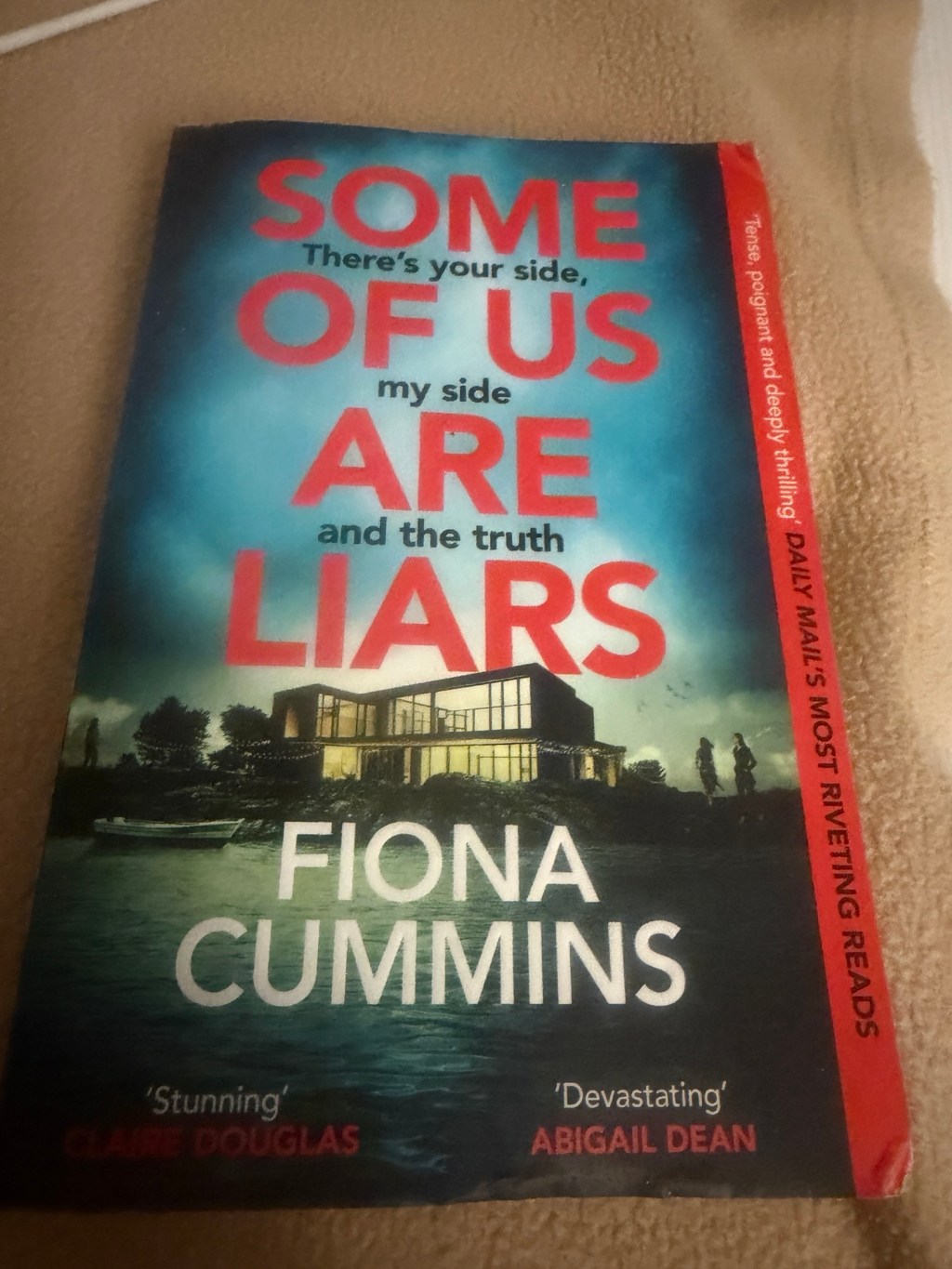
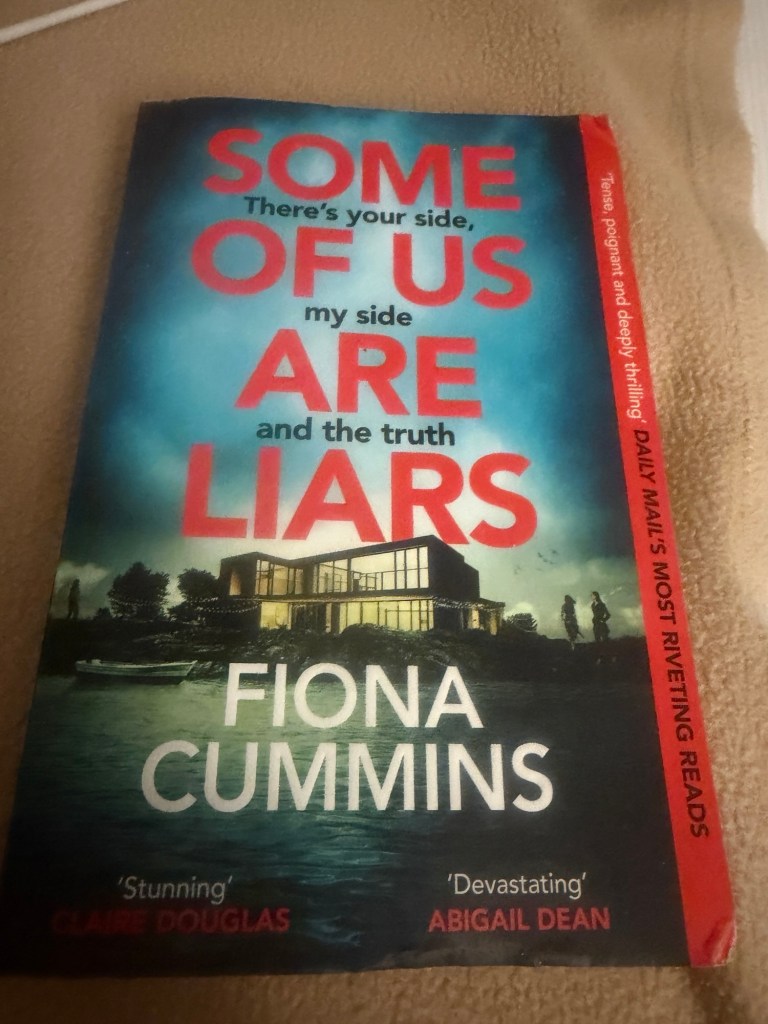
  • Book Review: Some of Us Are Liars by Fiona Cummins

    Book Review: Some of Us Are Liars by Fiona Cummins

    Rating: 4.5 / 5

    Some thrillers grip you with pace. This one grips you with people — and then pulls the floor out from under them.

    What it’s about (no spoilers)

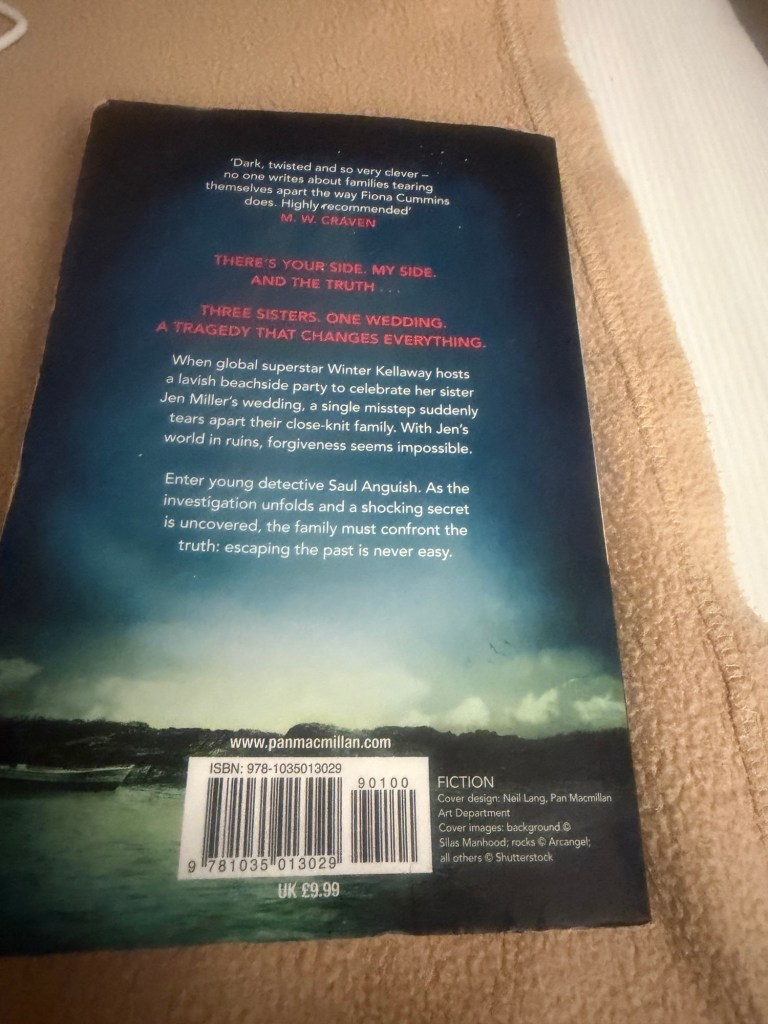
    Jen Miller leaves her youngest child in the care of her two sisters while the family gathers at superstar Winter Kellaway’s beachside estate for a wedding celebration. The champagne is on ice, the decorations are flawless — and one split-second lapse turns the happiest day of the year into a tragedy the family will never recover from. What follows is grief, blame, an explosive court case, and a long-buried secret that refuses to stay buried. DC Saul Anguish is brought in to investigate.

    What I loved

    The twists. Plural. Every time I thought I had it worked out, Cummins shifted the ground and I was wrong again — and not in a cheap, out-of-nowhere way. The clues are there; you just don’t see them until she wants you to.

    The sisters are the real engine of the book. Winter, Jen and Alyssa are so believably written that the fallout hurts, and the shifting timelines and viewpoints mean you’re constantly re-weighing who deserves your sympathy. That’s the clever bit: your loyalties keep moving.

    It’s also genuinely emotional. This isn’t just a puzzle to solve — it’s about guilt, forgiveness and how far people will go to protect the ones they love. I read most of it in two sittings because I simply couldn’t leave it alone.

    What didn’t quite work

    My one real gripe is the subplot involving Saul. I never felt it earned its place. Every time the story cut back to him I found myself wanting to get back to the sisters, and I don’t think losing those sections would have cost the book anything — if anything the central story would have hit even harder. It’s not badly written, it just sits slightly apart from everything that makes the novel so compelling. Half a star off for that.

    The verdict

    A dark, twisty, surprisingly moving thriller with characters you’ll be arguing about long after the last page. If you like Lisa Jewell or Claire Douglas, or you enjoy a courtroom thread running through your crime fiction, you’ll fly through this one. It was also shortlisted for the CWA Twisted Dagger 2026.

    4.5 out of 5 — highly recommended.

    You can buy the book here
    https://link.amazon/B07Y7qejX


    Have you read it? Did you guess the twist? Tell me in the comments — and let me know if you agree with me about Saul.

  • Book Review: First Wives’ Shadow by Adele Parks

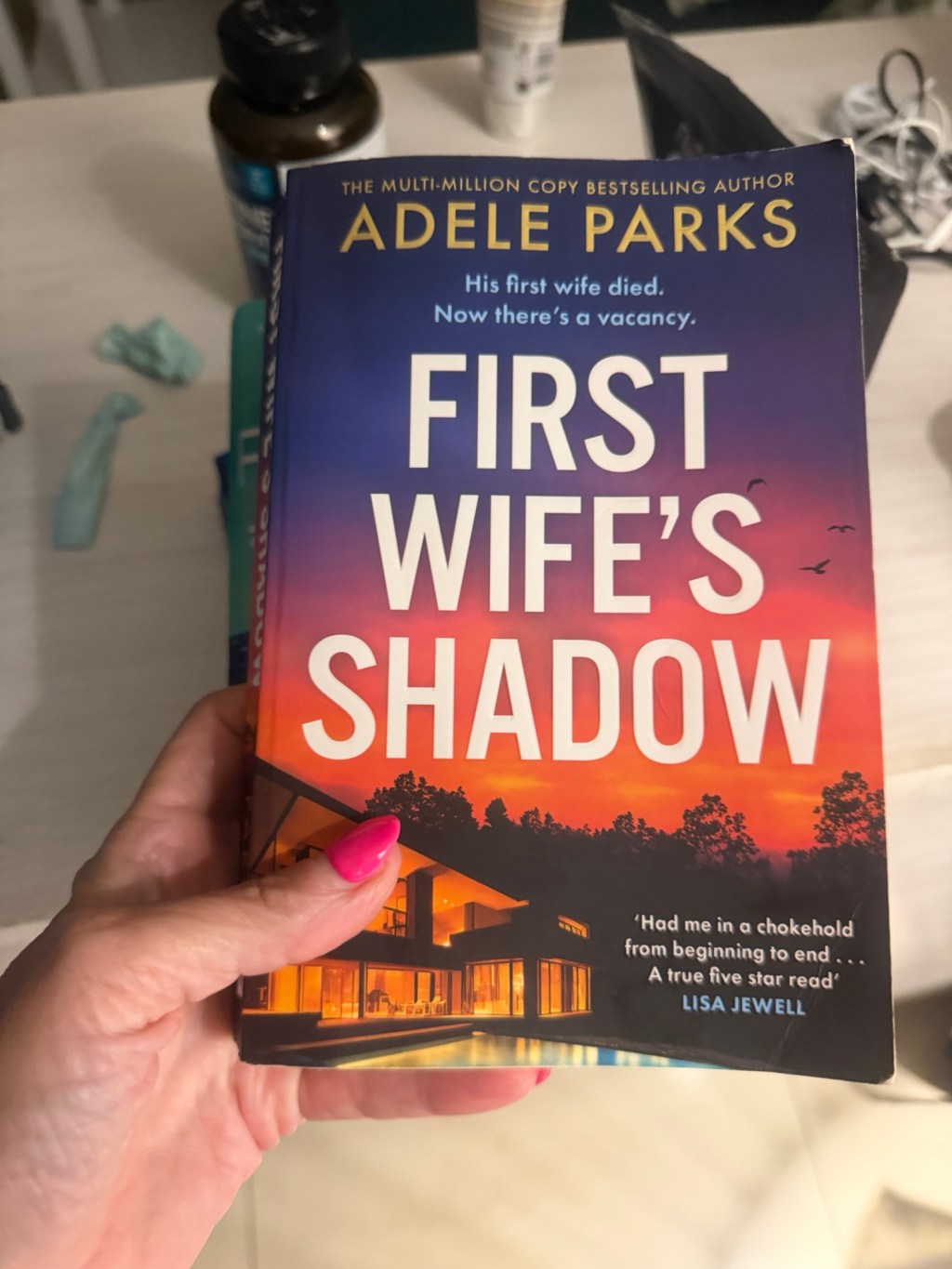
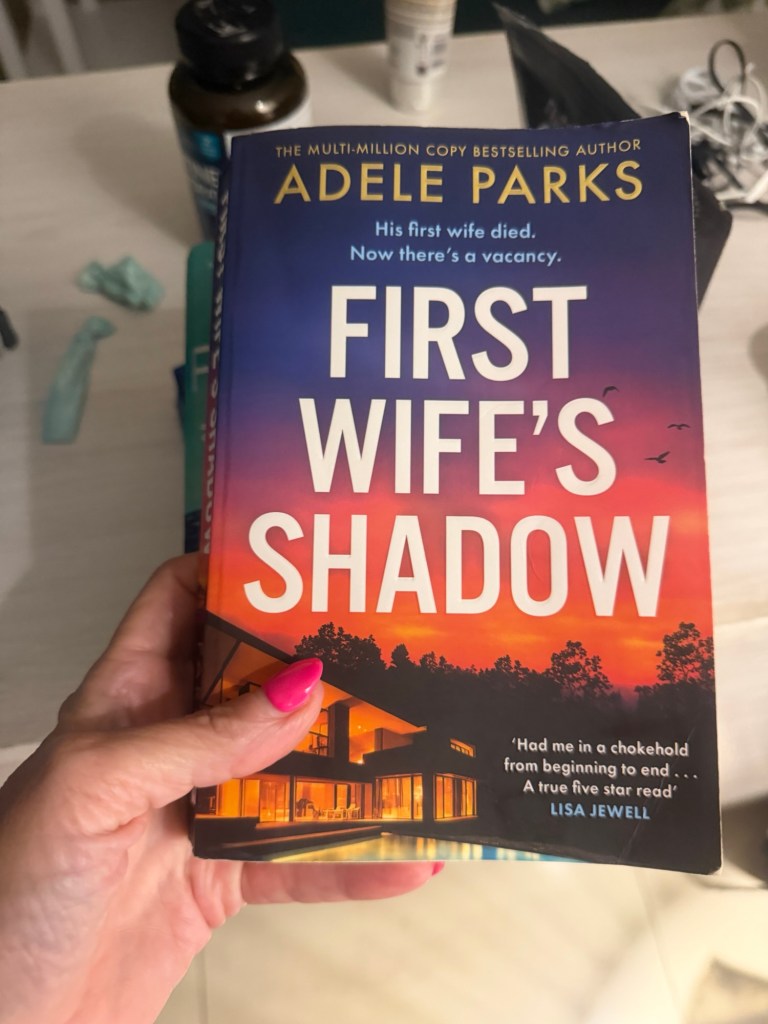
    Book Review: First Wives’ Shadow by Adele Parks


    Rating: 2 out of 5 stars
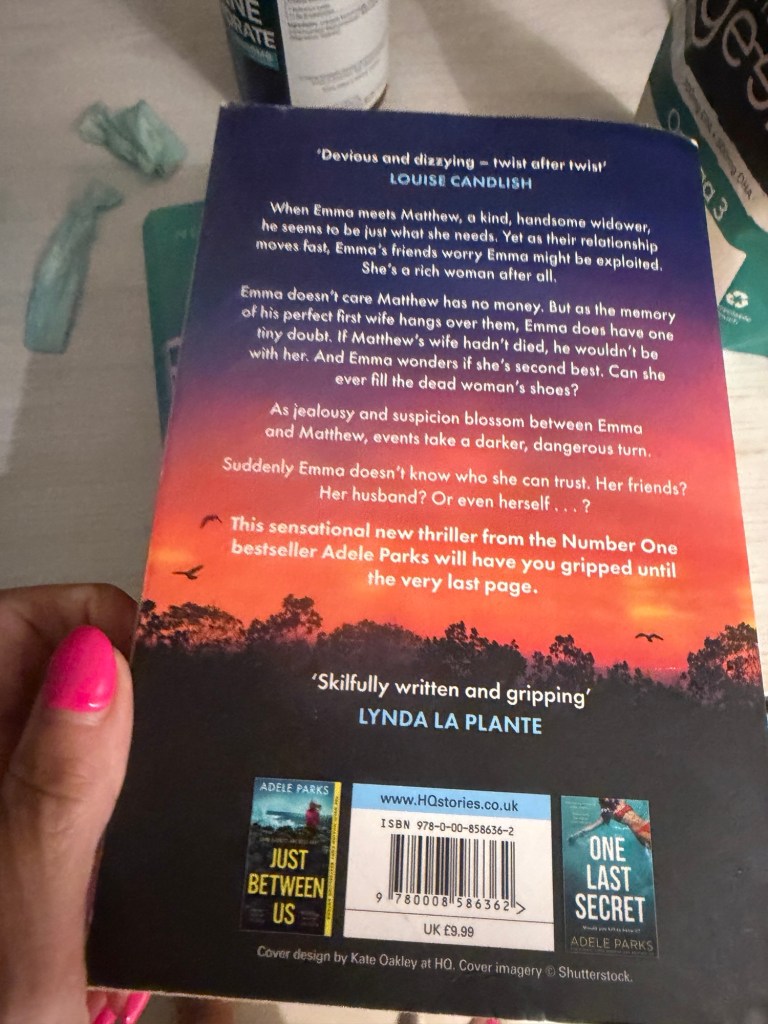
    I went into First Wives’ Shadow hoping for a gripping, addictive domestic thriller, and while it started off reasonably well, it quickly became a bit of a slog.


    The premise had potential and the opening chapters were intriguing enough to keep me reading. However, as the story progressed, I found myself struggling to believe some of the characters’ choices—particularly those made by the supposedly hard-nosed, successful businesswoman at the centre of the novel. I just couldn’t accept that someone portrayed as so intelligent, experienced and tough-minded would fall for certain things so easily.
    There were several moments that felt over-the-top and, at times, downright ridiculous. Rather than feeling tense or shocking, parts of the plot became frustrating because they required too much suspension of disbelief. I kept waiting for the story to settle into something more convincing, but instead I felt as though I was trudging through it just to reach the end.
    That said, there is a good twist towards the conclusion, and it did add some much-needed interest after a fairly slow and unbelievable middle section. Unfortunately, it wasn’t enough to make up for how implausible I found much of the story.
    Overall, First Wives’ Shadow had a promising start and a decent final twist, but the unrealistic plot points and frustrating character decisions meant it didn’t quite work for me. A disappointing read from an author I usually expect more from.

    You can buy here

    https://link.amazon/B07iR4R5v

  • Book Review- The Passengers by John Marr

    Book Review- The Passengers by John Marr

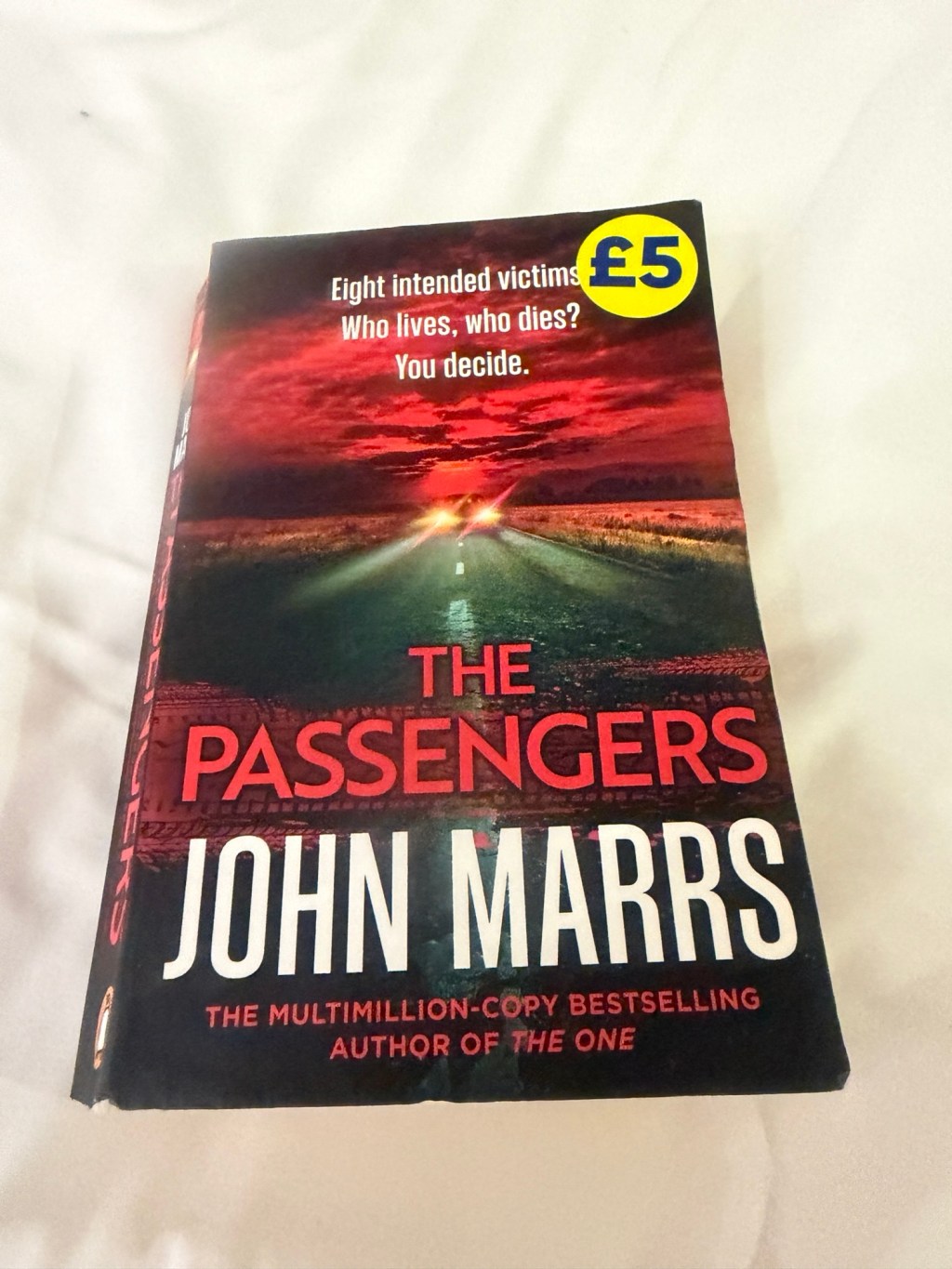
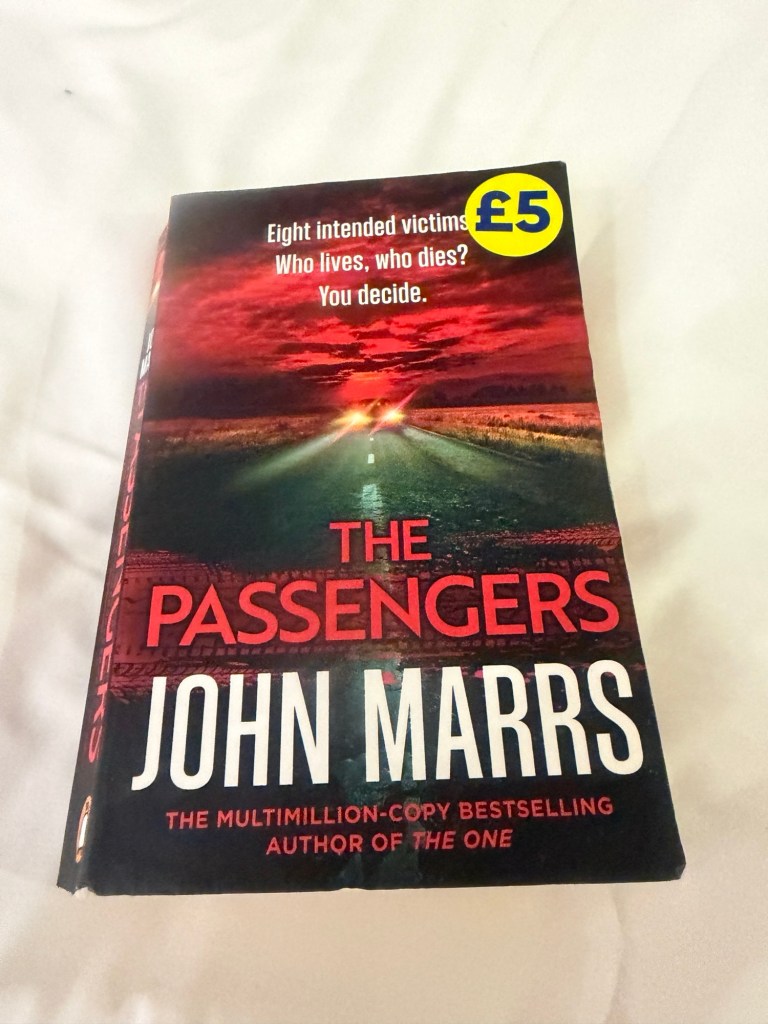
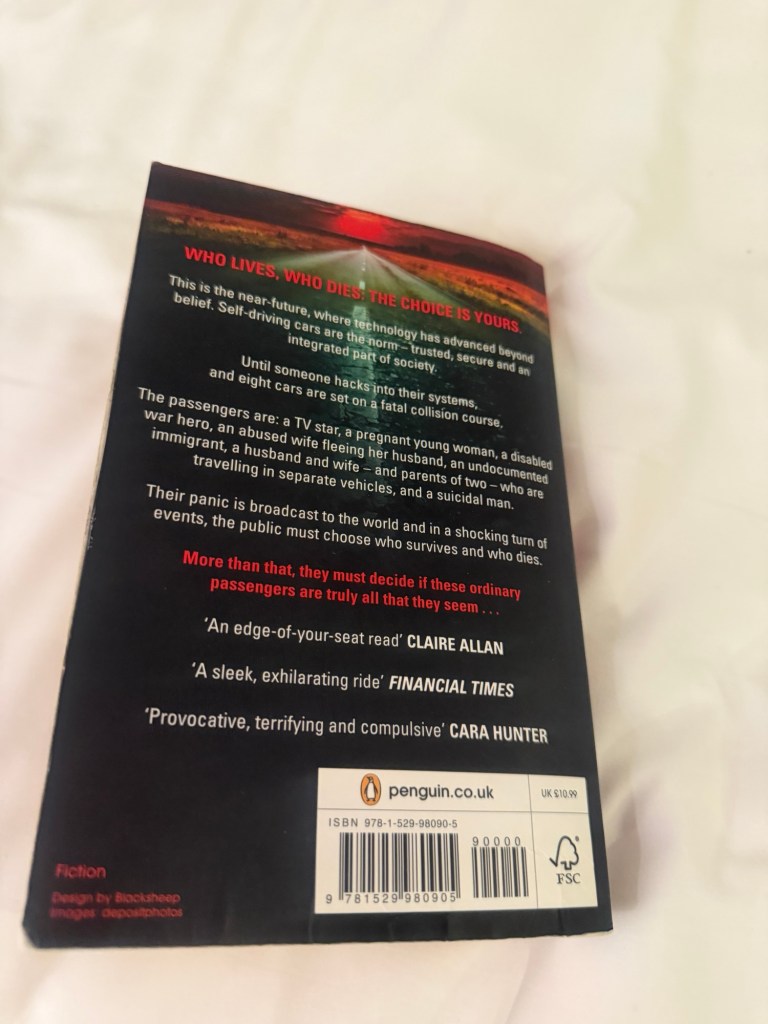
    I actually picked up The Passengers by John Marrs from a little book share while I was on holiday in Mexico, and it turned out to be one of those lucky finds you just can’t put down. You know when you grab a book on a whim and it completely pulls you in? That was this for me. A solid 5/5.


    The whole idea of the book is honestly a bit terrifying because it doesn’t feel that far off reality. It’s set in a world where driverless cars have taken over, and everything is meant to be safer and controlled. But then eight people find themselves trapped inside hacked cars, with no way of escaping, and they’re all being driven towards a deadly crash.
    What really got me hooked is that it’s not just about what’s happening in the cars. The public is actually watching it unfold and has to vote on who should live and who should die. It sounds intense, and it really is. I found myself constantly changing my mind about who I was rooting for as more and more secrets came out.
    And that’s the clever bit — none of the characters are perfect. The more you learn about them, the more you question everything. Just when I thought I had someone figured out, another twist would come in and completely change my opinion.
    I also loved how easy it was to read. The chapters are quite short, which made it perfect for dipping in and out while I was lying by the pool… although in reality, I ended up reading way more than I planned because I kept saying “just one more chapter”.
    It’s one of those books that really makes you think as well. Not in a heavy way, but enough to make you wonder what you would actually do in that situation. Would you trust the system? Would you vote? Could you even make that kind of decision?
    For me, it had the perfect mix of thriller, drama, and just enough sci-fi to make it feel modern and believable. Definitely one I’ll be recommending, and I still can’t believe I just found it sitting on a random book shelf on holiday.
    If you like fast-paced, twisty reads that keep you guessing, this is 100% worth picking up.
    5/5 from me.
    Have you read it, or would you trust a driverless car?

    You can buy the book here
  • Book Review: The Woman Who Lied by Claire Douglas

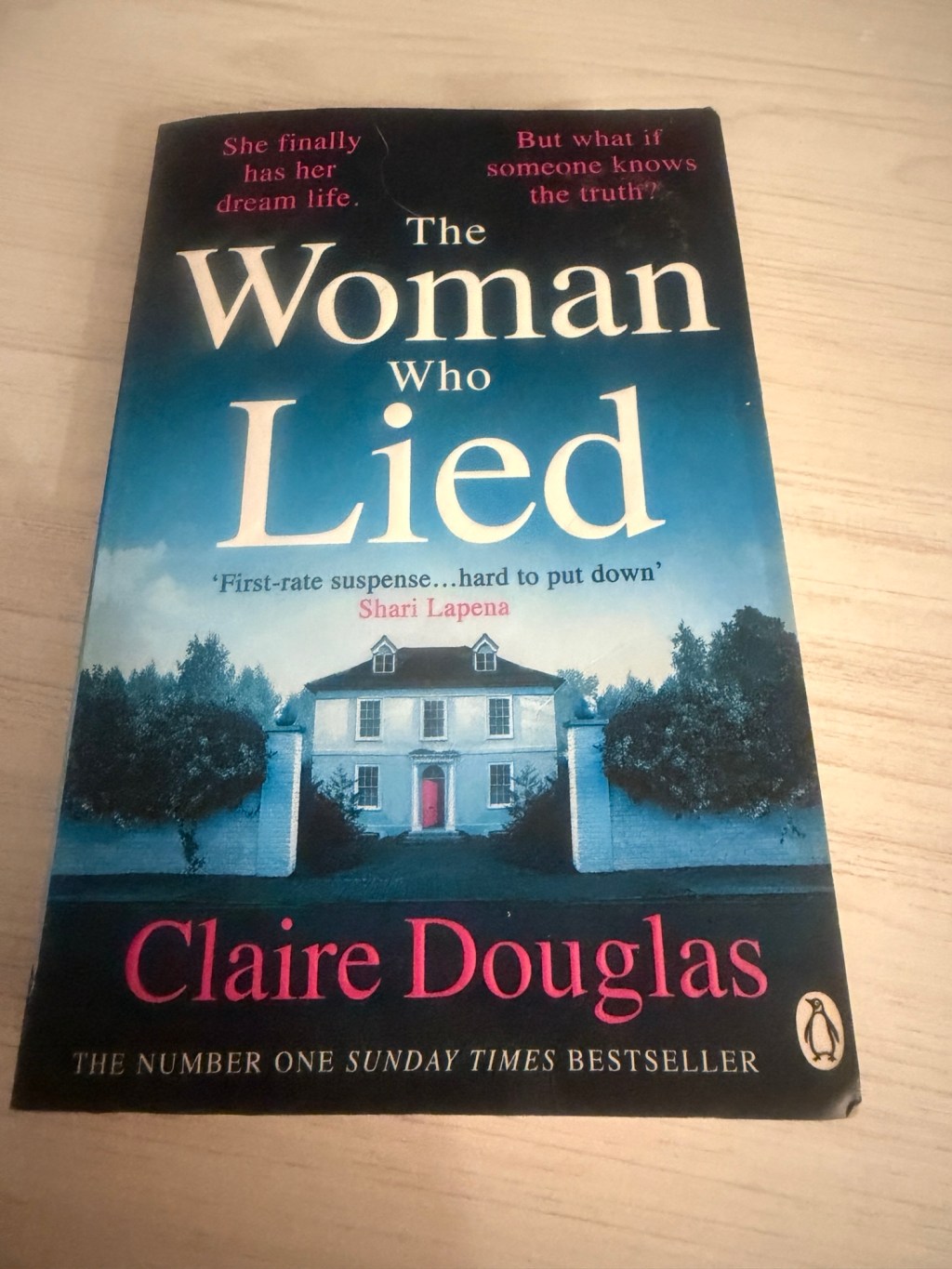
    Book Review: The Woman Who Lied by Claire Douglas

    Rating: 4/5

    Overview

    The Woman Who Lied by Claire Douglas is a tense, atmospheric psychological thriller that keeps you hooked from the start. Douglas delivers a compelling story that explores the intersection of art and reality, and the dangerous consequences of keeping secrets.

    The Plot

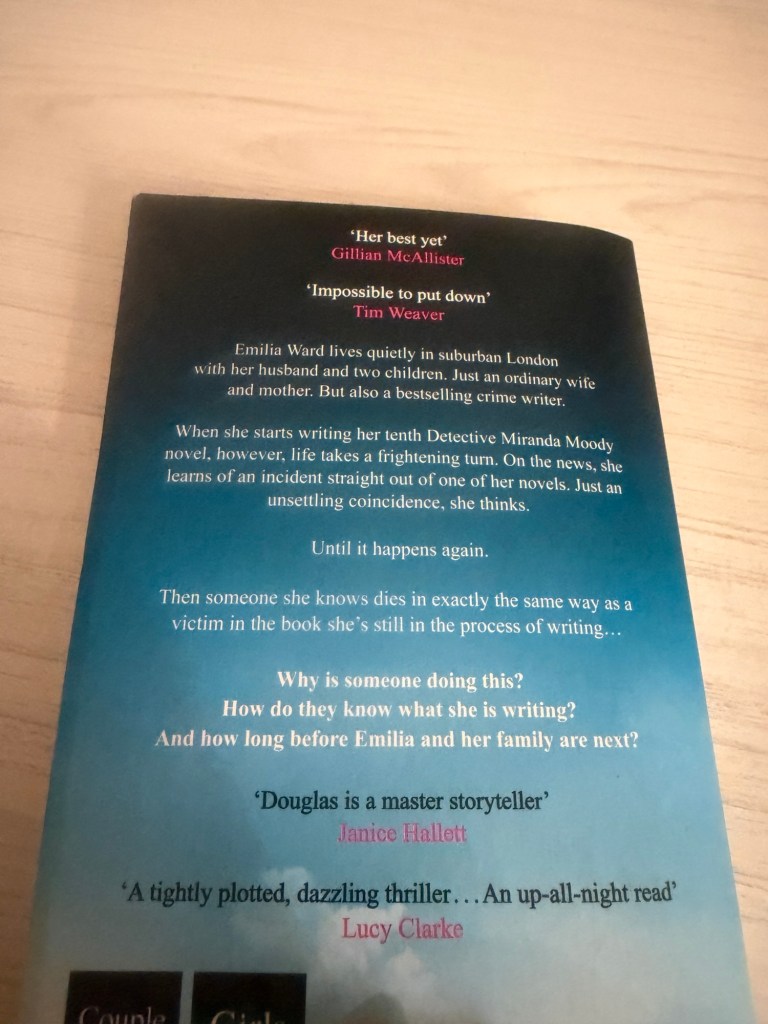
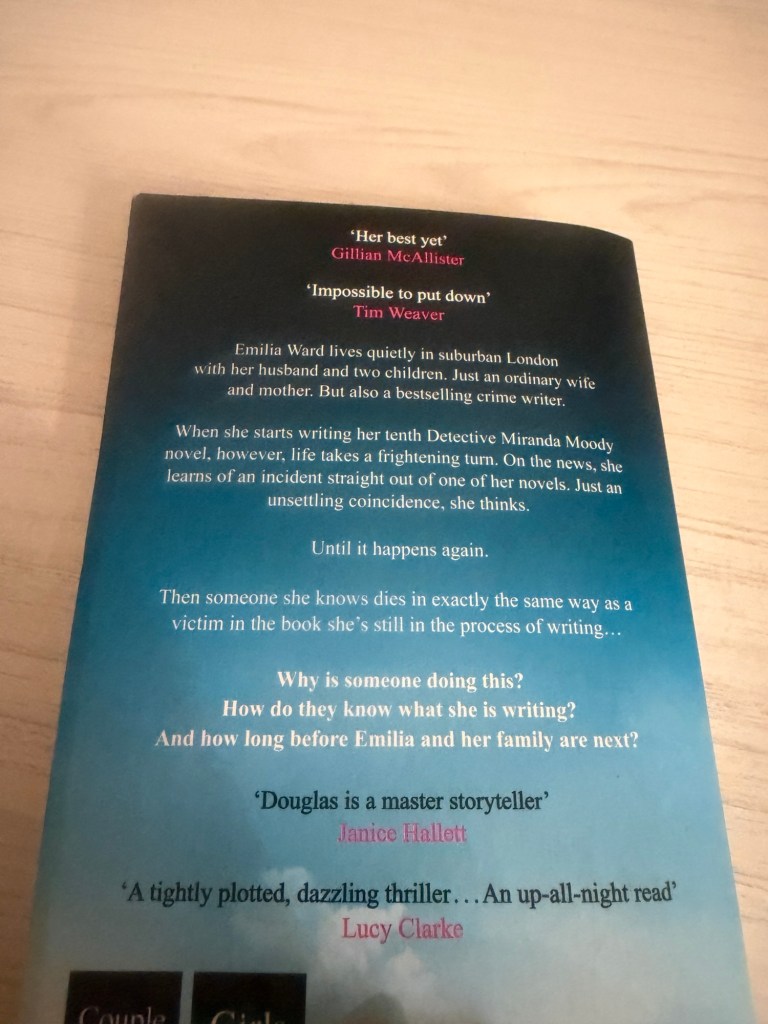
    The story follows Emilia Ward, a bestselling crime author living in suburban London. As she begins writing the tenth installment of her popular detective series—intended to be the final book where she kills off her protagonist—her life takes a disturbing turn. Events from her manuscript begin to manifest in real life. What starts as an unsettling coincidence quickly escalates into a nightmare as someone seems to be using her unpublished plot to harass her and endanger her family. As the line between her fiction and reality blurs, Emilia is forced to question everyone around her, including her closest friends and family, while trying to uncover who is stalking her and why.

    While the premise is brilliant and the tension builds effectively, I found the ending to be a little jumbled and rushed. The complexity of the layers in the final act felt slightly disjointed, which took away from the impact of the earlier, more methodical suspense.

    The Verdict

    Despite the frantic conclusion, the book remains a highly enjoyable read for fans of the genre. Douglas excels at creating claustrophobic environments and high-stakes social dynamics. If you enjoy domestic noir that isn’t afraid to twist the knife, this is a great addition to your reading list.

     Strengths: Gripping atmosphere, a clever “book-within-a-book” premise, and constant suspicion.

     Weaknesses: An uneven final act that loses some of the narrative clarity established in the earlier chapters.

    Final Thoughts

    While it didn’t stick the landing perfectly, The Woman Who Lied provides plenty of entertainment and enough mystery to satisfy anyone looking for a solid psychological thriller.


    You can buy the book

    Here

    https://amzn.to/4f1QV5j

  • Book review – The Midnight Library by Matt Haig

    Book review – The Midnight Library by Matt Haig

    Matt Haig’s The Midnight Library is an uplifting, thought‑provoking novel that I’d rate 4/5 for its emotional impact and accessible exploration of one big question: how different might your life be if you’d taken other paths?
    Between Life and Death: A Library of Regrets
    At the heart of The Midnight Library is Nora Seed, a woman who believes she has wasted her life. She’s burdened by regrets: the band she left, the relationship she ended, the career she didn’t pursue, the friendships she let fade.

    In a moment of deep despair, Nora finds herself not in oblivion, but in an extraordinary place—the Midnight Library.
    This library exists in the thin space between life and death. Every book on its seemingly endless shelves contains a different version of Nora’s life, created by choices she could have made but didn’t. One book shows the life where she stayed in the band. Another reveals what might have happened if she became a competitive swimmer, a glaciologist, a wife, a mother. The premise is simple yet powerful: if you could step into your “what if” lives, would they truly be better than the one you have now?


    An Uplifting Story About Dark Feelings


    Although the book opens in a very dark place—with depression, loneliness, and suicidal thoughts—it doesn’t stay there. Instead, the Midnight Library becomes a vehicle for hope. As Nora tries on different versions of herself, she discovers that every path, no matter how glamorous or successful it looks from the outside, carries new problems, compromises, and losses.
    The lives she imagined as “perfect” are far messier up close. Fame comes with pressure and isolation. Scientific achievement comes with sacrifice and distance from loved ones. Seemingly ideal relationships are complicated by their own secrets and disappointments. Gradually, the narrative nudges us toward an important realization: there is no version of life untouched by pain. The goal isn’t to find a flawless path, but to make peace with imperfection and find meaning in the life you actually inhabit.
    This is why, despite its heavy themes, the novel feels uplifting. It doesn’t pretend that suffering can be erased with positive thinking. Instead, it suggests that shifting our perspective on regret—seeing it as part of being human rather than evidence of failure—can open the door to compassion for ourselves.
    The Big “What If” Question
    One of the most engaging aspects of The Midnight Library is how directly it speaks to a universal experience: wondering “What if?” about our own lives.
    • What if you had stayed in that relationship instead of leaving?
    • What if you’d moved abroad instead of staying in your hometown?
    • What if you’d pursued your creative passion rather than choosing a safer job?
    The book invites you to imagine your own Midnight Library—shelves filled with lives where you made different choices. It then gently challenges the fantasy that those other lives are automatically better. In each “what if” life Nora explores, there are still conflicts, heartbreaks, and compromises. Sometimes she discovers a version of herself with achievements she envies, but she also sees what those achievements cost: missed moments with family, constant stress, a loss of authenticity.
    By the time you close the book, you’re likely to look at your own regrets differently. Instead of seeing them as proof that you’re on the “wrong” path, you may begin to understand that every path involves trade‑offs. The story suggests that happiness isn’t found by chasing the perfect alternative life, but by engaging more fully with the imperfect one you already have.
    Why It Earns a 4/5
    A 4/5 rating feels right for The Midnight Library. It’s not flawless, but its strengths far outweigh its weaknesses.
    On the positive side, it’s:
    • Emotionally accessible: The writing is clear and conversational, making complex feelings easy to follow.
    • Conceptually simple yet rich: The idea of a library of alternate lives is both imaginative and instantly understandable.
    • Genuinely reflective: It encourages readers to question their own narratives about failure, success, and self-worth.
    Some readers may find the message a little too neat or the ending somewhat predictable. The philosophical lessons—about accepting your life, forgiving yourself, and living in the present—are delivered in a way that can feel like familiar self‑help wisdom. If you’re looking for a very nuanced, ambiguous portrait of mental illness, you might feel that the book simplifies certain aspects.
    However, the emotional honesty and the gentle tone make it a comforting read for anyone who has ever felt overwhelmed by regret, disappointed in themselves, or stuck in the feeling that everyone else has a “better” life. It’s the kind of book you want to press into the hands of someone who’s having a hard time, not because it offers solutions, but because it offers company and a perspective shift.
    What You Take Away After Reading
    When you finish The Midnight Library, you’re left with a few resonant ideas:
    • Regret is a story we tell ourselves. Changing the story can change how we feel.
    • No life is free from pain, but every life has the potential for connection, meaning, and small joys.
    • You don’t need to become a radically different person or follow a completely different path to deserve your life; you already do.
    Ultimately, the book suggests that instead of standing in the present and staring longingly at the doors that closed behind you, you can turn toward the doors still open ahead. Its uplifting power lies in reminding us that the life we have—however imperfect—is still full of possibilities.

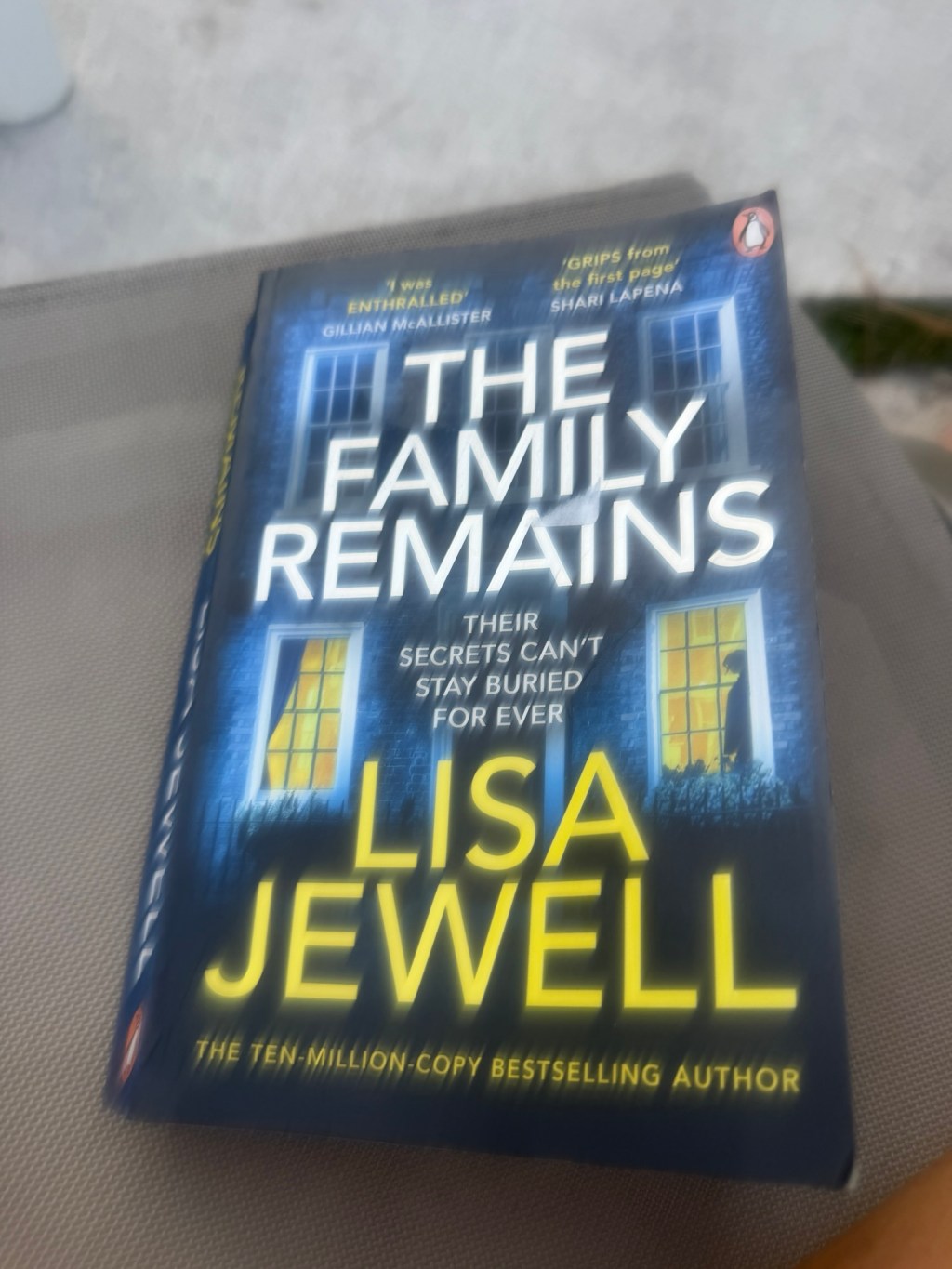
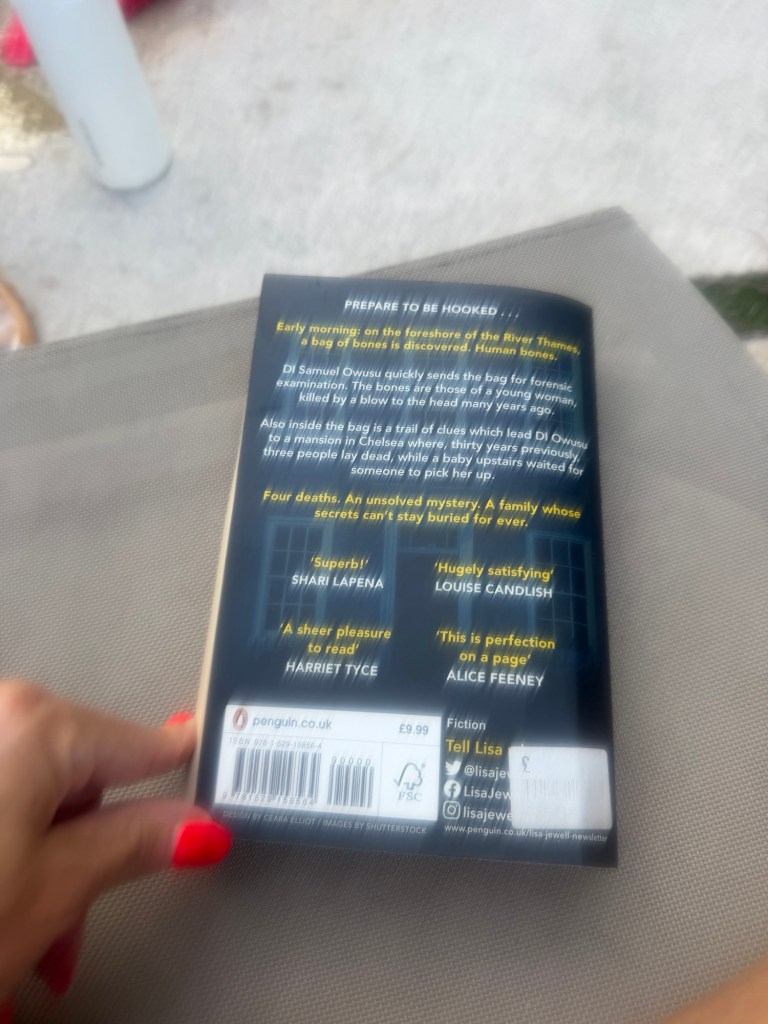
  • Book review The Family Remains by Lisa Jewell — 3.5/5

    Book review The Family Remains by Lisa Jewell — 3.5/5


    If you haven’t read The Family Upstairs, start there first. In my opinion this is not a standalone, whatever the cover might suggest — without that backstory you’ll be lost.


    For those who did read the first book, this picks up with siblings Henry and Lucy Lamb, now adults, still living in the shadow of a deeply traumatic childhood. Their parents fell under the spell of a controlling con man who essentially turned their family home into a cult — and the fallout from that is still very much haunting everyone. Lucy’s daughter Libby, who was left behind as a baby in that house, is about to travel to Botswana to finally meet her biological father Phin — a boy who grew up alongside Henry and Lucy during those dark years. But Phin mysteriously disappears before they can reach him, and Henry, who has always been obsessively fixated on Phin, takes off alone to track him down in Chicago. What follows is a multi-strand story — Lucy chasing after Henry, a detective investigating bones pulled from the Thames that lead back to that same Chelsea mansion, and a new character called Rachel, whose story of escaping an abusive husband slowly weaves into everything else.
    It sounds gripping, and at times it is — but for me the multiple storylines and narrators made it feel a little scattered. It lacked the claustrophobic tension of the original. Rachel’s whole thread in particular felt like it dragged the pace down rather than adding to it.
    Still worth reading if you loved the first book — just go in knowing it won’t quite hit the same heights.
    Rating: 3.5/5

  • Book Review: The Paris Apartment by Lucy Foley

    Book Review: The Paris Apartment by Lucy Foley

    The Verdict: A readable mystery that makes for a good holiday escape, even if a slower pace and surface-level characters keep it from matching the heights of Foley’s previous hits.

    Review Breakdown:

     Pacing: A bit slow overall, taking some time to build momentum

     Character Depth: Surface-level and not particularly engaging, lacking real depth

     Atmosphere: Good claustrophobic setting, but missing local Paris description

     Overall Rating: 3.5 / 5 stars — A good holiday read

    The Setup

    Lucy Foley returns with her signature multi-perspective style, this time trading her usual remote landscapes for a beautiful, creepy old apartment building in the heart of Paris.

    We follow Jess, a young woman looking for a fresh start, who shows up to crash with her half-brother, Ben. The only problem? Ben is missing, his keys are left behind, and the building’s wealthy, eccentric neighbors are all hiding secrets.

    The Critique: Pacing and Characters

    While the book is well-structured on paper, the execution feels a bit slow overall. The plot takes a while to get moving, and it lacks the gripping momentum you might expect from a typical thriller.

    A big part of this slow drag comes down to the characters. While they are clearly defined in their suspicious roles—from the watchful concierge to the defensive socialite—they are all a bit surface-level. Without much depth or genuine emotional stakes, they aren’t particularly engaging. Instead of rooting for them or being deeply intrigued by their secrets, you might find yourself watching them from a distance.

    The Setting: Where is Paris?

    The book also leaves you wanting a bit more from its actual setting. For a novel with “Paris” right there in the title, it feels surprisingly isolated from the city itself.

    If you dive in hoping to be transported to the romantic, bustling streets or historic cafes of Paris, you will likely wish for much more descriptive detail and local flavor. The apartment building functions more like a generic, dark backdrop than a living, breathing character.

    Final Thoughts

    If you’ve read a few of Lucy Foley’s books before, you will likely find this one readable, but not nearly as enjoyable or gripping as some of her others. Because of the slower pace and flat characters, it doesn’t quite have that unputdownable magic. However, if you are just looking for a straightforward, easy-to-read mystery for a holiday weekend, it still works as a good, enjoyable time-killer.

    You can buy the book on Amazon

    https://amzn.to/43sciqZ