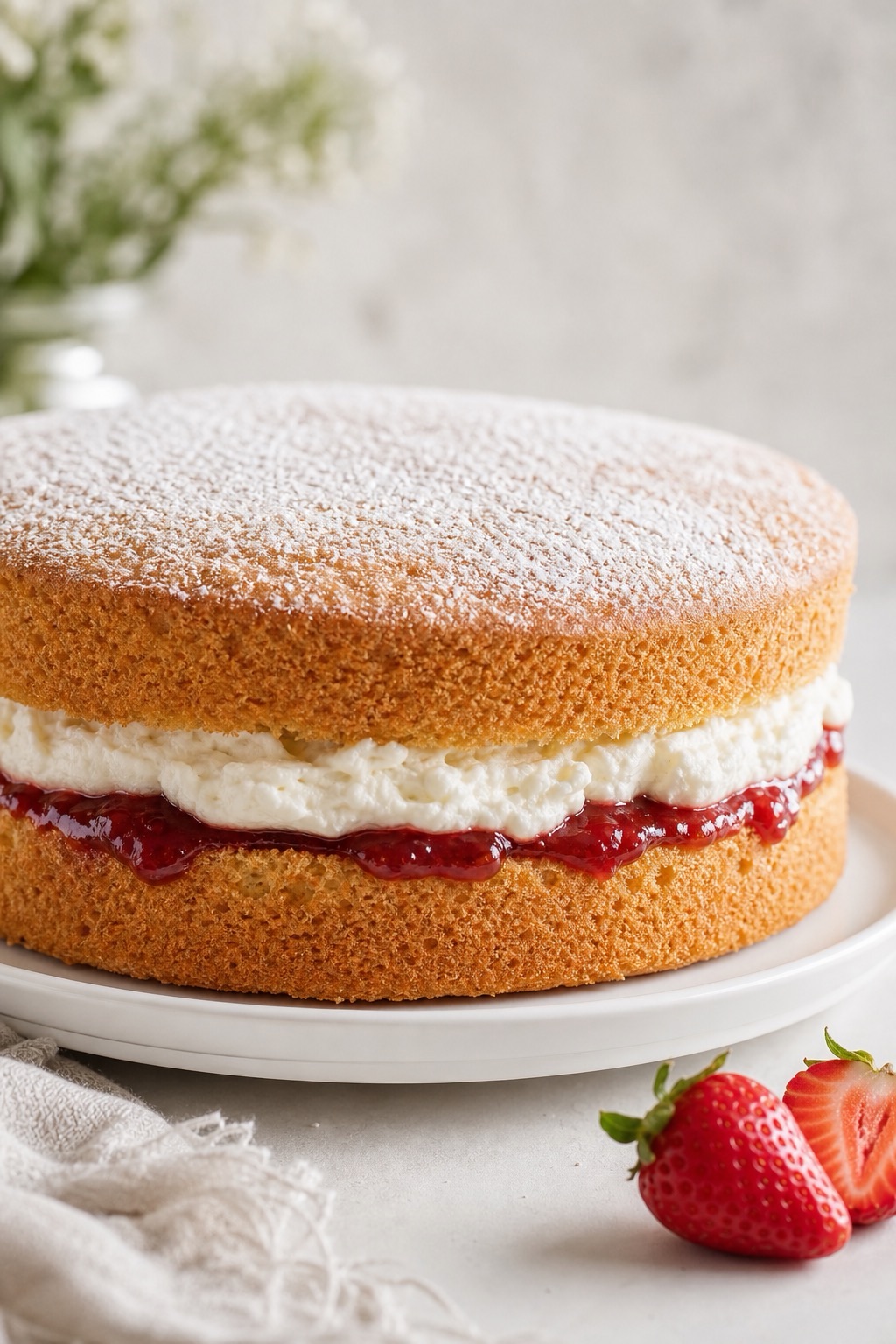
There’s something wonderfully nostalgic about a classic Victoria sponge cake – light golden layers, a generous spread of strawberry jam, and soft clouds of cream, all finished with a delicate dusting of icing sugar.
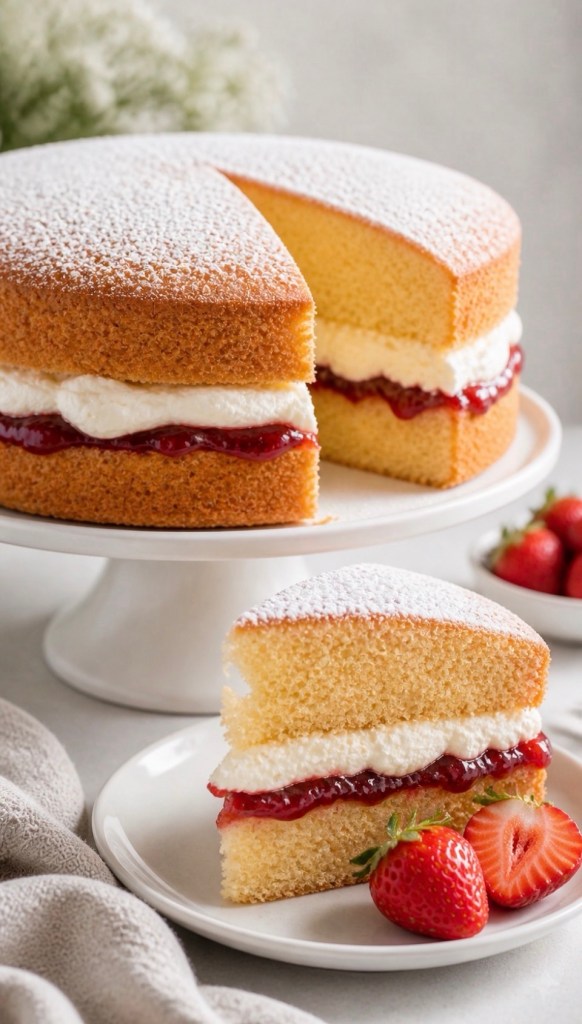
It’s simple, elegant, and feels like a warm invitation to sit down with a proper cup of tea.
This version uses both UK and US measurements, so no matter where you’re baking from, you can follow along easily. It’s a brilliant go‑to recipe for afternoon tea, birthdays, or whenever you fancy a traditional British bake that never goes out of style.
What Is a Victoria Sponge?
A Victoria sponge (or Victoria sandwich) is a traditional British cake made from two layers of vanilla sponge, sandwiched together with jam and often whipped cream. It’s named after Queen Victoria, who was said to enjoy a slice with her afternoon tea.
What makes it special is its simplicity. There’s no heavy frosting or elaborate decoration – just soft, buttery sponge, a bright layer of jam, and a creamy filling. When you cut into it and see those neat layers, it just feels like home on a plate.
Ingredients (UK & US Measurements)
This recipe makes one 20 cm / 8‑inch two‑layer cake.
For the sponge
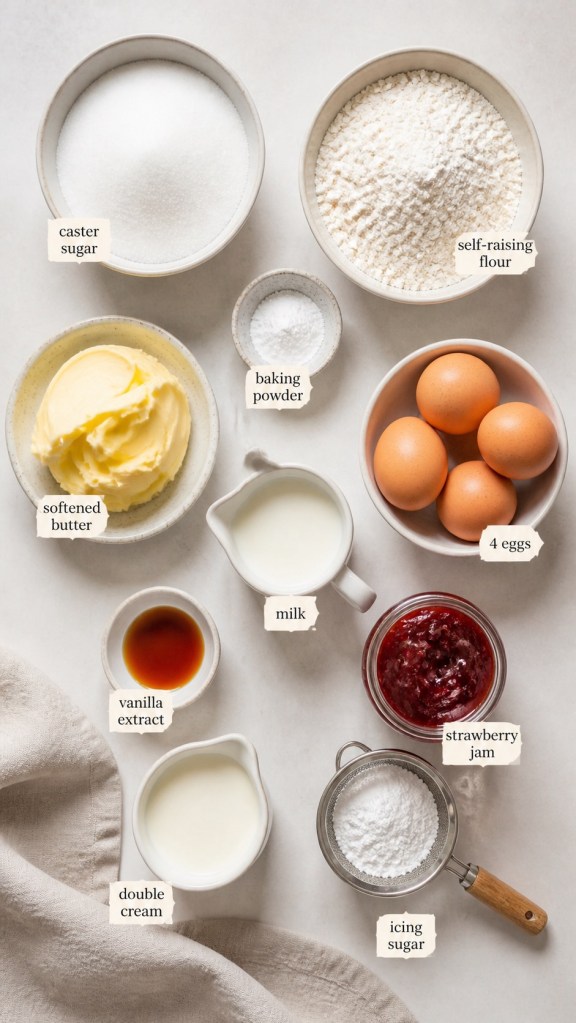
• 200 g caster sugar (1 cup superfine sugar)
• 200 g unsalted butter, softened (14 tbsp / 1 ¾ sticks)
• 4 medium eggs (UK) or 4 large eggs (US)
• 200 g self‑raising flour (1 ⅔ cups self‑rising flour)
• 1 tsp baking powder
• 2–3 tbsp milk (2–3 tbsp whole milk), as needed for consistency
• 1 tsp vanilla extract
For the filling
• 200 g strawberry jam (about ¾ cup)
• 150 ml double cream, whipped (⅔ cup heavy or whipping cream, whipped)
• Icing sugar (powdered sugar) for dusting the top
Equipment
• Two 20 cm sandwich tins (two 8‑inch cake pans)
• Baking paper (parchment) for lining
• Mixing bowl, electric mixer, spatula, wire rack
Step‑by‑Step Method
- Prepare your tins and oven
Preheat your oven to 180°C (160°C fan) / 350°F.
Grease the bases and sides of your two 20 cm / 8‑inch tins, then line the bases with baking paper.
Taking a moment to line the tins properly really helps the sponges rise evenly and release cleanly, which is especially important if you want neat layers for photos or video.
- Cream the butter and sugar
In a large mixing bowl, beat the softened butter and caster sugar together until very pale and fluffy. This usually takes around 3–4 minutes with an electric hand mixer or a stand mixer.
This step is key: creaming properly incorporates air into the mixture and gives you that light, soft crumb that makes a Victoria sponge so lovely to eat.
- Add the eggs and vanilla
Add the eggs one at a time, beating well after each addition so the mixture stays smooth. If it starts to look a little curdled, you can mix in a spoonful of the flour to bring it back together.
Stir in the vanilla extract. It adds a gentle sweetness that lifts the flavour without overpowering the jam and cream.
- Fold in the dry ingredients
Sift the self‑raising flour and baking powder together, then gently fold them into the bowl using a spatula or large metal spoon.
Add the milk a tablespoon at a time until the batter reaches a soft “dropping” consistency – when you lift the spoon, the mixture should fall off slowly in dollops rather than running or sticking.
- Bake the sponges
Divide the batter evenly between the two prepared tins and level the tops so they bake flat.
Bake in the preheated oven for 20–25 minutes, or until the sponges are risen, lightly golden and a skewer inserted into the centre comes out clean. Try not to open the oven door too early, as that can cause the cakes to sink.
- Cool completely
Leave the cakes in their tins for about 5 minutes, then carefully turn them out onto a wire rack. Peel away the baking paper and allow the sponges to cool completely.
If the cakes are even slightly warm when you add the filling, the cream can melt and the top layer may slide, so cooling fully is worth the wait.
- Fill with jam and cream
Once the sponges are fully cool, place one layer upside down on your serving plate or cake pedestal.
• Spread an even layer of strawberry jam over the base.
• Whip the double cream to soft peaks and spoon it over the jam, spreading gently towards the edges.
Carefully place the second sponge on top, right‑side up, and try not to press down too firmly so you don’t squeeze out all the filling.
- Finish and serve
Just before serving, sift a light dusting of icing sugar over the top of the cake.
Slice with a sharp knife to reveal the layers of sponge, jam and cream. This is the perfect moment for a close‑up photo or video: one slice on a small plate in front, showing off the crumb and filling, with the rest of the cake proudly on its pedestal behind.
Tips for the Perfect Victoria Sponge
• Use room‑temperature ingredients: Butter and eggs blend more easily and help create a smoother, lighter batter.
• Don’t overmix once the flour goes in: Gentle folding keeps the sponge tender and prevents it turning dense.
• Measure accurately: For sponge cakes, weighing ingredients (especially flour and sugar) makes a big difference to the final texture.
• Watch the bake time: Start checking from around 20 minutes; over‑baked sponge will feel dry rather than soft and springy.
• Serve fresh: This cake is best on the day it’s filled, when the sponge is soft and the cream is fresh and light.
Variations on This Traditional British Cake
Once you’re comfortable with the classic, you can easily play with a few variations:
• Swap strawberry jam for raspberry, cherry or mixed berry jam.
• Add a handful of fresh sliced strawberries to the filling for extra colour and texture.
• Use vanilla buttercream instead of whipped cream if the cake needs to sit out for a while or travel.
• Add a little lemon zest to the sponge for a subtle citrus twist.
Perfect for Afternoon Tea – And Social Media
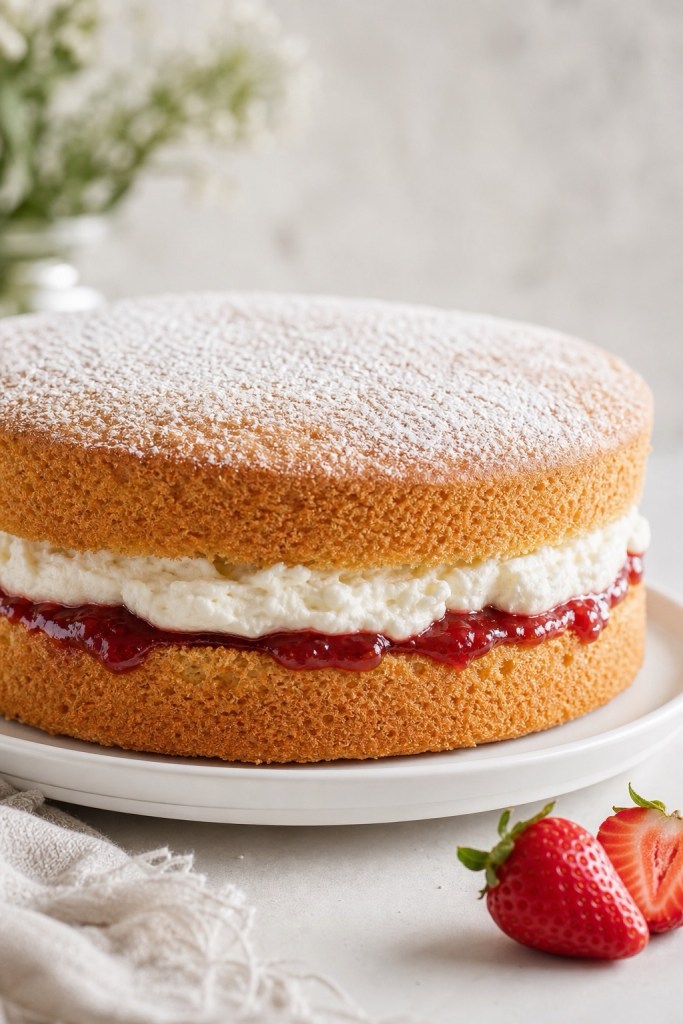
This classic Victoria sponge is ideal for afternoon tea, family celebrations or a simple weekend treat. It also happens to be incredibly photogenic, especially when you show off the crumb and layers in a close‑up slice.
If you share your bake on social media, let people know whether you’re team “jam only” or “jam and cream” and invite them to vote in the comments – it’s a fun way to spark conversation around this traditional British favourite
 LCChaosandhome