Tag: #Wellness

  • Thought for the day 3 July 2026

    Thought for the day 3 July 2026

    What do you do to improve your sleep?

    When Your Brain Thinks Bedtime Is Showtime
    You know that moment when your head hits the pillow and suddenly your brain goes:
    “Right. Now we plan our entire life, relive every awkward conversation since 1998, and maybe redesign the kitchen.”
    Lovely.
    Some people drift off peacefully. Meanwhile, the rest of us are hosting a full-blown TED Talk in our own heads at 2am.
    And if, like me, it runs in the family — well, it’s basically genetic chaos. My dad has it. My daughters have it. We don’t pass down jewellery or heirlooms… we pass down overthinking.
    Honestly, it’s the bane of my life.
    Tried It All? Same.
    Meditation? Done it.
    Warm bath? Boiled myself like a human teabag.
    Reading? Finished three chapters and somehow became more awake.
    Herbal tea? At this point I could open my own apothecary.
    Essential oils? I smell incredible. Still not asleep.
    At some stage, you just lie there thinking:
    “Right. Sleep is clearly in the lap of the gods. I’ll just… wait here then.”
    The Plot Twist No One Tells You
    The harder you try to sleep, the less it happens.
    It’s like your brain senses desperation and goes,
    “Oh, you need sleep? Absolutely not.”
    So instead of trying to switch my brain off (impossible), I’ve started… distracting it like a toddler.
    What Actually Helps (Somewhat — Let’s Be Real)

    1. The “Get It Out of My Head” List
      Before bed, I write everything down. And I mean everything.
      Jobs, worries, random thoughts, “buy dishwasher tablets,” all of it.
      It’s basically telling your brain:
      “You can stand down now. I’ve saved the file.”
    2. Background Noise for the Overthinking Olympics
      Silence is dangerous. That’s where the thoughts get loud.
      I stick on a podcast or audiobook I’ve already heard — nothing gripping, just enough to gently hijack my brain.
      Think “mildly interesting, not life-changing.”
    3. Stop Checking the Time Like It Owes You Money
      Nothing good has ever come from looking at the clock at 2:17am.
      It’s always just:
      “Fantastic. I’ve got 3 hours and 12 minutes left to panic about not sleeping.”
      Avoid.
    4. Get Up (Yes, I Know. Annoying.)
      If it’s really not happening, I get out of bed.
      Low lights, no drama, something boring.
      It stops your brain associating bed with frustration… and mild rage.
    5. Accept That Some Nights Are Just a Write-Off
      This one’s a game-changer.
      Some nights, sleep just doesn’t happen properly. And fighting it only makes it worse.
      Oddly, the minute you stop trying so hard, your body sometimes goes,
      “Oh… we’re relaxed now? Great. Lights out.”
      The Family Curse (or Superpower?)
      Having a brain that won’t switch off is exhausting… but it’s also the same brain that thinks creatively, solves problems, and comes up with ideas at lightning speed.
      Shame it chooses 1:43am to do its best work.
      Final Thought
      If you’re lying there night after night thinking you’re the only one — you’re not.
      There’s a whole club of us, wide awake, overthinking, rearranging our lives in the dark.
      We’re just… very, very tired.
  • Book Review: The Strange, Unpredictable Journey of “Nine Perfect Strangers” by Liane Moriarty

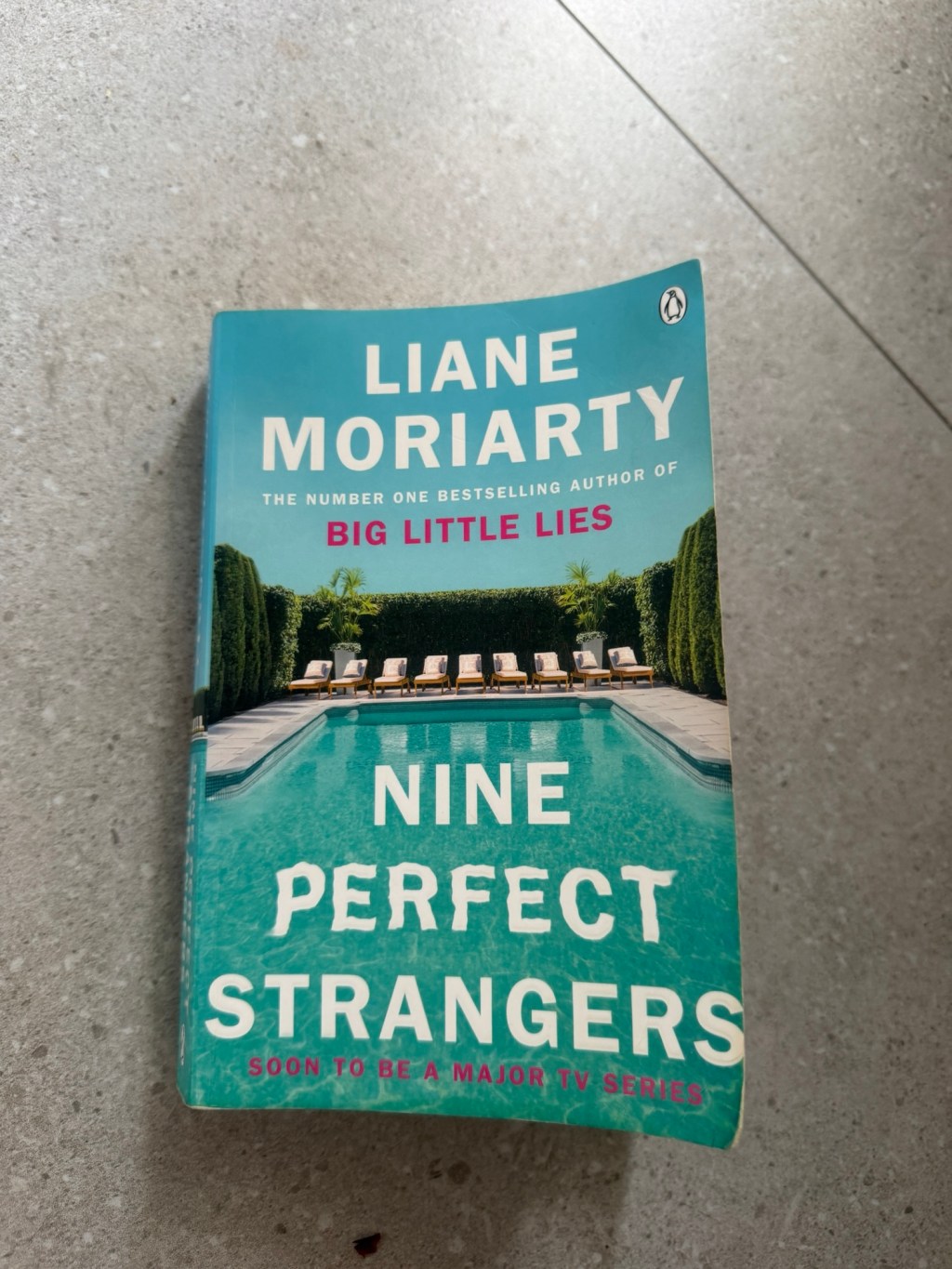
    Book Review: The Strange, Unpredictable Journey of “Nine Perfect Strangers” by Liane Moriarty

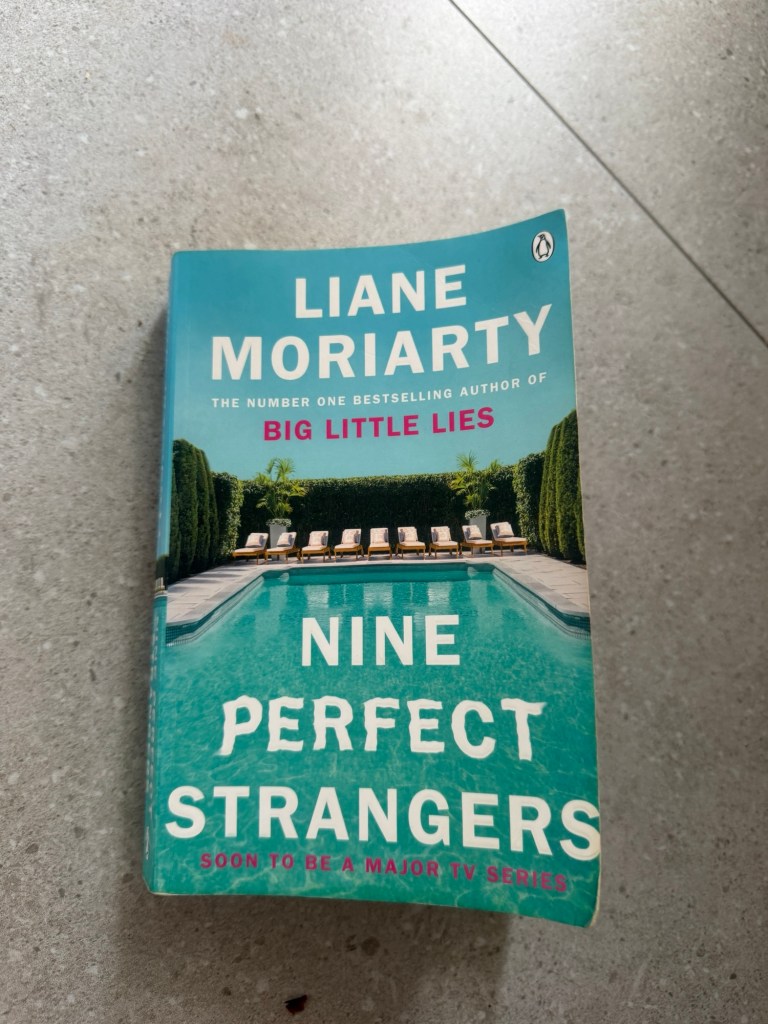
    If you’ve ever walked into a bookstore and picked up a novel based on a stunning, inviting cover, only to find the contents were not at all what you expected, you’ve probably experienced the same whiplash I did with Liane Moriarty’s Nine Perfect Strangers.

    I recently finished the book, and while I have some strong feelings about where it went off the rails, it ultimately earned a solid 4 out of 5 stars from me. Here is my take on this wild, wellness-retreat-gone-wrong.

    The Hook: A Strong Start

    The premise is undeniably gripping. We follow nine individuals as they arrive at Tranquillum House, an ultra-exclusive, remote health resort in Australia. Each character is beautifully drawn, detailed, and incredibly engaging. Whether it’s a struggling romance novelist or a family grappling with deep, collective grief, Moriarty does a masterful job of setting the stage. For the first act, the book is a masterclass in character-driven drama. The tensions are subtle, the personalities are sharp, and I was completely hooked on the group dynamics.

    The Turning Point: When It Goes Off the Rails

    However, about midway through, the story hits a major speed bump. The retreat is run by Masha, an enigmatic director with a vision for “transformation” that is, to put it mildly, radical.

    The story began to go downhill for me the moment the guests started being dosed with psychedelics.

    While I understand the author was aiming for a high-stakes psychological shift, it felt like the narrative lost its drift here. The grounded, relatable human drama was suddenly replaced by chaotic, forced scenarios. The pacing slowed to a crawl, and the plot became increasingly confusing as Masha’s own grip on reality slipped. What started as a fascinating study of human vulnerability turned into something much more erratic and, at times, difficult to follow.

    A Deceptive Cover

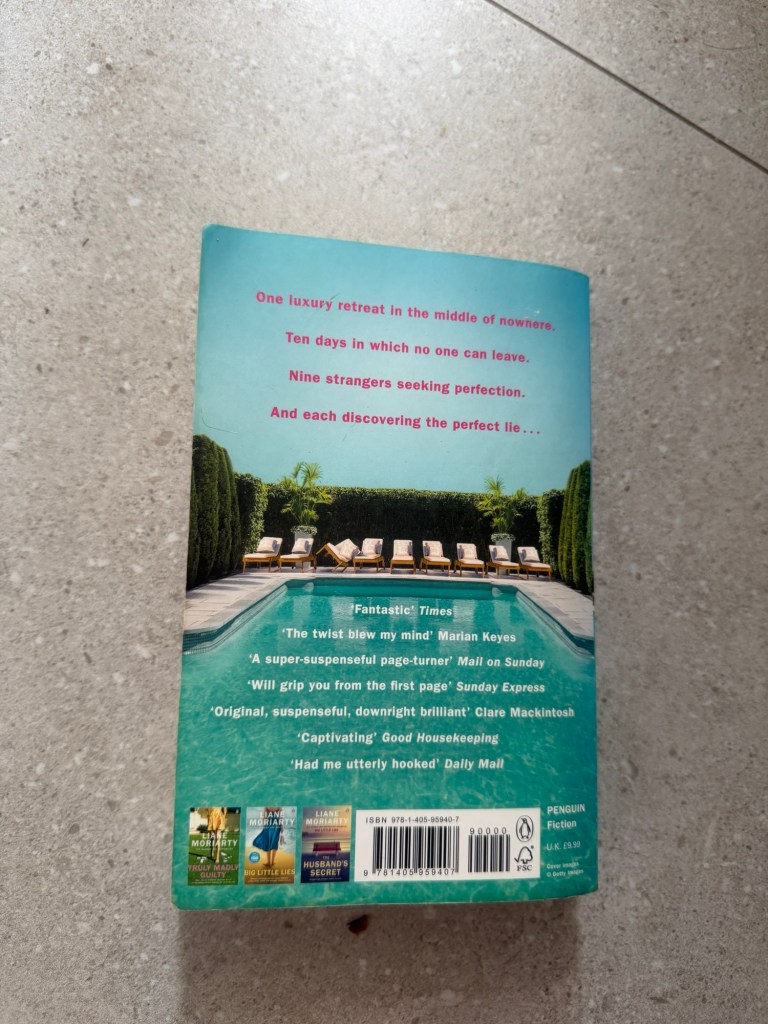
    It’s also worth mentioning the presentation. I couldn’t help but feel that the book’s cover art slightly misrepresents the tone of the story inside. The aesthetic promises one kind of experience, but once the story veers into that psychedelic, chaotic middle section, it’s a total shift that might catch new readers off guard.

    The Redemption

    Despite the “strange” middle section and the pacing issues that followed, I’m glad I stuck with it. Moriarty managed to pull everything back together for a very strong, satisfying finish. The ending redeems the slower stretches, providing the resolution the reader is craving and bringing the characters’ arcs to a meaningful close.

    Final Verdict

    Nine Perfect Strangers is a bit of a rollercoaster. It’s a book of two halves: a brilliant, character-focused setup and a confusing, erratic middle that eventually finds its way home. If you can push through the chaos of the retreat’s “experimental” phase, the payoff is well worth the effort.

    Rating: ★★★★☆

    Have you read Nine Perfect Strangers? Did you enjoy the shift in tone, or did you find the second half as confusing as I did? Let me know in the comments!

    You can buy from Amazon

    https://amzn.to/4fNciJu

    This post may contain affiliate links, which means I may earn a small commission if you purchase through them — at no extra cost to you. As an Amazon Associate, I earn from qualifying purchases

  • Good Vibes Only: That Time Lance and I Got “Vibrated” Back to Life

    Good Vibes Only: That Time Lance and I Got “Vibrated” Back to Life

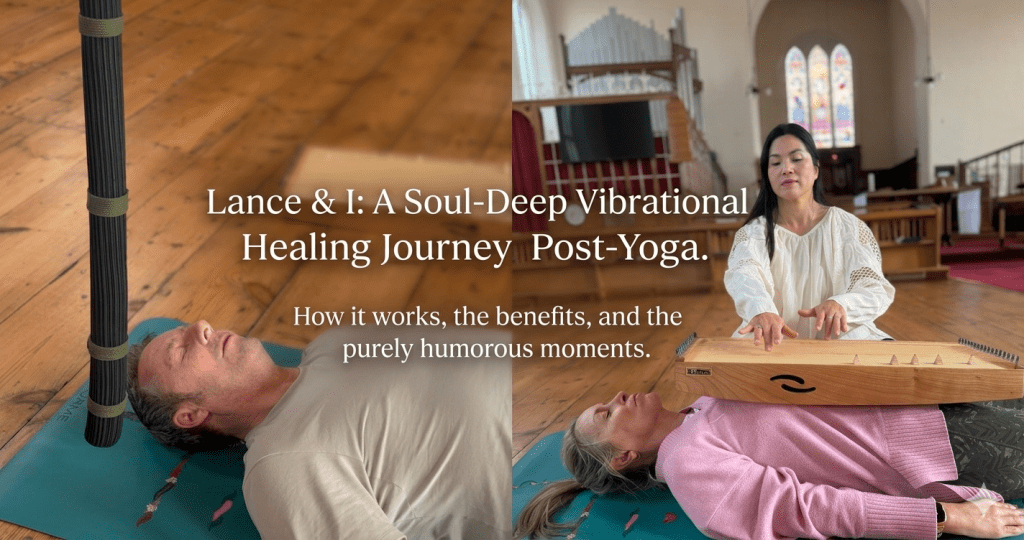
    Lance and I go to yoga weekly and usually end our session with a standard Savasana and a heated debate over where to get smoothies. But this week, things got… resonant. After rolling up our mats, we decided to dive headfirst (literally, in Lance’s case) into a vibrational healing session. If you’re wondering if that involves a lot of humming and mysterious wooden instruments, the answer is a resounding yes.

    What Exactly is Vibrational Healing?

    For the uninitiated, vibrational healing (or sound therapy) is based on the idea that everything in our bodies—from our cells to our over-caffeinated heartbeats—vibrates at a specific frequency. When we’re stressed, sick, or just “off,” those frequencies get out of whack.

    The goal? Use sound and physical vibration to “retune” the body. Think of it like a software update for your soul, but with fewer “remind me later” buttons.

    The Highlights (and the Humorous Bits)

    1. The Monochord “Chest Press”

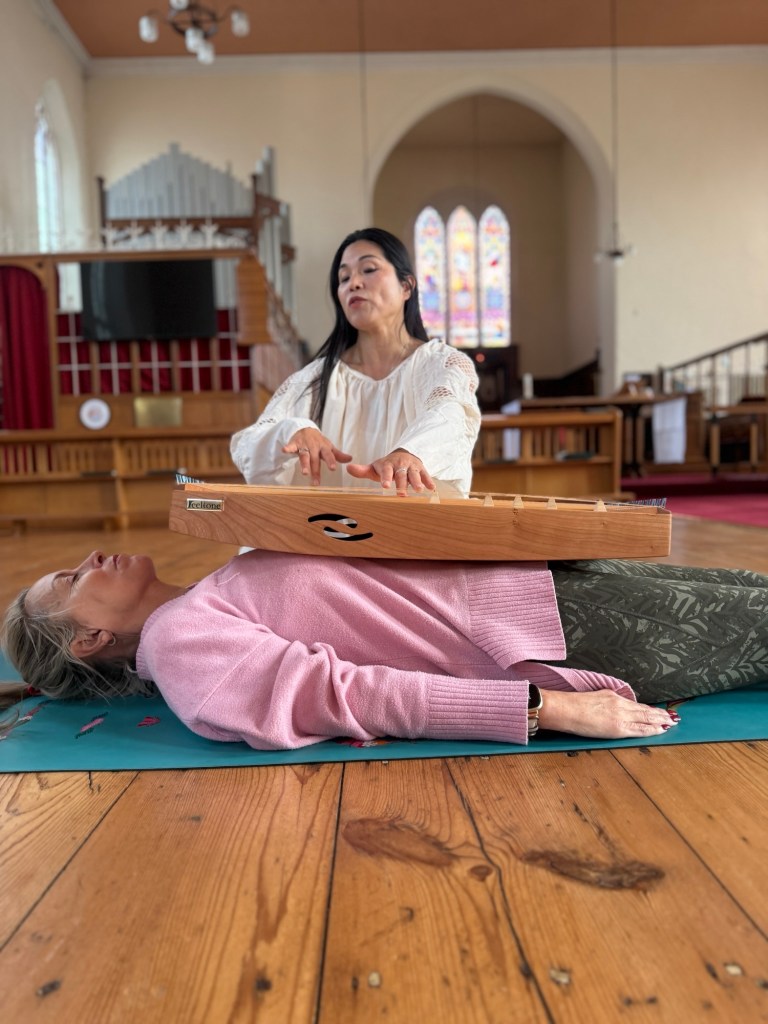
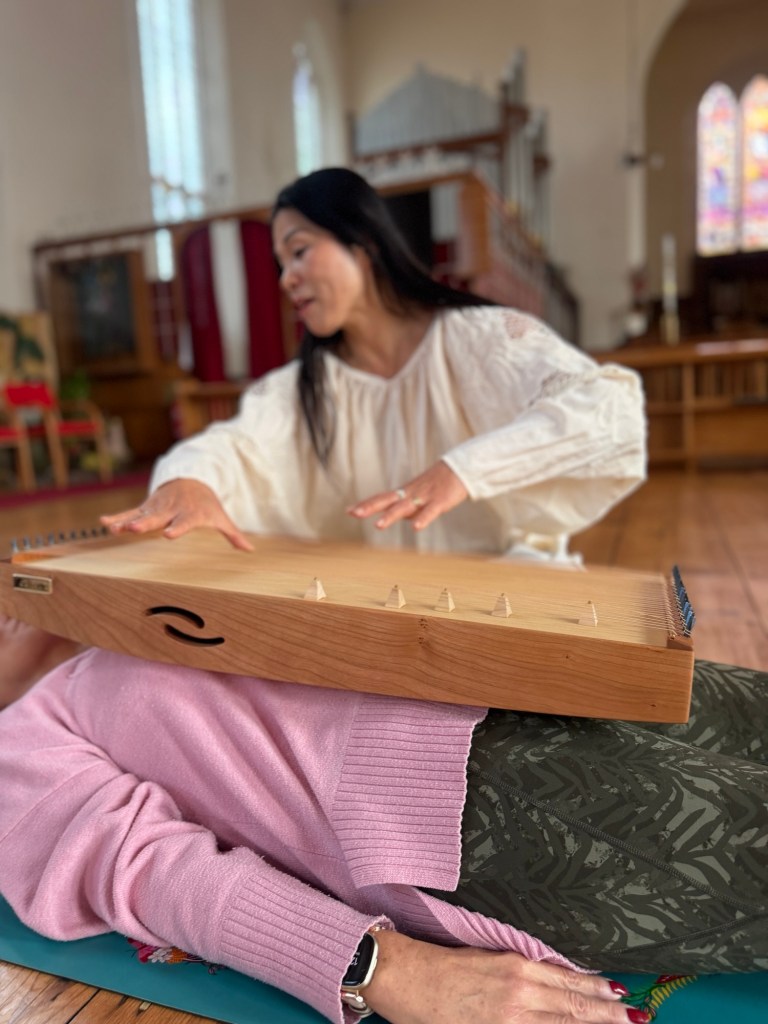
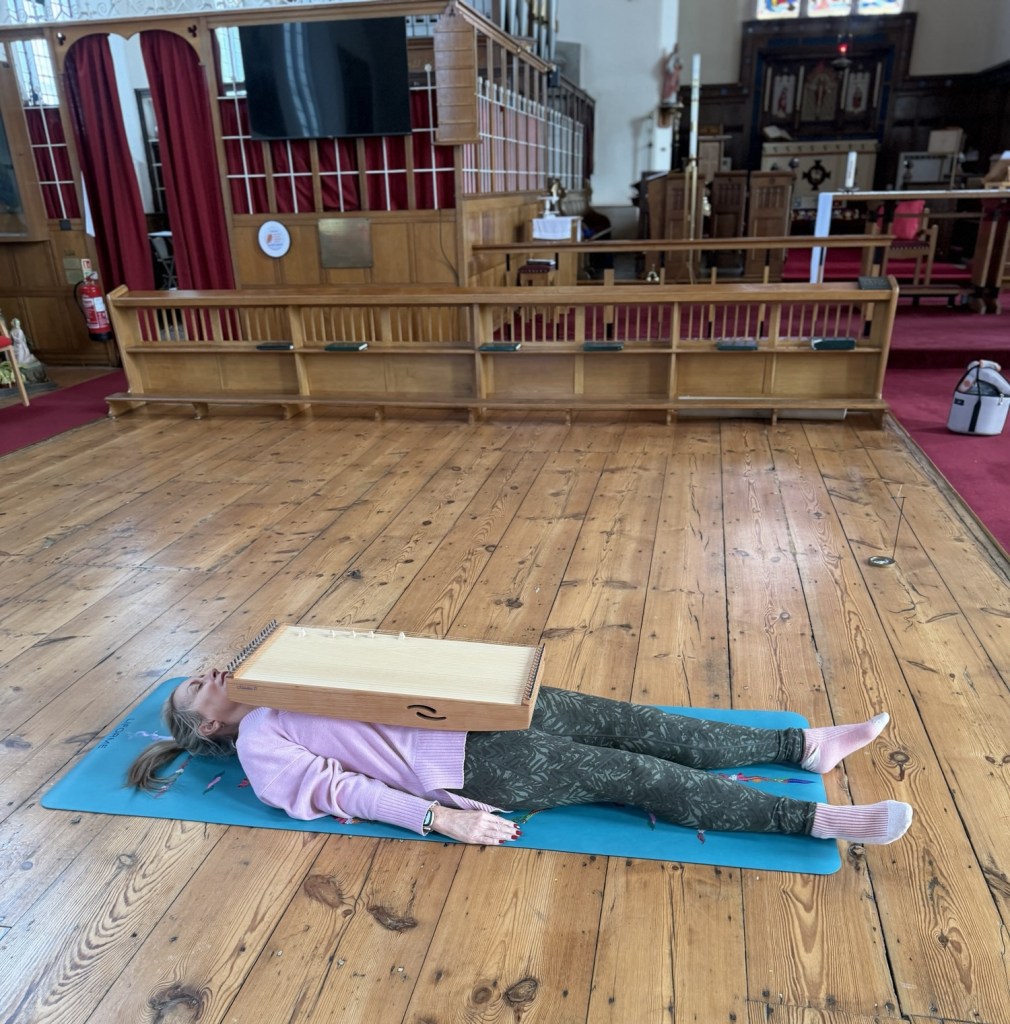
    In the first photo, you’ll see me lying flat while our practitioner placed a Monochord (that sleek wooden stringed instrument) directly on my chest.

    • The Sensation: It’s hard to describe, but it feels like your ribcage is being turned into a cello. As she plucked the strings, the sound didn’t just go into my ears; it traveled straight through my sternum.

    • The Benefit: This is incredible for “heart opening” and clearing out emotional congestion. Honestly, it vibrated the stress of my Monday morning right out of my toes.

    2. Lance and the “Tube of Zen”

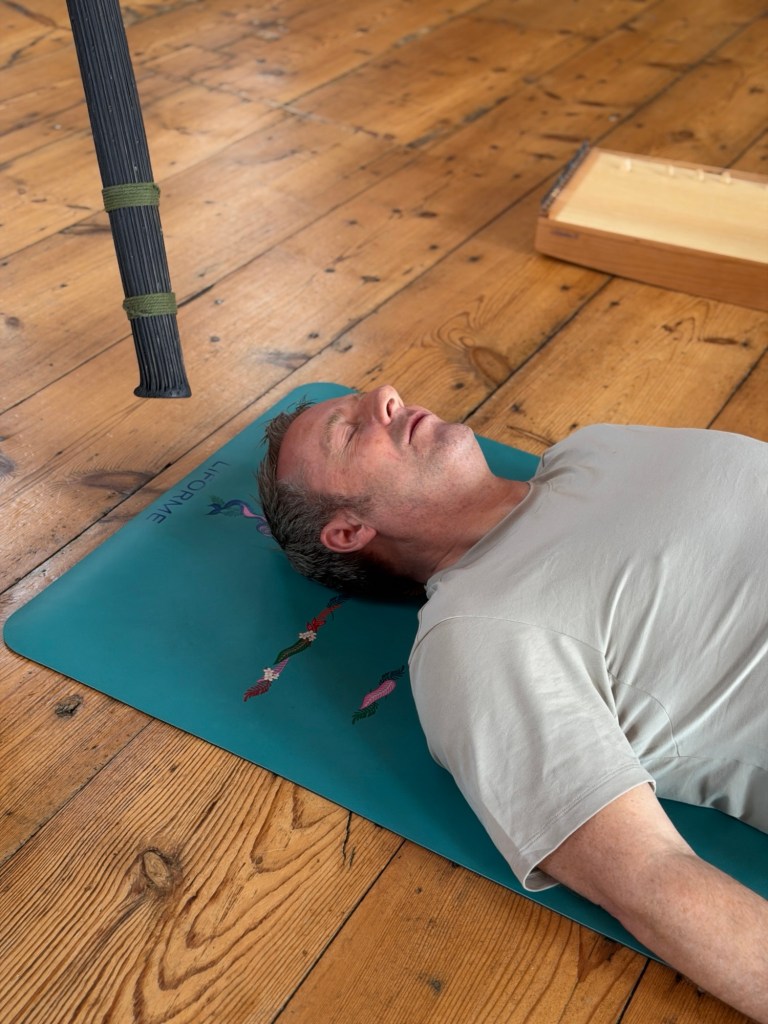
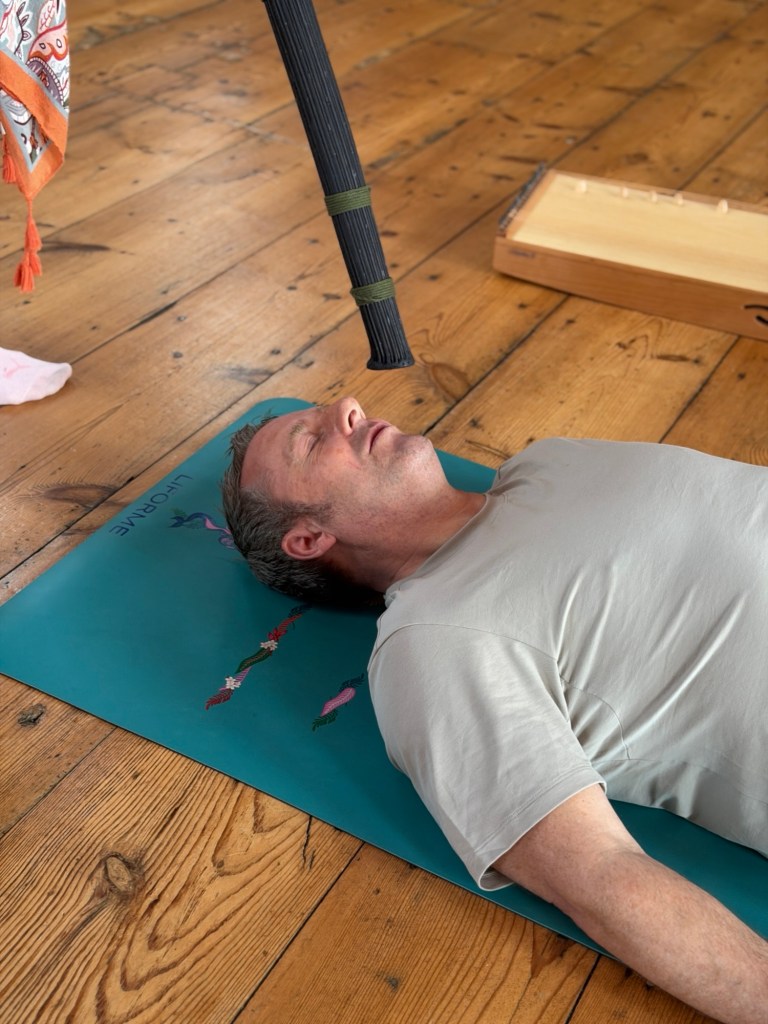
    Then there’s Lance. As you can see in the photo, he had a rain stick tube positioned right over his “Third Eye.”

    • The Look: I won’t lie—from my angle, it looked like he was being beamed up to a very chill spaceship.

    • The Benefit: This targeted sound application is meant to calm the nervous system and quiet the “monkey mind.” Judging by the fact that Lance didn’t move a muscle for twenty minutes, I’d say his monkey mind went on a full-blown vacation. And he didn’t snore which is a result!

    Why You Should Try It

    If you’re feeling “stuck” or just need a break from the noise of the world, here’s why we’re now vibrational healing converts:

    • Deep Physical Relaxation: It reaches spots that a foam roller just can’t. The vibrations act like a cellular massage.

    • Mental Clarity: It’s like hitting the “reset” button on your brain. I walked out feeling like I’d just had eight hours of sleep and a very polite epiphany.

    • Intimate Connection: Doing this with a partner or friend adds a layer of shared peace. There’s something special about being in a room that quite literally hums with good energy.

    The Verdict

    We walked into the session as two slightly stiff yoga students and walked out feeling like a couple of well-tuned Stradivarius violins. If you have the chance to let someone play a wooden instrument on your chest or point a sound tube at your forehead—do it.

    Your cells will thank you, and honestly, the “zen glow” is a much better look than “post-work stress.”

    Have you ever tried sound or vibrational healing? Did you feel like a new person or just a very musical human? Let us know in the comments!

  • Hardly Svelte, Wholly Determined

    Lance Martinus-Lewis

    I am going to immerse myself in unfathomable serenity and instill energy, regain empowerment, and accelerate momentum—not tomorrow or the day after, but on a pinpointed day.

    I would imagine a lot of people can relate to this.

    Communicating with people is extraordinarily hard. We don’t really speak to listen. In truth, influencing others was never difficult for me.

    In design (Adobe Photoshop), something I started 25 years ago, I was able to give advice born from repeatedly trying. In photography, people asked for advice inspired by the framed work that I was very fortunate to have adorning their walls.

    In fitness, when people told me they could never do a marathon, I had been there.

    My running advice was born from the challenges I encountered by doing it after hobbling around on crutches for three years. Moreover, it’s my perspective. I believe there is zero difference, analytically, in the first ten steps and the last of 26.2 miles. If you know of any, feel free to let me know. It’s the simplicity of this rhetoric that got me—a hardly svelte man—around 17 half-marathons and 3 marathons.

    weights and fitness

    I haven’t been to a Dr’s in 13 years. Perhaps that allocates me to “It might be working” Philospophy. If you asked my advice on weights and fitness, it would be given from the perspective of stepping into a gym at 23 and varying degrees of “lax” and “on-and-offs,” but mostly, to be very fair, pure tenacity and discipline.

    I know exactly where I am in the universe, and the world has taught me repeatedly—and ingrained in me—the pointlessness of assuming any kind of reasurence of safety from my fellow citizens bar one fabulous soul partner. My safety, my well-being, my fitness, and my psychological well-being aren’t enhanced by “this” decade’s emphasis on mental healths sudden importance or an awareness of how it presents. I solidly believe that just because you identify what impediment you suffer from it doesn’t mean that the solutions are more accessible. In fact, it means more people readily roadblock self-progress by utilizing what the medical fraternity christened it (if indeed it was confirmed by a Dr) as reasoning not to develop the skills to overcome problems incurred.

    Moreover, just because so many people can now identify the names of their fluctuating mental health, doesn’t mean they all try to overcome it. I am responsible for mine. Now, I can wholeheartedly acknowledge that, and given I have done so comfortably, I will set about initiating the changes required. It will start with the staple that first introduced me to confidence when I was 23: exercise.