Category: Uncategorized

  • The Little Bread Maker That’s Earned Its Place on My Worktop

    The Little Bread Maker That’s Earned Its Place on My Worktop


    There’s something really lovely about making your own bread at home, isn’t there? It feels homely before you’ve even sliced into it. The smell alone is enough to make the kitchen feel cosy.


    I’ve been using the Panasonic SD-PN100 Automatic Mini Bread Maker, and I have to say, I’m really pleased with it. I didn’t want a huge bread maker taking over the worktop, and this one is such a nice compact size. i had a larger one years ago and it was heavy and unsightly and ended up stuck in a cupboard used only a handful of times . This is different- it sits neatly on the counter without looking bulky, which is a big thing for me because kitchen space is precious.
    It’s designed to be a smaller, more compact bread maker for everyday kitchens. It makes a smaller loaf of around 400g, which is ideal for individuals and couples who want fresh bread without making too much at once.
    For us, it’s just the right amount. A loaf lasts around two days for a couple, so it gets eaten while it’s still fresh.
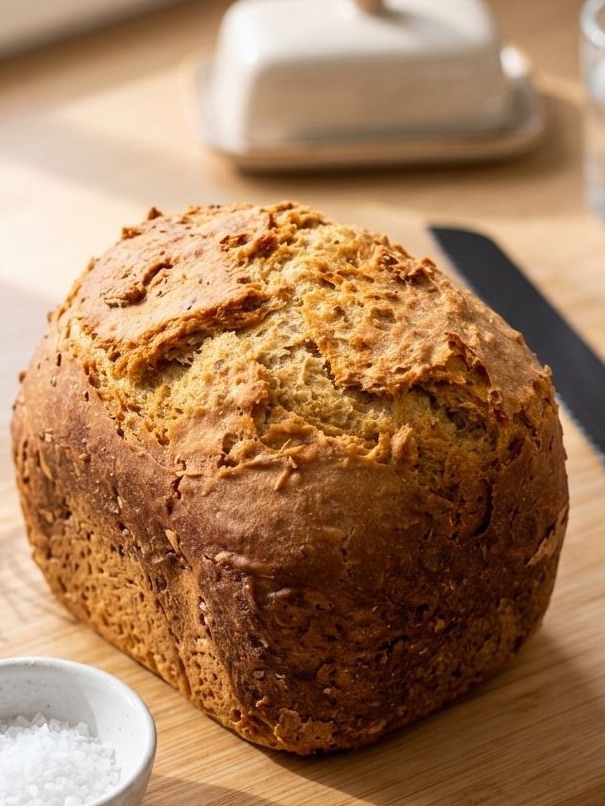
    I much prefer that to buying a big supermarket loaf and then finding the last few slices looking sad at the back of the bread bin.
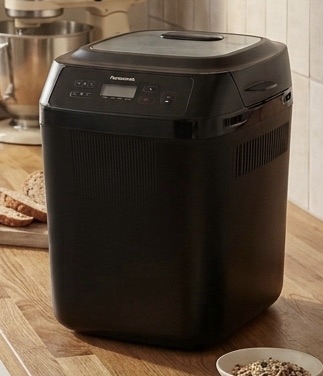
    So Quick and Easy
    One of the things I love most is how simple it is. I’m all for homemade, but I don’t always want a big faff. With this, you just add the ingredients into the bread pan, choose the setting, press start, and let it get on with it.


    No kneading by hand. No flour everywhere. No standing around wondering whether the dough has proved enough.
    The machine does the mixing, kneading, proving and baking for you. It really does feel like a little kitchen helper.
    A loaf can be ready in under two hours, which is brilliant when you suddenly fancy fresh bread but haven’t planned ahead. I love that it’s quick enough to feel practical, not just something you use once and then put in the cupboard forever.
    And honestly, nothing beats the smell of fresh bread baking. It’s one of those smells that makes everyone wander into the kitchen asking, “Is that bread?” There’s just something comforting about it.

    Why I Wanted to Make More Bread at Home

    One of the main reasons I wanted to make more bread myself is because I like knowing what’s going into it. I’m not saying I’ll never buy supermarket bread again, because real life is real life, but I do think it’s nice to have the choice. There are so many different types of flour available so no excuses to get bored . We also love soda bread which is so hard to find where we live, none of the larger supermarket Sell it, only Marks & Spencer’s and it’s always sold out!


    A basic homemade loaf can be really simple: flour, water, yeast and salt. But when you look at some supermarket bread labels, the ingredient list can be much longer.
    A typical UK supermarket white loaf may include wheat flour, water, yeast and salt, but it can also include vegetable oils, soya flour, preservatives such as calcium propionate, emulsifiers such as E472e and E481, and flour treatment agents such as ascorbic acid. These ingredients are often used to help with softness, texture, shelf life and consistency, but I personally like being able to make a simpler loaf at home.
    Salt is another thing that can creep up on us. Adults are generally advised not to have too much salt, and a lot of the salt we eat can come from packaged and everyday foods such as bread, breakfast cereals, meat products and ready meals. So when I make my own bread, I like that I can control how much goes in.
    It just feels better knowing exactly what I’ve added.

    My Favourite Bread Additions

    I’ve been making mine with pumpkin seeds and chia seeds, and I absolutely love the texture they give. It turns a simple loaf into something a bit more special. Pumpkin seeds add a lovely nutty flavour and a little crunch. They also contain protein, magnesium, potassium, zinc, iron and healthy fats. I like that they make the bread feel more filling too. Chia seeds are tiny, but they’re such an easy way to add extra goodness. They contain fibre, omega-3 fatty acids, iron, calcium and antioxidants. They disappear nicely into the loaf, so you’re getting the benefit without changing the bread too much. For a lighter bread I use a tablespoon or so of powdered milk which makes it a little softer. I’ve also been using raw whipped honey instead of refined white sugar. It gives the bread a gentle sweetness and a lovely flavour. Honey is still a sugar, so I wouldn’t call the bread sugar-free, but I do like that I’m not using refined white sugar. Raw honey is less processed than many standard sweeteners and can contain natural antioxidant compounds.
    I also use Himalayan salt. I like the taste, and I like the little touch of pink colour when I’m measuring it out. Himalayan salt is mostly similar to regular salt, but it also contains small amounts of trace minerals which give it the pink colour. Like all salt, it still needs to be used in moderation, but I do enjoy the flavour.
    Handy Features
    The Panasonic SD-PN100 has 18 automatic programmes, including bread settings, gluten-free settings, dough settings and sweet settings. I like that it’s not just for one basic loaf. You can play around with different types of bread, doughs and sweeter bakes.
    It can be used for things like wholewheat bread, brioche, pizza dough, pasta dough, gluten-free options and even homemade jam. I haven’t worked my way through everything yet, but I love knowing I’ve got options.
    You can also choose from light, medium or dark crust settings, which is handy because everyone has their own idea of the perfect crust. Some days I want a softer loaf, and other days I like it a bit darker and more crusty.
    It also has a timer that can be set, so you can get the ingredients ready and have the bread finished when it suits you. That’s such a useful feature if you want fresh bread ready in the morning or later in the day.
    It comes with a measuring cup and measuring spoon too, which is helpful because bread making does like a bit of accuracy. It keeps everything simple, especially if you’re just getting into making bread at home.
    One thing to note is that this model does not have an automatic yeast dispenser or raisin and nut dispenser, so seeds and extras need to be added manually. That doesn’t bother me at all because I like adding my pumpkin and chia seeds myself.


    Less Waste, Less Packaging


    Another thing I really like is that making bread at home means I’m not bringing home another plastic supermarket bread bag every time. I store my homemade bread in cotton drawstring bags, which feels much nicer and less wasteful.
    It’s such a simple little swap, but it makes me happy. Fresh homemade bread, stored in a reusable cotton bag, with no plastic packaging to throw away.
    Because the loaf is a smaller size, we actually eat it while it’s fresh. So there’s less food waste and less packaging waste. That feels like a win-win to me.
    Is It Cheaper?
    Once you’ve got your flour, yeast, salt and favourite extras in the cupboard, making a loaf at home can be really inexpensive. I like that I can make something fresh and lovely without paying bakery prices.
    Of course, the seeds, honey and extras add a little bit, but you’re choosing exactly what goes in. For me, that’s worth it.
    It also stops those little top-up trips to the shop where you go in for bread and somehow come out with ten other things. We’ve all done it.

    Final Thoughts

    I’m really pleased with the Bread Maker. It’s compact, quick, simple to use and perfect for a smaller household.
    I love that it doesn’t take up much room on the worktop. I love that a loaf is ready in under two hours. I love that I can just throw the ingredients in and let it do the hard work.
    Most of all, I love knowing what’s in my bread. Pumpkin seeds, chia seeds, raw whipped honey, Himalayan salt, and no refined white sugar. Just a fresh little loaf made exactly how we like it.
    For a couple, it’s the perfect size. For a smaller kitchen, it’s practical. And for anyone who loves the smell of fresh bread, it’s such a treat.
    Because really, is there anything nicer than walking into the kitchen and smelling a fresh loaf baking?

    Shopping list
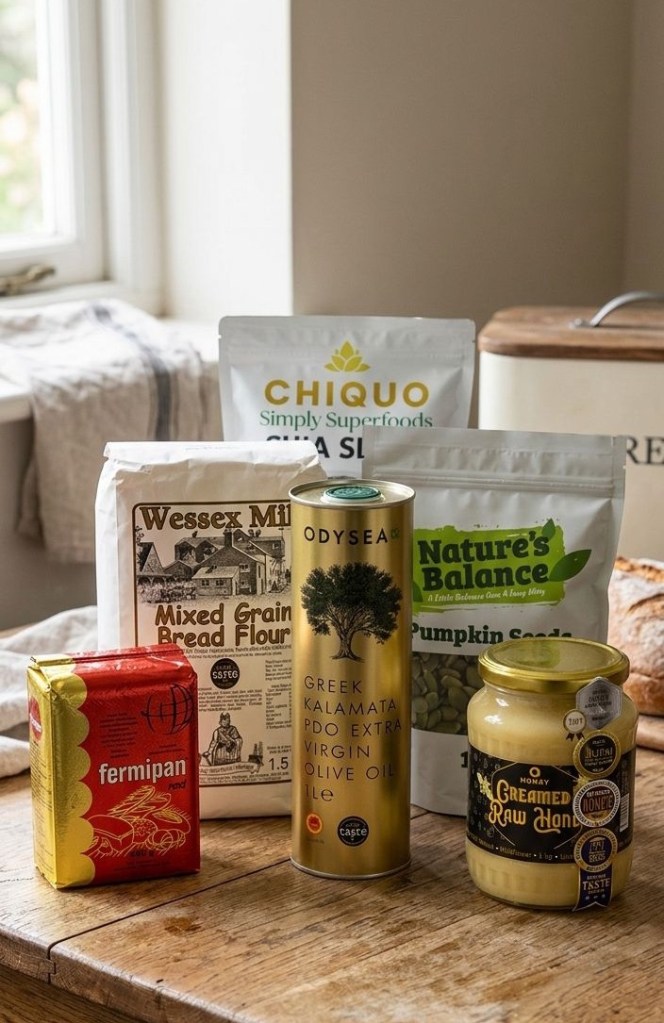
    These are the things I use, mainly from Amazon because bulk buying seeds etc works out so much cheaper and you have a greater variety than you can get In the shops . I am an Amazon associate so if you purchase I get a tiny amount which helps keep the cats in food !

    Panasonic bread maker

    https://amzn.to/4t1aEao

    Bread bags

    https://amzn.to/3P77C6o

    Bread knife – looks scary but it’s amazing

    https://amzn.to/4tGEYIq

    Yeast – this is a fabulous size packet and last ages – store in an airtight container

    https://amzn.to/4ef7agI

    Bread flour – I love the Wessex mill flour as they have a great range – a little bit pricier than ordinary bread flour but it lovely

    https://amzn.to/4cEaiBG

    Bread boards

    https://amzn.to/4mZb3sr

    Honey – this is seriously the best honey ever . Like the honey I used to have as a child – the whole family are converted – it’s a large jar which is just as well as it flys out in our house

    https://amzn.to/48toN8V

    Chia seeds these are organic

    https://amzn.to/4eeSy0K

    Pumpkin seeds

    https://amzn.to/420e8im

    Olive oil – I love Odysea products as they are imported from Greece – their Greek yoghurt is out of this world !

    https://amzn.to/4vVbPuD

    Milk powder

    https://amzn.to/4t2YzRZ

    Salt
    https://amzn.to/4t0ddta

  • Is eBay Now More Geared Towards Buyers Than Sellers?

    Is eBay Now More Geared Towards Buyers Than Sellers?


    If you talk to regular UK resellers, you’ll hear the same thing on repeat: eBay just doesn’t feel like a level playing field anymore. Between the fees, promoted listings, returns and buyer protection, the platform feels heavily weighted towards keeping buyers happy – even when that comes at a real cost to the people actually supplying the stock.

    I’ve sold on eBay for years, alongside other platforms like Vinted and Depop, and I can honestly say the gap between how buyers and sellers are treated has never felt wider.

    Buyer Protection Everywhere, Seller Protection Nowhere
    eBay leans hard into reassuring buyers. The Money Back Guarantee is splashed all over the site, and there are all kinds of safety nets if you’re the one doing the shopping.
    If you’re selling, it looks and feels very different:
    • A buyer can open a case if an item doesn’t arrive or they say it’s “not as described”.
    • They usually have a generous window to do this, long after you’ve mentally moved on from that sale.
    • Even if you don’t offer returns, a buyer can effectively force one by choosing the right reason when they open a case.
    On paper, there is “seller protection”. In reality, it often feels like you’re starting from a weaker position. The default seems to be: believe the buyer, then see if the seller can somehow prove otherwise. You can upload photos, screenshots, tracking – the lot – and still find yourself on the losing side.

    Spend five minutes in any seller group and you’ll see the same stories: buyers pressing the right buttons, using the right language, and the refund going straight through regardless of how careful the seller has been.

    The Perfume Problem – Free Samples At The Seller’s Expense
    Nowhere have I felt this imbalance more than with perfume.
    For a while I regularly listed sealed, genuine perfumes – all high‑street names like Marks & Spencer and Zara that most people in the UK would recognise. The listings were clear, the bottles were sealed, and everything was exactly as shown in the photos.
    Here’s what kept happening:
    • A buyer would purchase a perfume, open it, “test” it at home, decide they didn’t like the fragrance, and then open an “item not as described” case.
    • Some would go further and claim the perfume must be fake, even though it was completely genuine and bought from a normal shop, just so they could get a refund and avoid paying return postage.
    Because “item not as described” is treated as a protected reason, I was expected to accept the return, refund the buyer and, in many cases, cover the return postage as well. I’d end up:
    • Out of pocket on the product.
    • Out of pocket on the original postage.
    • Out of pocket on the return postage.
    • Stuck with an opened, used perfume that I couldn’t resell as new.
    In other words, some buyers were treating eBay like a free sample counter, and I was the one funding it. Yes, there are rules about items coming back in the same condition, but in practice, getting any kind of support on that front is exhausting and often not worth the energy.

    And it isn’t just perfume. I’ve even had completely ordinary items flagged as “counterfeit” and removed – things as ridiculous as a Marks & Spencer mug and a roll of wallpaper. When perfectly normal, branded homeware is being treated like dodgy designer fakes, it really hammers home how jumpy the system is about protecting buyers and brands, and how little faith it places in honest small sellers.

    The New Trick: AI‑Generated “Damage” Photos
    As if all that wasn’t enough, there’s a newer problem creeping in thanks to AI – and that’s buyers using AI‑generated or heavily edited photos to fake damage.
    It goes something like this:
    • The buyer receives an item that’s absolutely fine.
    • They don’t want to pay to send it back, or they’ve changed their mind.
    • They then send through photos showing dramatic scratches, cracks, stains or dents that simply aren’t there in real life.
    With AI image tools now everywhere, it’s frighteningly easy for someone to create a “damaged” version of your item in a few taps. From your side, you know the thing you sent was in great condition. From eBay’s side it just looks like a customer showing “evidence” and a seller saying, “No, honestly, that’s not right.”

    And again, the system tends to lean towards the buyer. It’s all about “protecting the customer”, but there’s very little in place to protect you from people abusing that trust, especially when the tools they’re using are getting more convincing by the day.

    Fees On Top Of Fees: Promoted Listings As A Hidden Tax
    Then we have the joy of fees.
    As a UK seller, once you add everything up – final value fees, the flat per‑order fee, and the various extras – eBay can easily swallow a chunky percentage of your sale. And that’s before you even talk about promoted listings.
    Promoted listings are pitched as an optional extra, a way to boost your visibility if you’re happy to pay a bit more. In reality, they’re starting to feel like a hidden tax on being seen at all.
    You set a promoted rate – often a few percent on top of the normal fees – and eBay uses that to push your listings further up in search. The issue is:
    • If you don’t promote, it can feel like your items are buried.
    • If you do promote, a huge proportion of your sales end up coming through as “promoted”, so you’re paying the extra on almost everything.

    So you’re already paying high basic fees, then on top of that you’re nudged into paying extra just to get in front of buyers. It doesn’t feel like optional advertising; it feels like paying twice for the same sale.

    Slower Than Vinted: Same Dress, Two Very Different Outcomes
    The other big change I’ve noticed is speed, particularly for fashion.
    I often list the same item on both platforms – for example, a dress:
    • I’ll photograph it once.
    • Write one description.
    • List it on Vinted and eBay at the same time.
    Again and again, that dress will sell on Vinted before anyone has even properly looked at it on eBay. Vinted feels busier and faster for clothing, especially everyday brands and high‑street pieces. It’s very mobile‑first, the app is simple, and crucially, there are no selling fees taken from your side as the seller. The buyer pays a small service fee; you don’t.

    On eBay, by the time you’ve thought about fees, promoted listings and the risk of returns, the whole thing feels heavier and slower. For casual clothes and mid‑range fashion, Vinted often wins on both speed and simplicity.

    But Vinted Isn’t Perfect Either
    That said, Vinted is far from flawless.
    One of the biggest issues on Vinted is the way accounts can be banned or suspended with little warning and very little explanation. People wake up to “You’ve been suspended” messages and genuinely don’t know what they’ve supposedly done wrong.
    The customer service can be equally frustrating:
    • Replies that feel copy‑and‑paste.
    • Long waits for any kind of response.
    • Very little flexibility or willingness to properly look at individual situations.

    So while Vinted can be quicker and cheaper for clothing, it can also feel incredibly fragile. You can be doing everything right, building up a lovely little income stream, and then suddenly find yourself locked out with no clear way to appeal.

    Depop: Dead As A Doornail
    I’ve also tried Depop, and honestly, for me it’s been absolutely dead as a doornail.
    The app looks trendy, it’s popular with a younger crowd, and in theory it should be a great place to move fashion. In reality:
    • Views are painfully slow.
    • Offers are rare.
    • Sales are few and far between.

    It might work if you’re in a very specific niche or have the right kind of following, but for the average UK reseller trying to move normal, everyday pieces, it feels pretty hopeless compared to Vinted and even eBay on a good day.

    The Lost Human Touch In The Age Of AI
    What all three platforms – eBay, Vinted and Depop – seem to have lost is the human touch and basic common sense.
    More and more decisions feel automated, driven by algorithms, flags and AI systems rather than real people using their heads. It’s “computer says no” – or worse, “computer says banned” – with very little room for nuance.
    The impact of that on small sellers is huge:
    • A perfectly normal listing can be removed as “counterfeit” because it matches some over‑sensitive filter.
    • A genuine seller can be suspended because too many automated flags stacked up in the background.
    • Whole income streams can vanish overnight, with no warning and no straightforward way to speak to someone who can actually fix it.

    In the world of AI and automation, these platforms are so focused on protecting themselves and smoothing the buyer experience that they’ve forgotten there are real people on the other side trying to pay their bills. There’s no allowance for common sense, no space for “Let’s actually look at this specific situation.”

    So Why Bother With These Platforms At All?
    With all of that, you might ask: why stay on eBay or Vinted at all?
    The honest answer is that they still have their uses:
    • eBay has huge reach, auctions and a big audience for collectables and niche items.
    • Vinted is brilliant for moving clothing and shoes quickly without having fees sliced off your side of the deal.
    • Depop might work if you hit the exact right niche and aesthetic, even if it’s been a damp squib for me.
    But I no longer see any of them as somewhere to put all my eggs.
    For me, the sensible approach now is:
    • Use eBay selectively, for the right categories, and price with the fees and return risk in mind.
    • Use Vinted for fashion and lighter‑weight items, but be aware the rug can be pulled at any time.
    • Treat Depop as a nice extra if it ever picks up, not something to rely on.
    • Spread stock across multiple platforms so no single site can cut off your income overnight.
    Most importantly, remember that none of these platforms are truly on the seller’s side. They will protect their own brand and their buyers first. Your job is to use them while they work for you, keep good records, and never rely on just one site for your entire livelihood.

  • If cats could talk……. they wouldn’t!

    If cats could talk……. they wouldn’t!

    Cats don’t need words to make themselves understood—they’ve mastered a whole language of looks, movements, and tiny habits that say everything. Once you start noticing these subtle signals, you realise your cat has been “talking” to you all along.


    The Language of the Tail

    A cat’s tail is like a mood barometer. Held high with a little curve at the tip means a happy, confident greeting. A flicking or lashing tail usually signals irritation—often when you’ve stopped stroking them too soon. And when they gently wrap their tail around you, it’s their version of a quiet hug.


    Slow Blinks and Soft Eyes


    A slow blink from your cat is one of the clearest signs of trust. Often called a “cat kiss,” it’s their way of showing they feel safe with you. Try it back—you might just get one in return.


    Head Bumps and Gentle Nudges


    When a cat nudges you with their head, they’re marking you as safe and familiar. It’s affection, but also a little claim: you’re part of their world.


    Following You Around
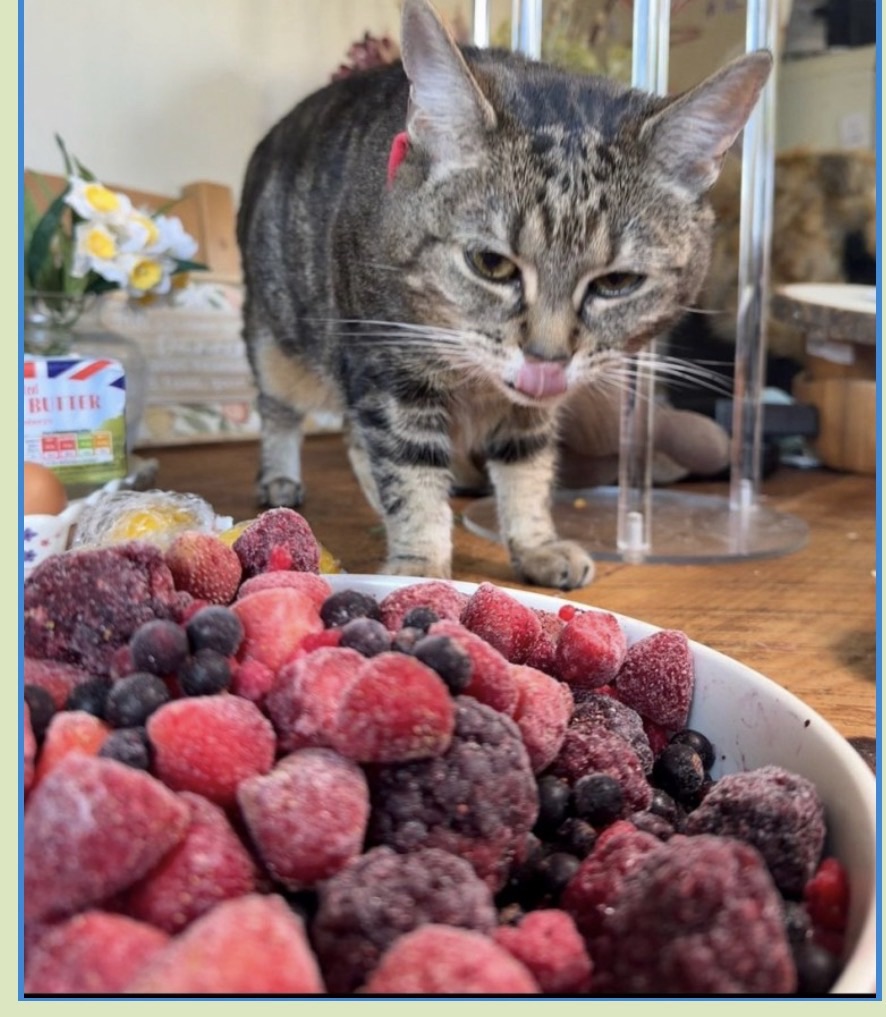
    If your cat shadows you from room to room, it’s not by accident. It’s attachment. They want to be near you, even if they pretend they’re just passing through. Millie our tabby does this and it’s so endearing it makes me feel like she’s keeping an eye on me. She loves being in the kitchen when I’m cooking, surveying the scene and “helping”


    Kneading and Purring


    That soft kneading—“making biscuits”—is a comforting behaviour from kittenhood. Paired with purring, it usually means your cat feels completely content and secure. The number of shops we go in trying to find the ultimate soft Cookie pillow has been immense- FYI the JYSK fur one is a winner in our house along with the Kelly Hoppen/QVC zone !!


    The Sit-On-Everything Habit


    Books, laptops, clean washing—if it’s yours, it’s fair game. Cats place themselves where your attention is. It’s not inconvenience—it’s connection.


    Our Three Cats, Three Different Voices


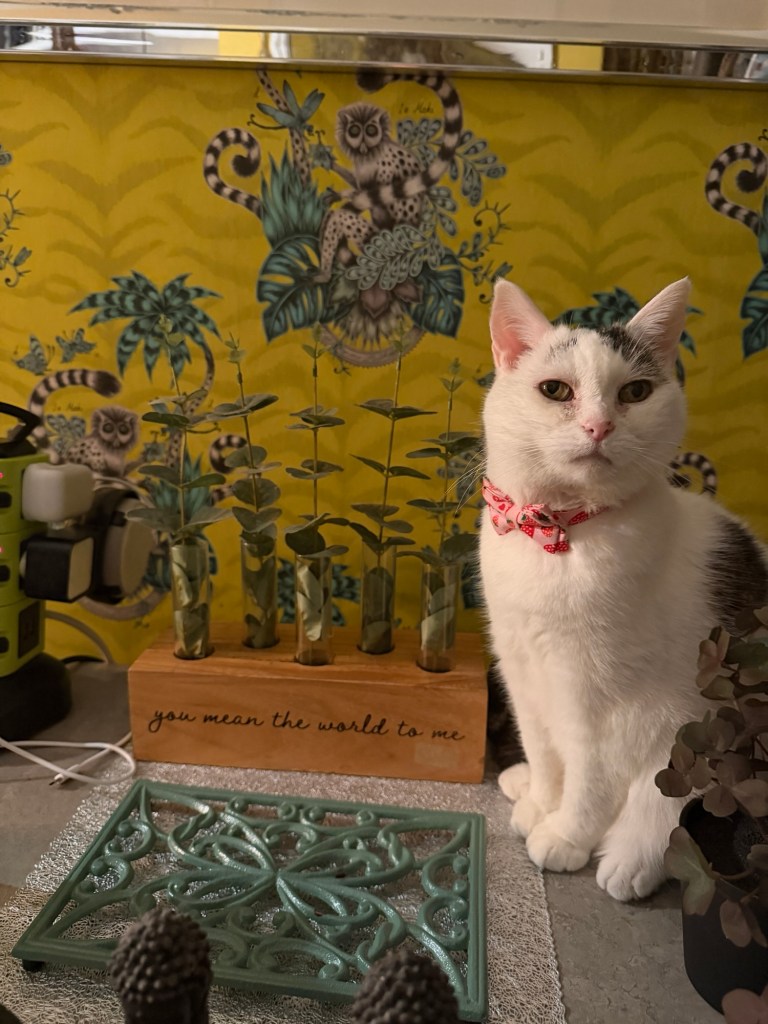
    Living with Ruby, Millie, and Moon has shown us that no two cats communicate the same way. Each of them has their own little “language,” and once you tune into it, you start to understand exactly what they’re saying.


    Ruby is our whirlwind. Our first cat .. we moved into a new house and soon noticed this cat around all the time – turns out the previous owners moved house , didn’t want her and left her behind . She’s confident, full of energy, and not at all shy about making herself known. If she wants attention, you’ll hear about it—loudly. She is a real character. She is our soul mate, our emotional support animal and the one who makes herself indispensable – Ruby is in fact a he … which we found out about a year after she adopted us but we can’t get out of the she habit – so he/she is Ruby, Reuben , Deubs Rubes and answers to them all, especially if food is involved !

    Her miaowing isn’t just noise, it’s a demand, a conversation, and sometimes a full-blown announcement that she is the main character in that moment.

    With Ruby, there’s no guessing—you always know. She is a number one diva !


    Moon is the quiet observer. She doesn’t need noise to be noticed. Instead, she simply appears. You’ll be reading or on your phone, and suddenly she’s there—gently climbing onto your chest, settling herself right in your space, often directly on top of whatever has your attention. Then come those beautiful, steady eyes. No sound, no fuss—just a silent but very clear message: “I’m more important than that.”
    When we first got Moon, she spent her days hiding under the kitchen table or tucked away under the bed. That nervousness hasn’t completely disappeared—she can still be a little jumpy if you walk too close—but it’s just a trace of her past. At heart, she’s incredibly gentle. And interestingly, despite her quiet nature, the other cats never seem to challenge her. There’s something about her calm presence that holds its own.


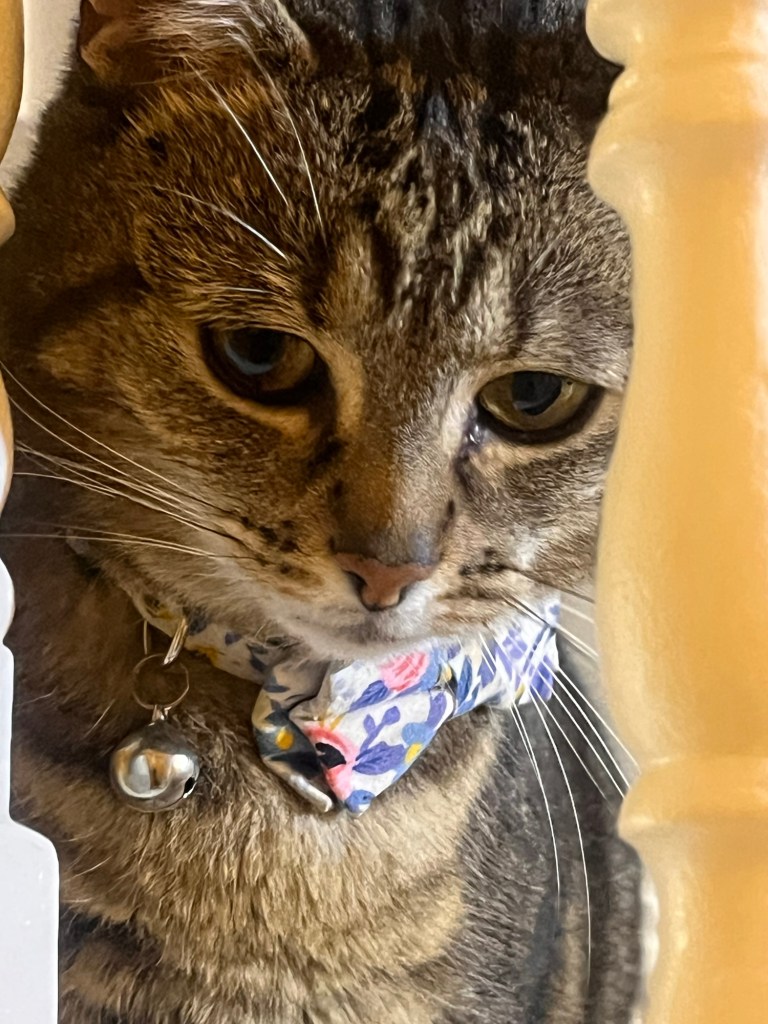
    Millie is our surprise. At first, we thought she might be a bit scary, but she’s actually just wonderfully unique. She’s like a little dog in cat form. She’ll come up and head nudge you with real purpose, showing affection in a way that feels very much on her terms. She’s not keen on hands, which we think may come from her previous home, and it’s something we respect. Millie has clear boundaries—but she still finds her own way to show love, and that’s what makes her so special. When I was going through some worries early this year she took to sleeping next to me in bed . She jumps up when the lights go off and snuggles her little body into the curves of mine and we go to sleep cuddling .

    She is the first one to great us when we get home pounding down the stairs to stick her head through the bannister for a head rub


    Listening Without Words

    Cats may not speak our language, but they are constantly communicating.

    The cats don’t have an awful lot to do with each other , we had dreams of them cuddling up together and playing but it was not to be .. The only exception is dinner time when Ruby & Moon gang up on us looking like a pair of East end villains with their piercing eyes

    Whether it’s a tail flick, a slow blink, a loud miaow, or a quiet stare, every action means something.


    And when you live with cats like Ruby, Millie, and Moon, you realise something quite special—once you learn their language, the silence isn’t silence at all.

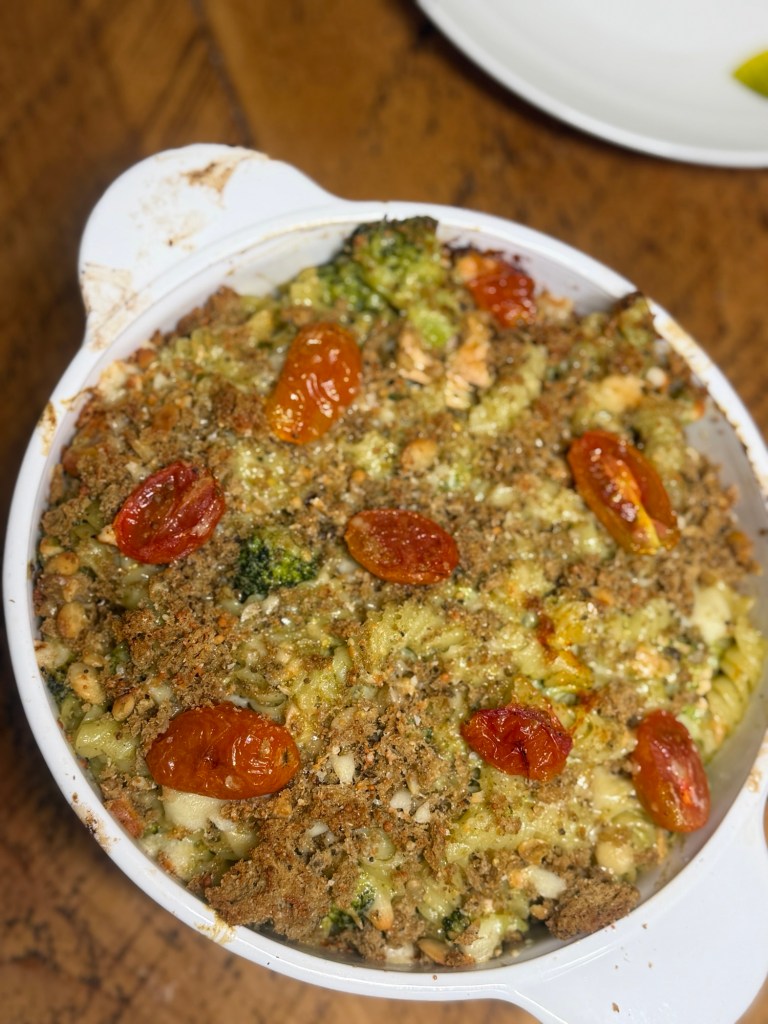
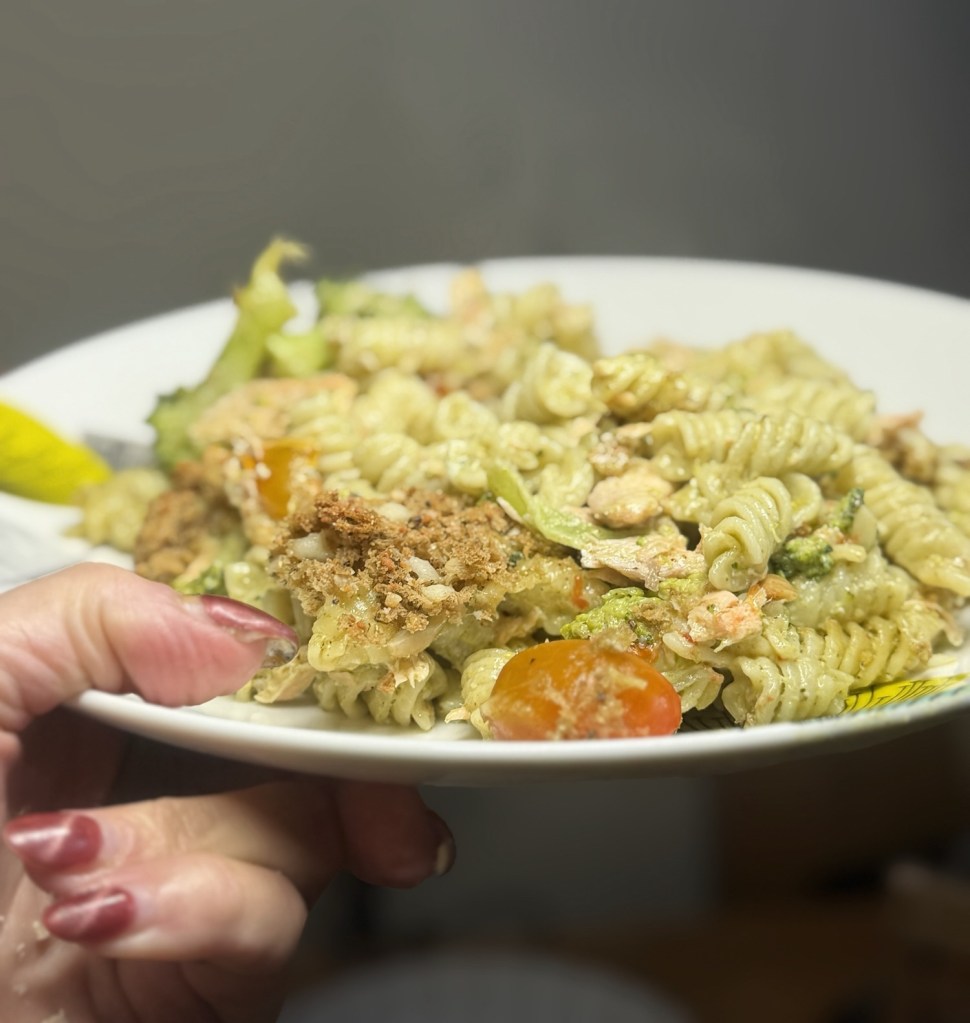
  • Creamy Pesto Salmon Pasta Bake (Cosy, Creamy & So Easy)

    Creamy Pesto Salmon Pasta Bake (Cosy, Creamy & So Easy)


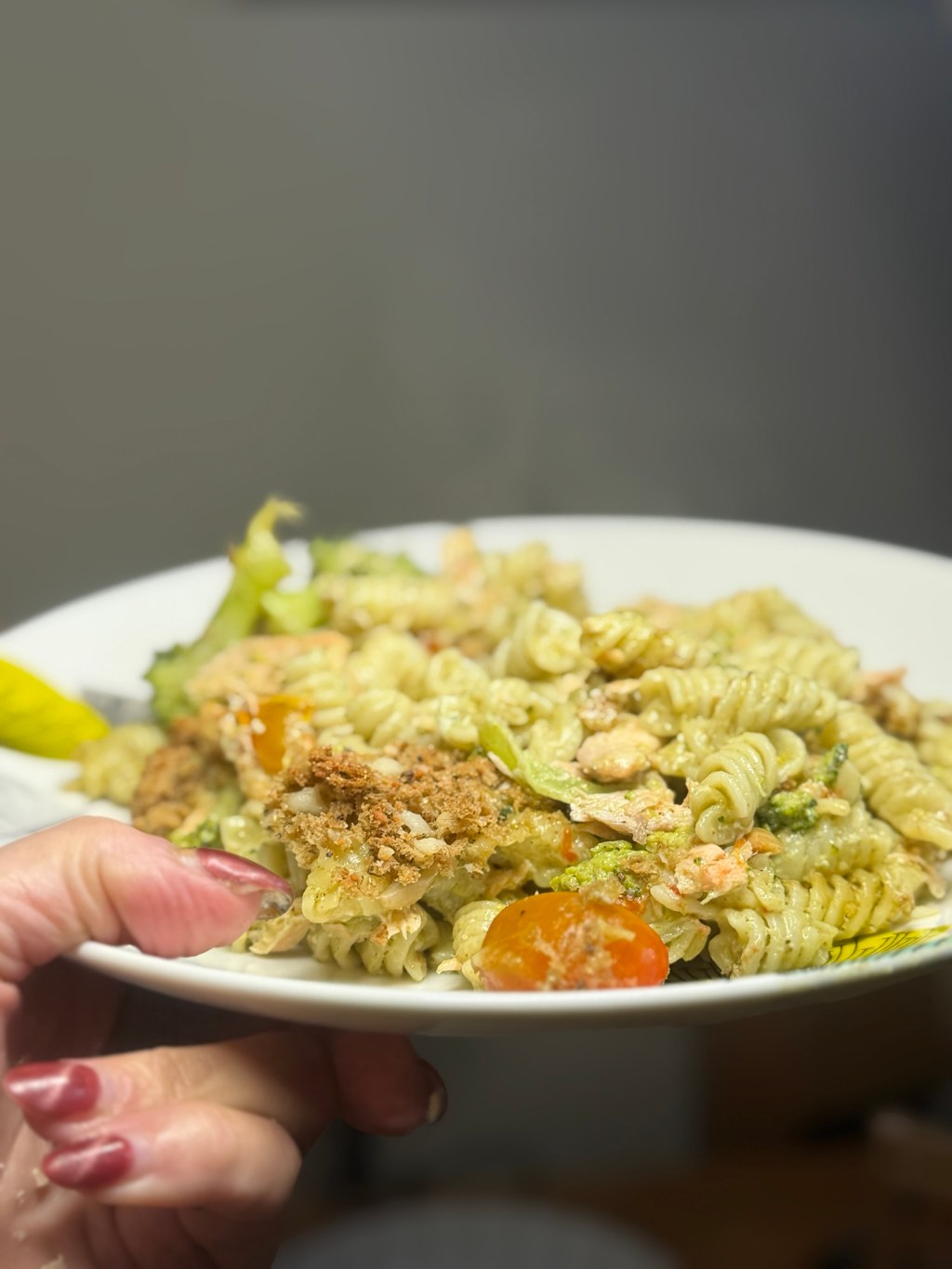
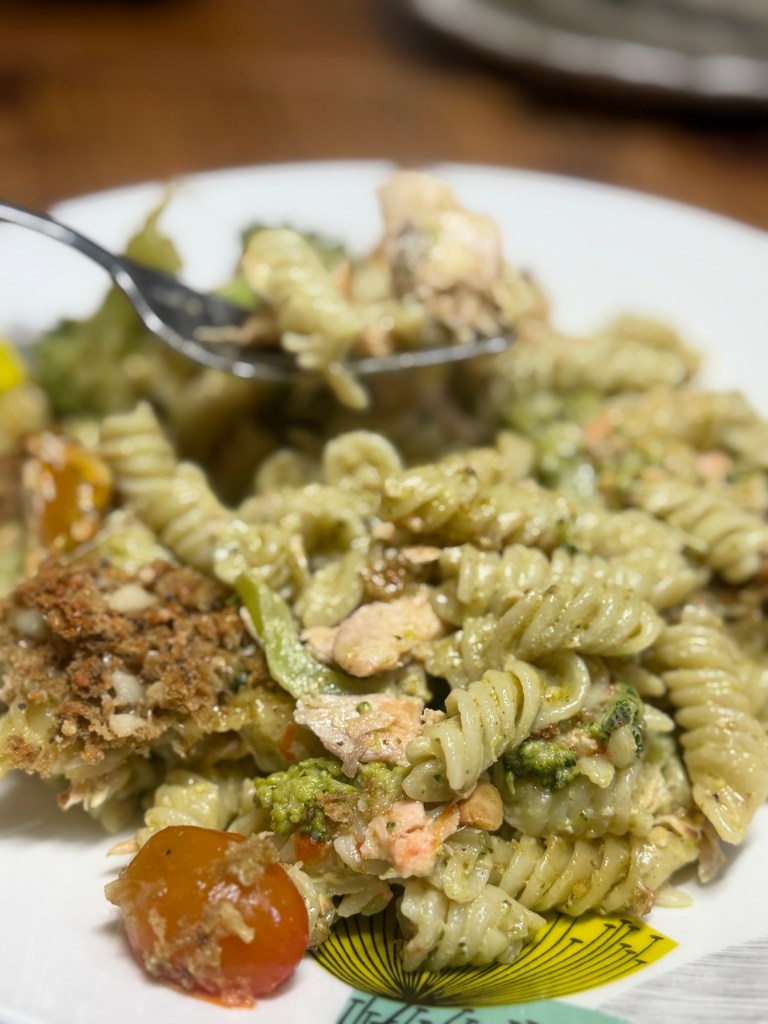
    This is one of those dinners that just feels right at the end of a long day. It’s warm, creamy, full of flavour, and looks like you’ve made a real effort… even though it’s actually very simple to throw together.


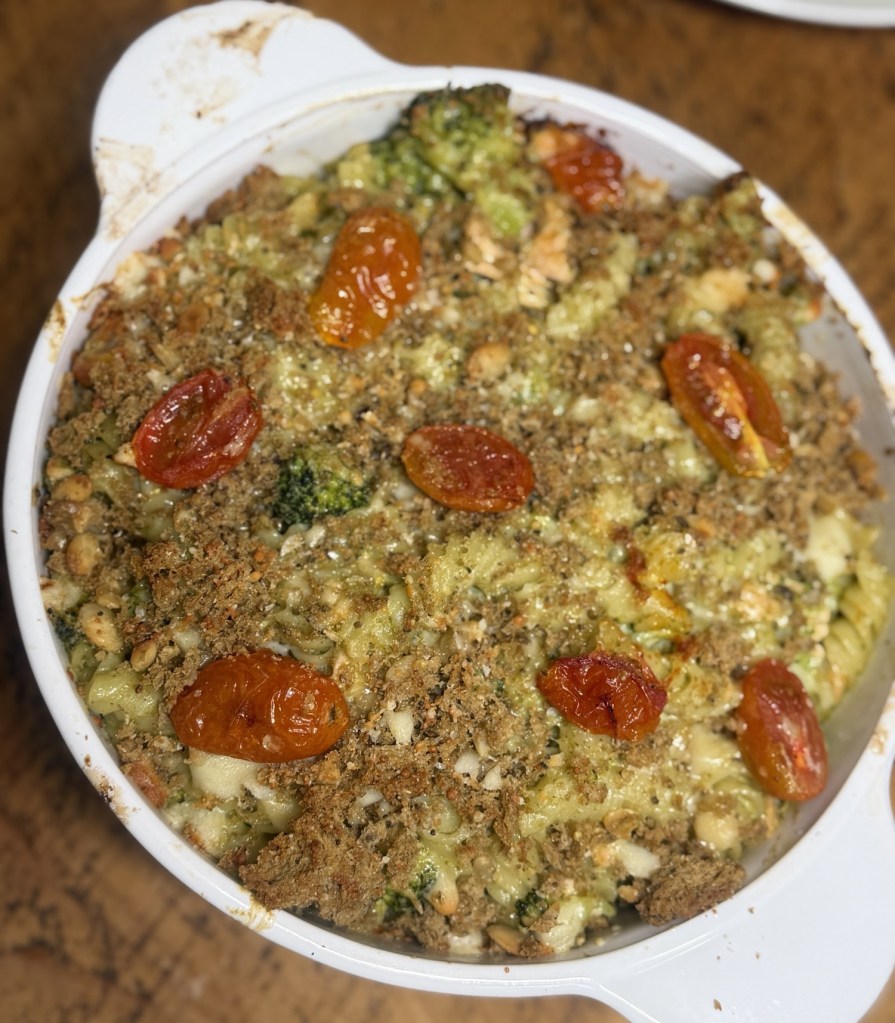
    This pesto salmon pasta bake has quickly become a favourite in our house. You’ve got flaky salmon, sweet roasted tomatoes, and a rich, creamy pesto sauce all wrapped up with pasta and topped with that golden, crispy finish. It’s the kind of meal that disappears quickly and gets requested again the next week.


    What I love most is how versatile it is. It’s perfect for a relaxed evening at home, but it’s also lovely enough to put in the middle of the table if you’ve got people coming round. And if you like to get ahead, you can prep it earlier in the day and just pop it in the oven when you’re ready.


    Ingredients
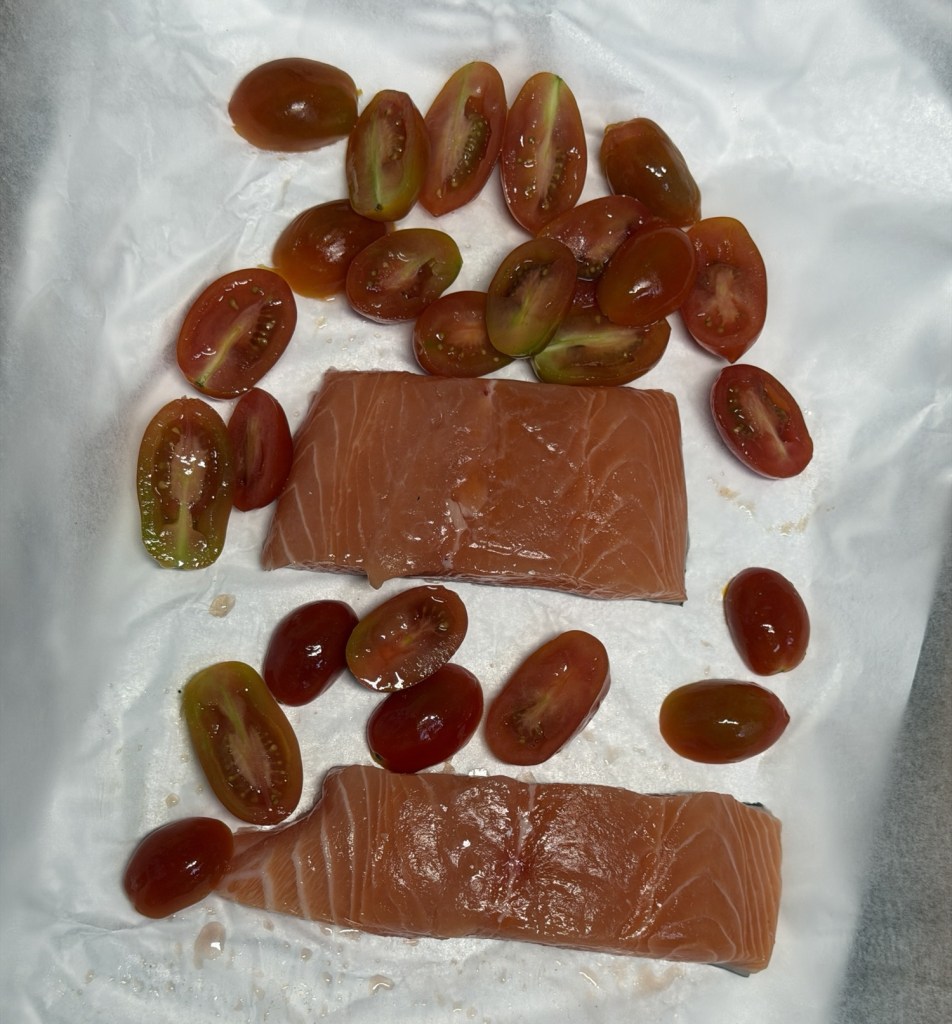
    • 150g cherry tomatoes, halved or sliced
    • 2 salmon fillets (about 260g)
    • 2 tbsp olive oil
    • 350g penne
    • 1 small broccoli (about 300g), cut into small florets
    • 150g pesto
    • 250g mascarpone
    • 50g breadcrumbs
    • 20g grated parmesan
    Method
    Start by preheating your oven to 160c . Arrange the cherry tomatoes and salmon fillets on a baking tray on foil season well, and drizzle over half of the olive oil.

    Bake for around 15/20 minutes, until the salmon is cooked through and the tomatoes are soft and juicy. Set aside to cool slightly.

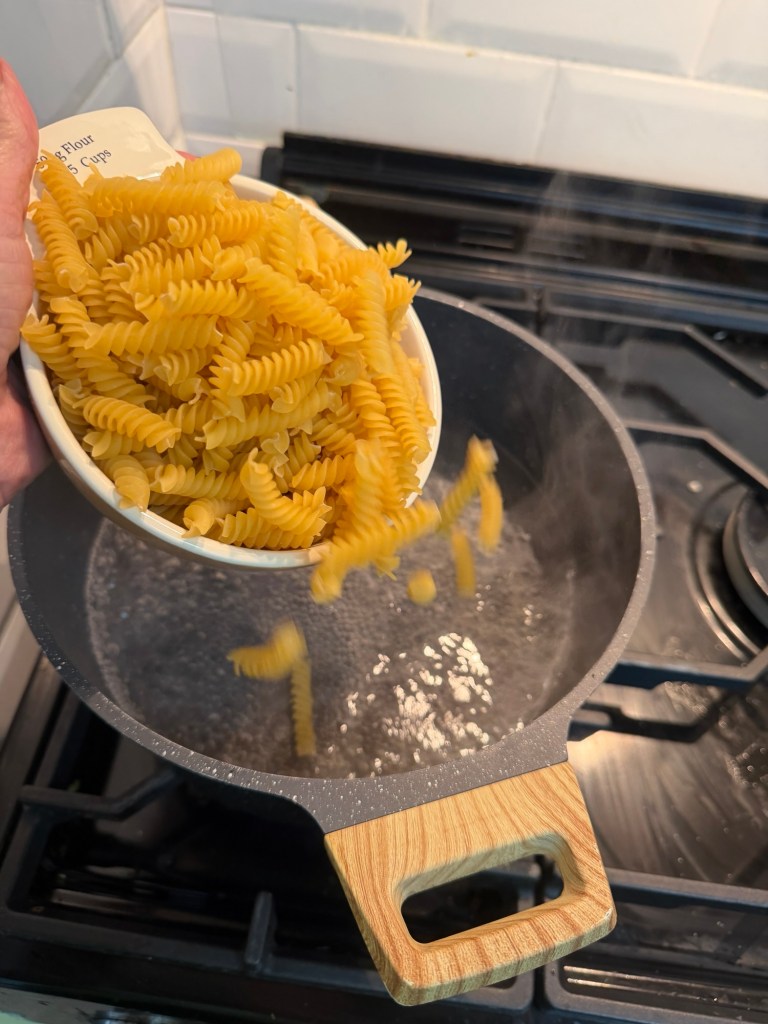
    Meanwhile, cook the penne according to the packet instructions until al dente.

    Add the broccoli for the final 2 minutes so it cooks through but still keeps a bit of texture.


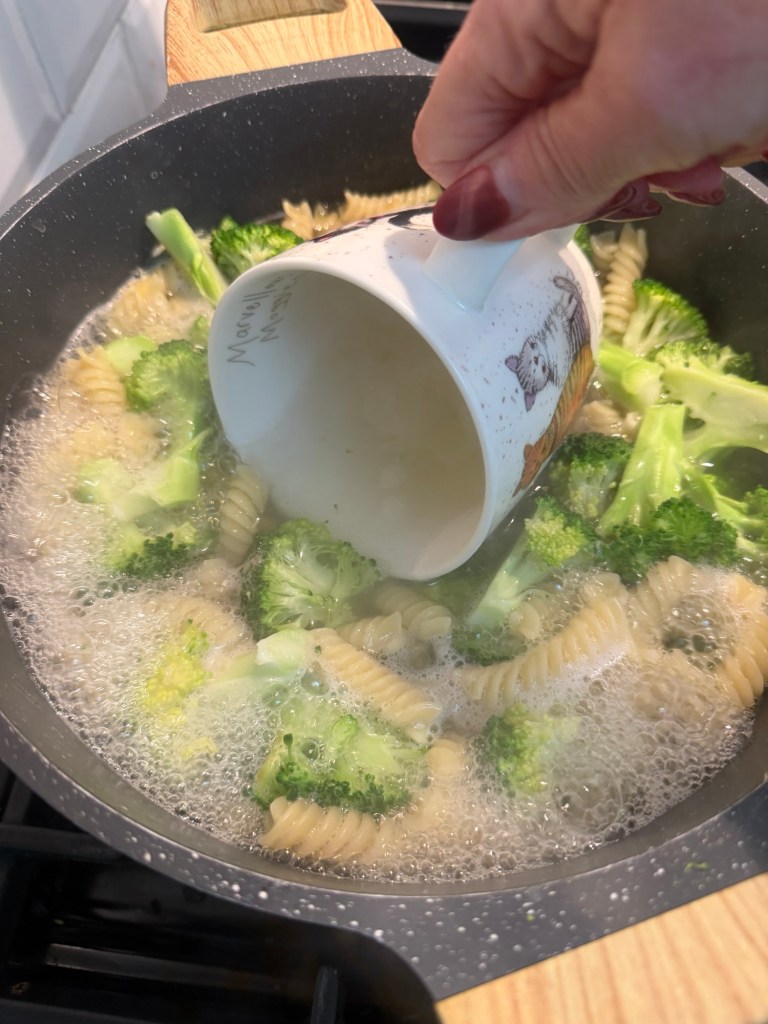
    Before draining, scoop out a large mug of the pasta water—this makes all the difference to your sauce.

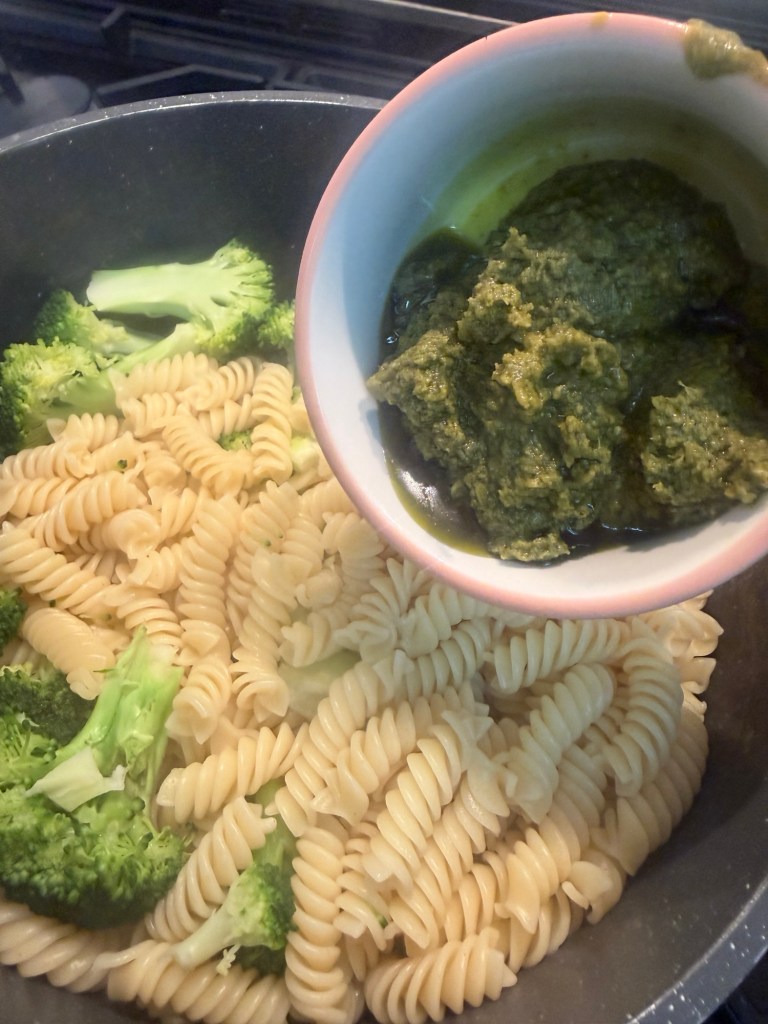
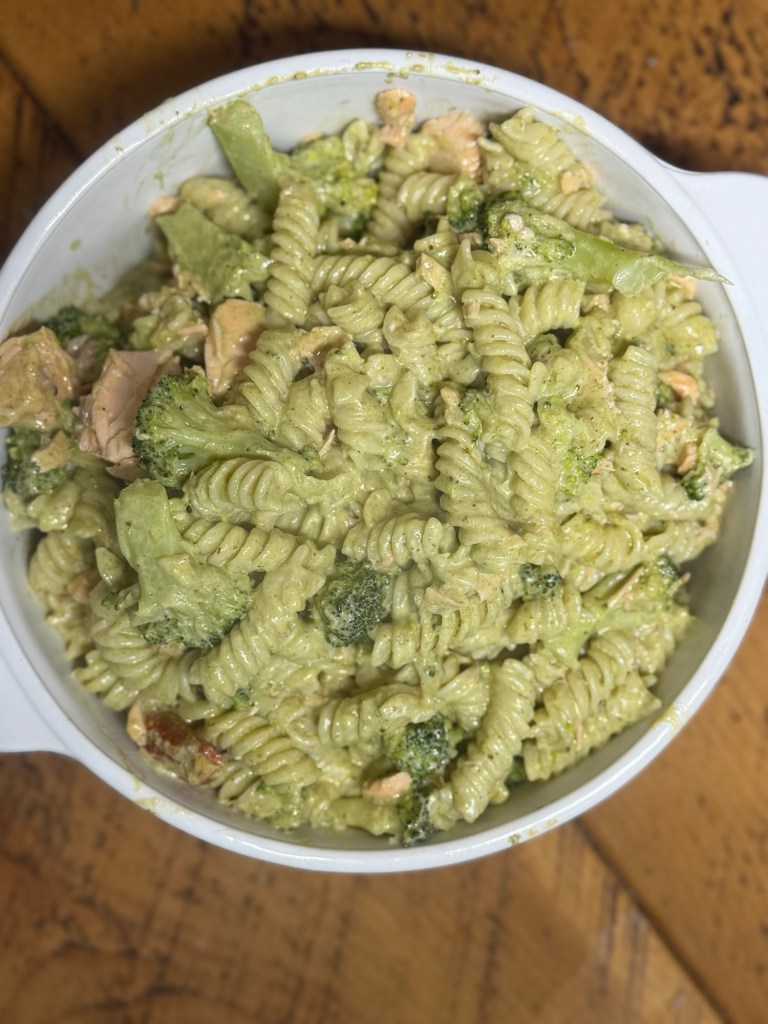
    Return the pasta and broccoli to the pan, then stir in the pesto, mascarpone, and half of the roasted tomatoes.

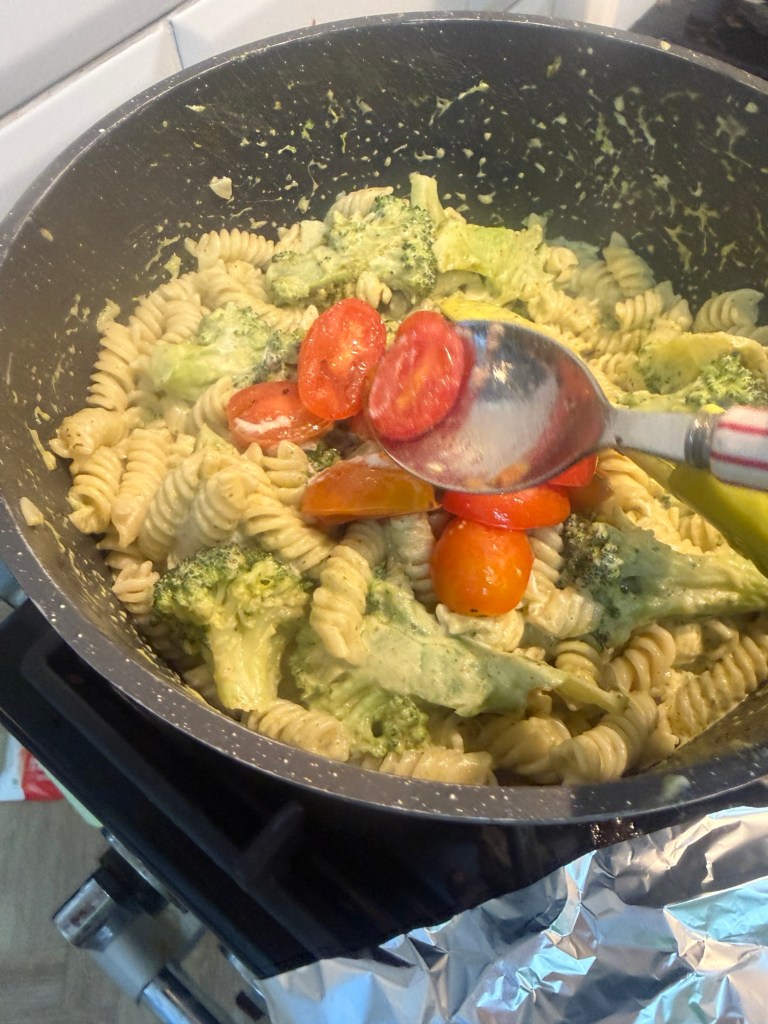
    Add a splash of the reserved pasta water and mix until the sauce becomes smooth and creamy, similar to double cream.

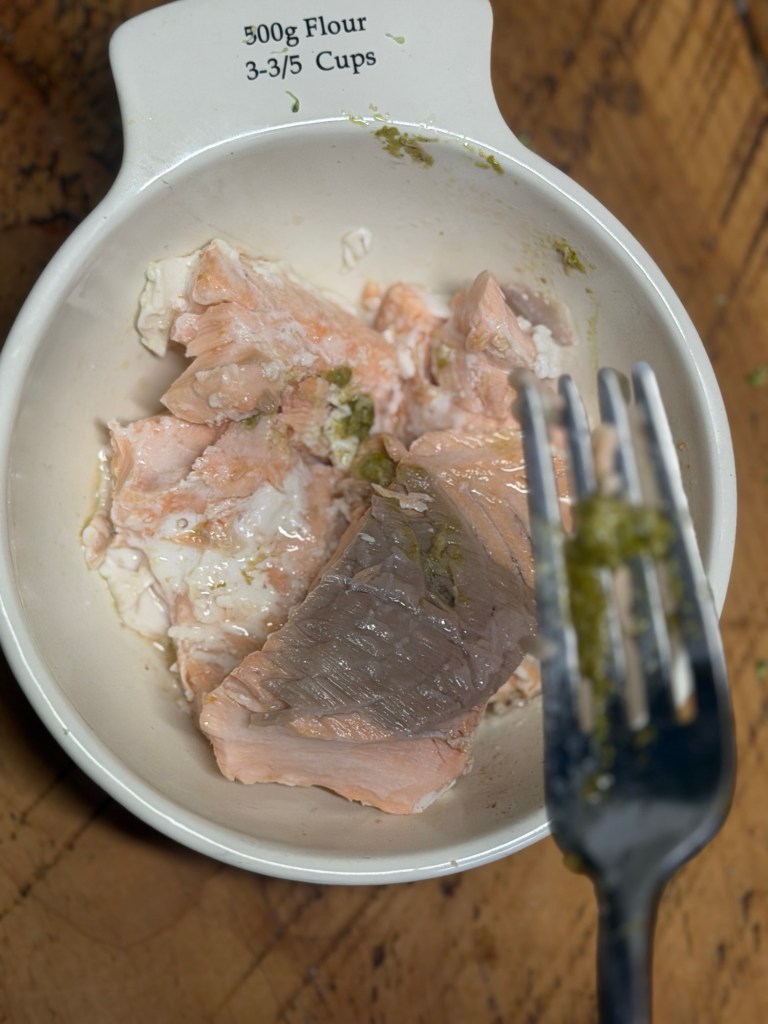
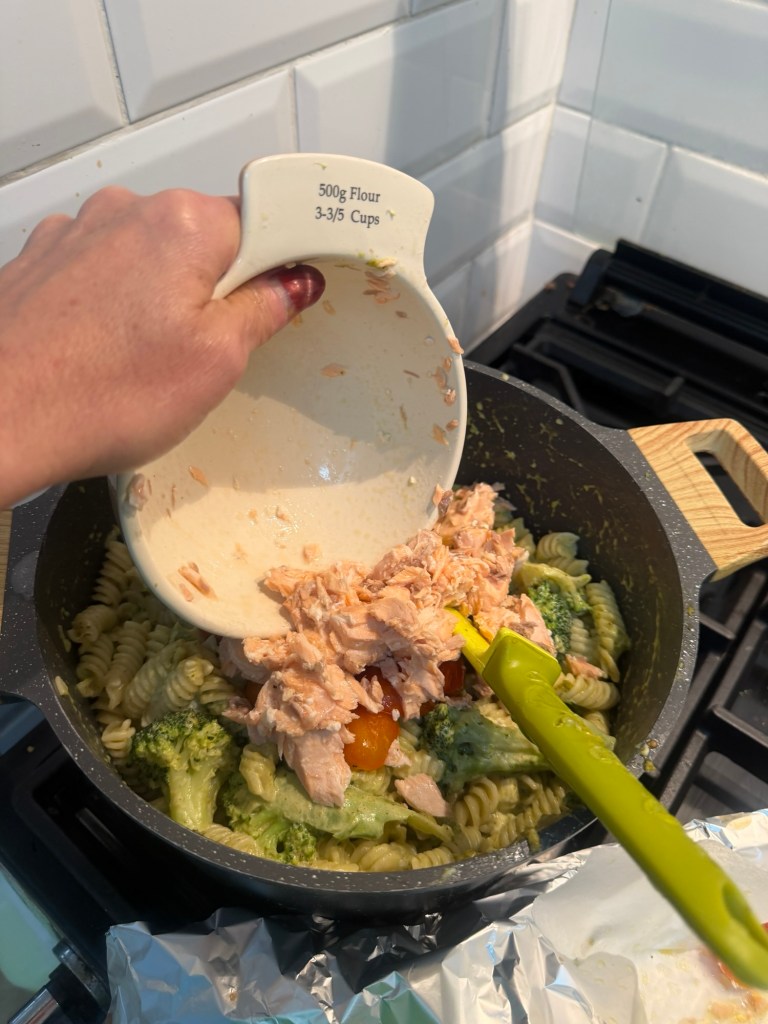
    Flake in the salmon, removing the skin, and gently fold everything together so you keep those nice chunky pieces.


    Transfer the mixture to a large baking dish.

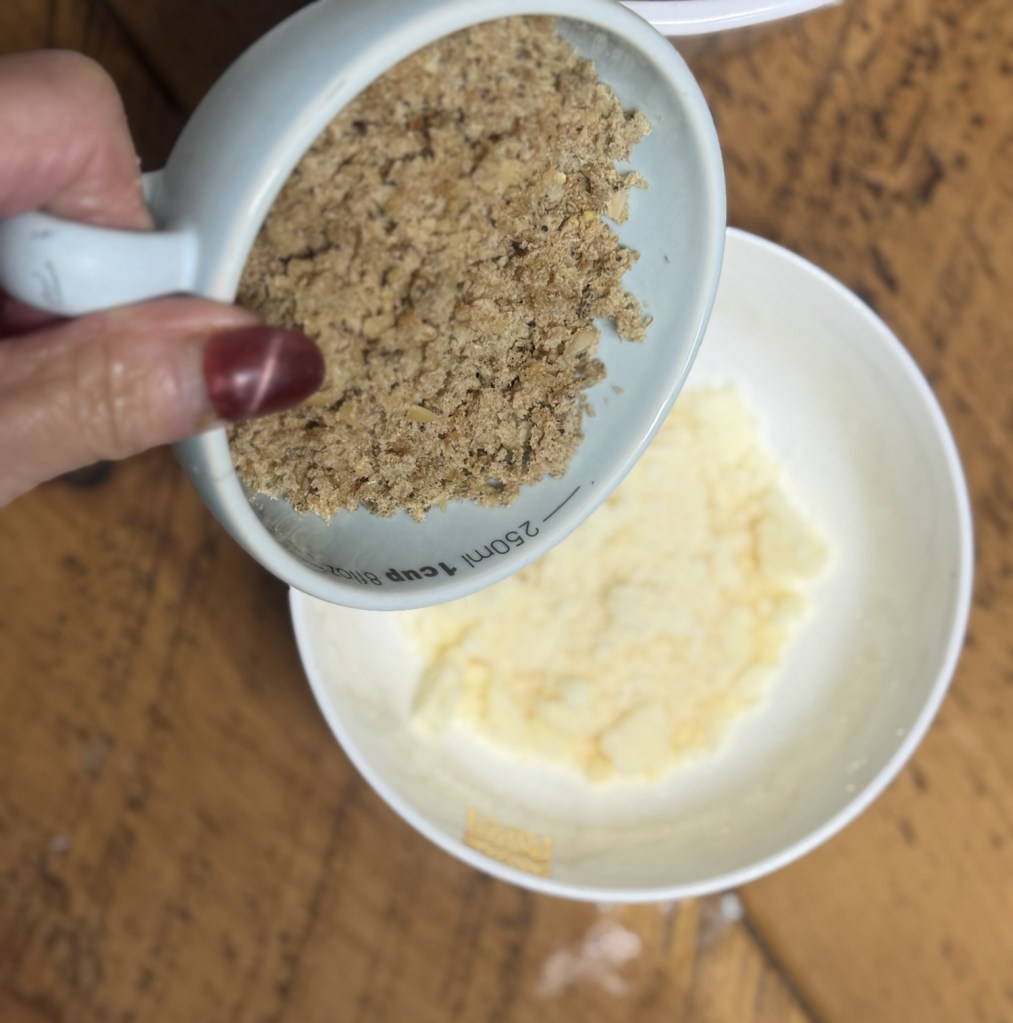
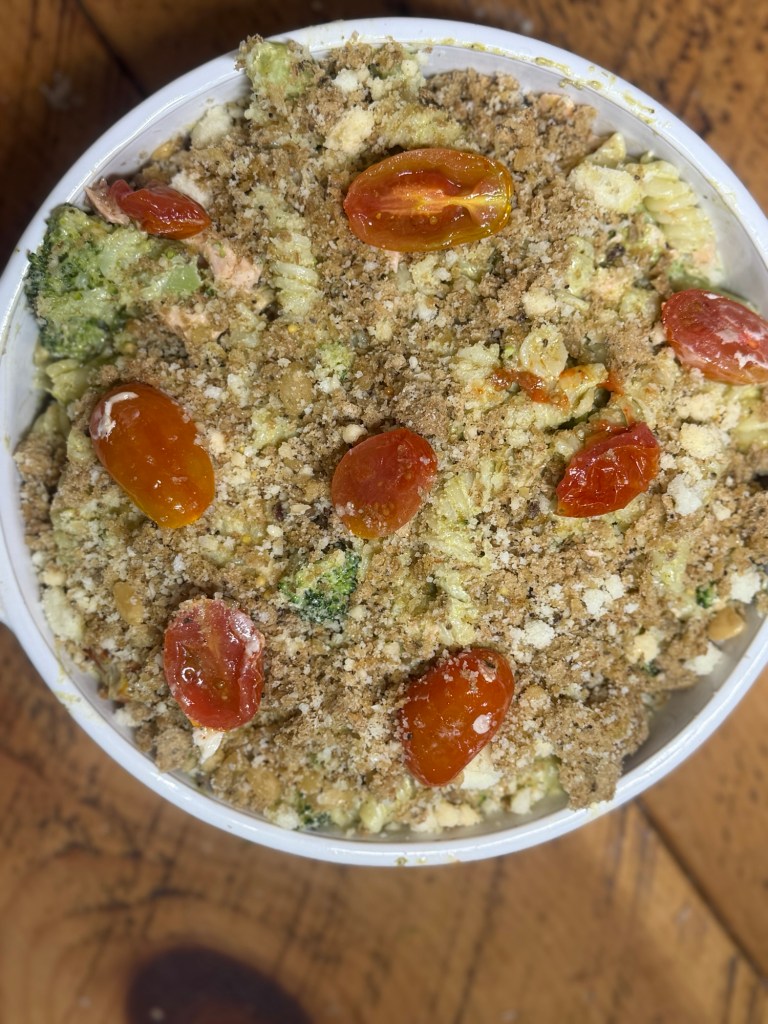
    Mix the breadcrumbs, parmesan, and remaining olive oil together, then scatter over the top.

    Finish by adding the rest of the tomatoes.

    Bake in a preheated oven at 200°C (180°C fan) for 20 minutes, or 25 minutes if cooking from chilled, until the top is golden and crisp.

    A Few Handy Tips
    • A little squeeze of lemon just before serving really brightens everything up.
    • You can easily swap the salmon for chicken or prawns if that’s what you have.
    • It reheats really well the next day, so it’s great for leftovers.
    Why You’ll Keep Coming Back to This
    It’s one of those reliable, no-fuss meals that still feels a bit special. Creamy, crispy, full of flavour—and easy enough to make any night of the week.

    Let me know if you give this one a go—I always love hearing what you think, and any little tweaks you make along the way. Don’t forget to save it for later, because this is definitely one you’ll want to come back to.

  • “Beautiful Boy”

    “Beautiful Boy”

    Refined Version

    At two minutes and ten seconds into the song “Beautiful Boy” by the incredible John Lennon—a song penned about his son, Sean Lennon—he delivers a poignant lyric:

    “Before you cross the street take my hand. Life is what happens to you whilst you’re busy making other plans.”

    In an article written by my beautiful girl, Carolyn, entitled “Love, Values, and a Life That Was Enough,” she talks with such emotional value about Mick, her fabulous grandfather. She mentions how, years later, she would remember how he held her hand, exemplifying total care. Without words, he reiterated that he was there for her; under his guiding eye, her safety, happiness, and security were of paramount importance.
    What was lovely was that I had expressed a real need for what we wrote to be authentic—not always about “Insta-life.” As the famous quote goes, “There’s life, and then there’s Insta-life.” When I identified with the actions that provided that security, and accepted that I held her hand almost instinctively, I knew upon reading her piece that it was the epitome of authenticity.
    When I awake in the night, before a 3:00 am quick scuttle to the bathroom, I watch my sleeping beauty. No matter how deeply asleep I convince myself she is, if I place my hand inches from hers without touching, her hand will—as if by magic—reach blindly, sometimes frantically, for mine.
    Years ago, I knew someone who was a masseur and a Feng Shui expert—very spiritual. I was skeptical then that people could give off an energy without words. However, when I absorb this spectacle, it’s like an ingrained life lesson allowing me to register that energy indeed “does” exist, and touch is an imperative, essential “must-have.”
    Moreover, the lyrics in Lennon’s song—“Before you cross the street take my hand. Life is what happens to you whilst you’re busy making other plans”—run parallel to my own experience.
    But let’s get our priorities right: go read the beautiful piece “Love, Values, and a Life That Was Enough” on this blog. For my part, regarding the beauty of a cat with “Mick’s eyebrows” and the charting of days out walking miles with the pram, there is just a little extract about those mesmerising eyebrows. Life is energy, and Ruby’s energy will always be totally, utterly authentic and very unique.


    Ruby, our “Beautiful Boy”
    Ruby with Mick’s fabulous eye brows.
  • Granny and Mick: Love, Values, and a Life That Was Enough

    Granny and Mick: Love, Values, and a Life That Was Enough

    Lance and I have been talking about people who we admire and have been role models . I didn’t choose a celebrity or world leader, the usual choices .. I chose my maternal grandparents . I’ve been thinking a lot lately about the people who really shaped me, and I keep coming back to my Granny and Mick. Honestly, they were just solid. No fuss, no drama, just good, steady people who got on with life and somehow made everything feel safe and simple.

    Charles & Dorothy Price (aka Granny & Mick)

    Maybe it’s because I’m heading into my 60th year soon, but I do find myself reflecting more. Looking back, joining the dots, and really seeing what mattered—and what still should.
    And it’s funny, isn’t it, how the things that felt so ordinary back then now feel so special?
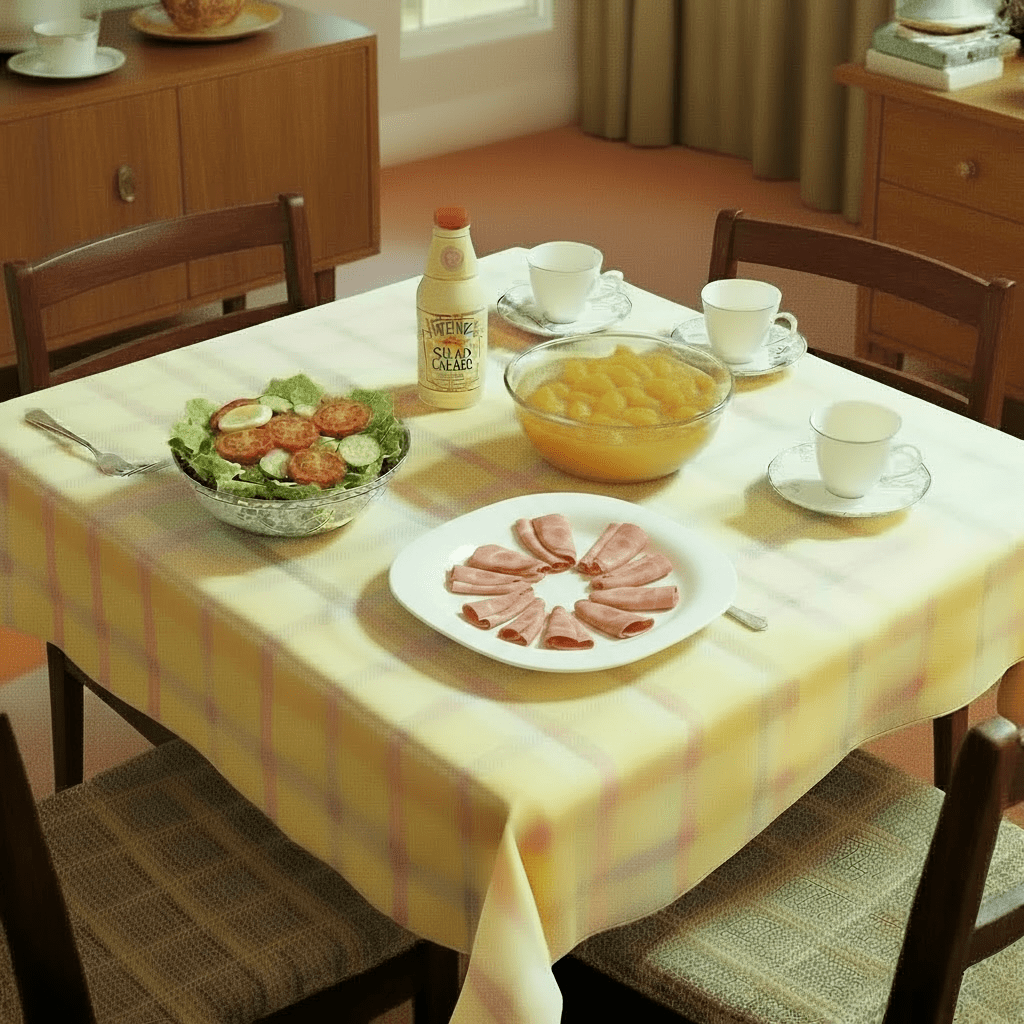
    Take Sunday evenings, for example. We didn’t have fancy meals or anything you’d see on Instagram now. It was salad, tinned ham, tinned mandarin oranges, and a good dollop of Wonder Whip. And if we were lucky, that frozen cream dessert that felt like the height of luxury in the 70s. Tea was always of the leaf variety- tea bags wouldn’t do .. and always served in a china cup and saucer.

    We loved it. Properly loved it. There was no overthinking it—it was just what we had, and it was enough. After tea Granny would shake her glass jar which housed Mint imperials and we were allowed 2 each. We would then sit and watch Antiques Roadshow or the early version of Master chef with Loyd Grossman !! We all loved “The House of Elliot” which was a series about two sisters running a fashion business in the 1920’s – I loved it so much I called my eldest daughter Evie in honour of one the heroines.

    Granny & Mick didn’t have a lot of money and lived a frugal lifestyle , I think that came from the life they’d lived. They were around during the war, dealing with rationing, making do with very little, stretching everything. Nothing was wasted. You learned to be resourceful, patient, and grateful, because you had to be. That mindset stayed with them—it shaped everything.
    Mick himself had such a strong work ethic. He’d been in the Air Force during the war, and later built his own life as a self-employed electrician, running a burglar alarm business. Nothing was handed to him—he worked for everything, steadily and honestly, and took real pride in what he did.
    And their story together always stayed with me. Mick was a friend of my granny’s younger brother—that’s how they first met and fell in love. Then the war came, and like so many couples of that time, they were separated.
    During a visit home, my mum, Christine, was conceived – their only child So when Mick came back from the war, he wasn’t just returning to the woman he loved—he was meeting his daughter too, properly, for the first time.
    I always smile when I think of that moment my mum used to talk about. Seeing this man in the house, not knowing who he was, she apparently shouted, “Make the nasty man go away!” She had no idea this “stranger” was actually her dad, and would become such a huge, loving presence in her life. They struggled to give her the best in life.

    Granny, carried her own quiet strength. She suffered with rheumatism from a childhood sports accident—she’d been hit with a hockey puck—and she walked with a stick for as long as I can remember. But she never complained. Not once. No moaning, no self-pity, she just got on with it.
    And Mick? He was completely devoted to her. Totally supportive in every way. You could see it in how he looked after her, how he put her first without hesitation. It wasn’t loud or showy—it was just constant, dependable love.
    People weren’t materialistic in those days either. It didn’t matter what house you lived in or what car was on the drive—if you even had one. There was more concern for your neighbours, more community. People looked out for each other.
    And the work ethic? Completely different. You didn’t expect things to just appear or rely on credit to have what you couldn’t afford. You worked for it. You saved. And when you finally got something, it meant something.
    That’s the thing. It was enough.
    These days, everything feels like it has to be bigger, better, newer. There’s this sense that if it’s not top of the range, it’s not worth having. But growing up, we mended things. We made do. If something broke, you fixed it or found another use for it. There was pride in that. And I don’t just mean possessions—I think that applied to relationships too.
    When I think about my grandparents’ marriage, that’s what stands out most. The patience. The respect. That quiet, unwavering commitment to each other. They worked at their marriage every single day, without making a fuss about it. And that kind of love feels a bit rare now.
    I do worry sometimes, if I’m honest. About where we’re heading, and what the next generation is growing up with—and without. Not everyone has those strong role models anymore. The ones who show you, not tell you, what it means to be kind, patient, respectful, and loyal.
    Manners feel like they’re slipping. Basic respect, even. And there’s this sense of entitlement that creeps in, like everything should be instant and perfect without any waiting or effort. It’s a very different world.
    We’ve become a bit of a “now” society. Everything on demand, everything fast. And I get it—I’m on TikTok, I scroll like everyone else—but when you stop and think about it, we’re constantly chasing that little dopamine hit. One video, then the next, then the next. It never really satisfies you, does it?
    Back then, the excitement was completely different. I can still picture it—sat on the edge of the sofa, waiting for the weekly episode of Dallas to start. Just one episode a week! And that was enough to get you properly excited. You’d talk about it, look forward to it, make a whole evening of it.
    Now we can have everything all at once—and somehow it feels like less.
    My grandparents have been gone for over 20 years now, but their legacy lives on . I still feel them with me. In the quiet moments, in the difficult decisions, I often find myself wondering what they’d say, what advice they’d give me, and whether what I’m doing would make them proud. Everytime I see wine gums and liquorice allsorts I think of Mick as they were his favourite.
    I think in many ways, they’re still guiding me—just in a different way.
    I’m not saying everything was better back then—of course it wasn’t—but there’s definitely something we’ve lost along the way. That appreciation for simple things. That patience. That sense of making the most of what you have. I miss the smell of Granny’s Max Factor face powder, her lily of the valley perfume and her nulon hand cream. Mick was always smart with a shirt tie and jacket .. usually brown , with his brylcreme hair.

    Granny and Mick taught me that a good life isn’t about having everything—it’s about appreciating what’s right in front of you. Looking after your people. Taking your time. Being kind.
    Simple, really. But I do think it’s something we have to try a bit harder to hold onto now—for ourselves, and for the generations coming after us. Micks legacy was hand holding – he would always hold Granny’s when they were next to her and now I’m lucky enough to have Lance who does the same to me… so the cycle lives on

    Me as a child !
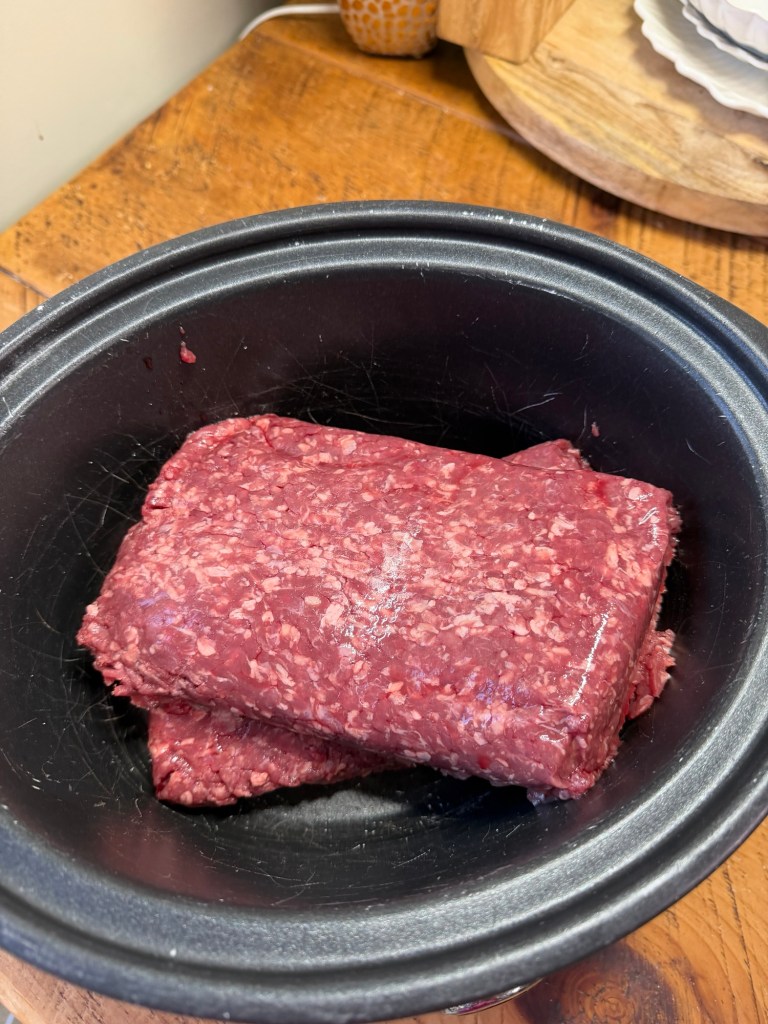
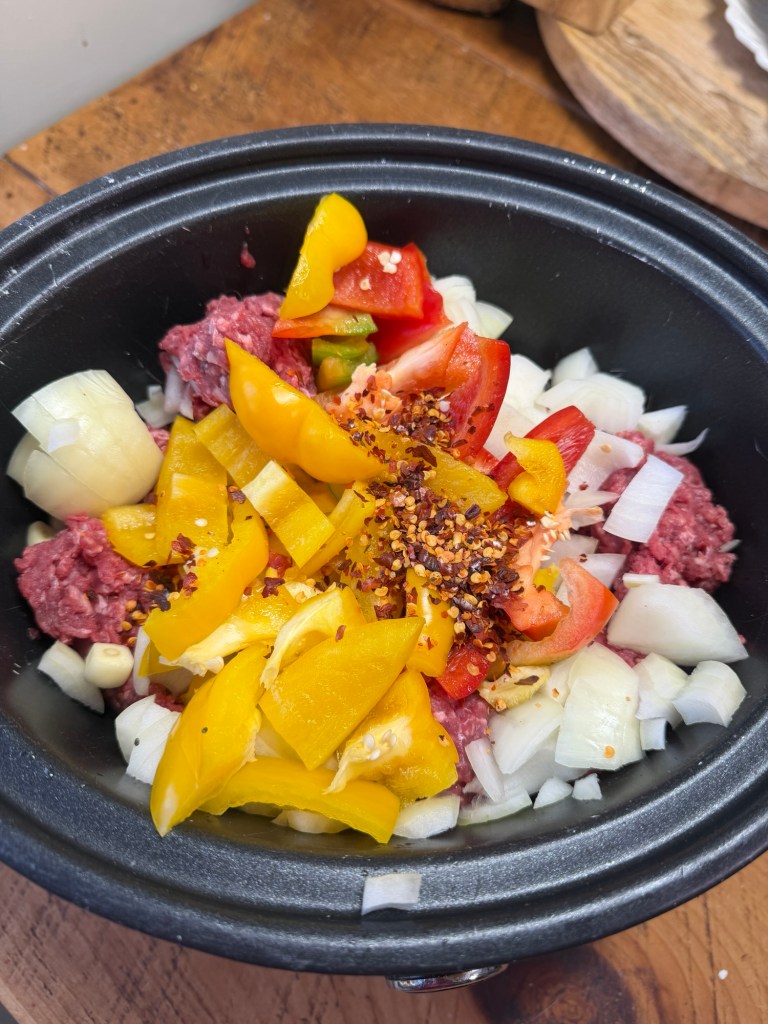
  • Slow cooker chilli con carne

    Slow cooker chilli con carne

    There is something very comforting about knowing dinner is gently bubbling away while you get on with your day.

    For me, this slow cooker chilli con carne is exactly that kind of recipe – a proper cosy bowl of food that basically cooks itself while you’re working, running errands, or just trying to keep on top of life.

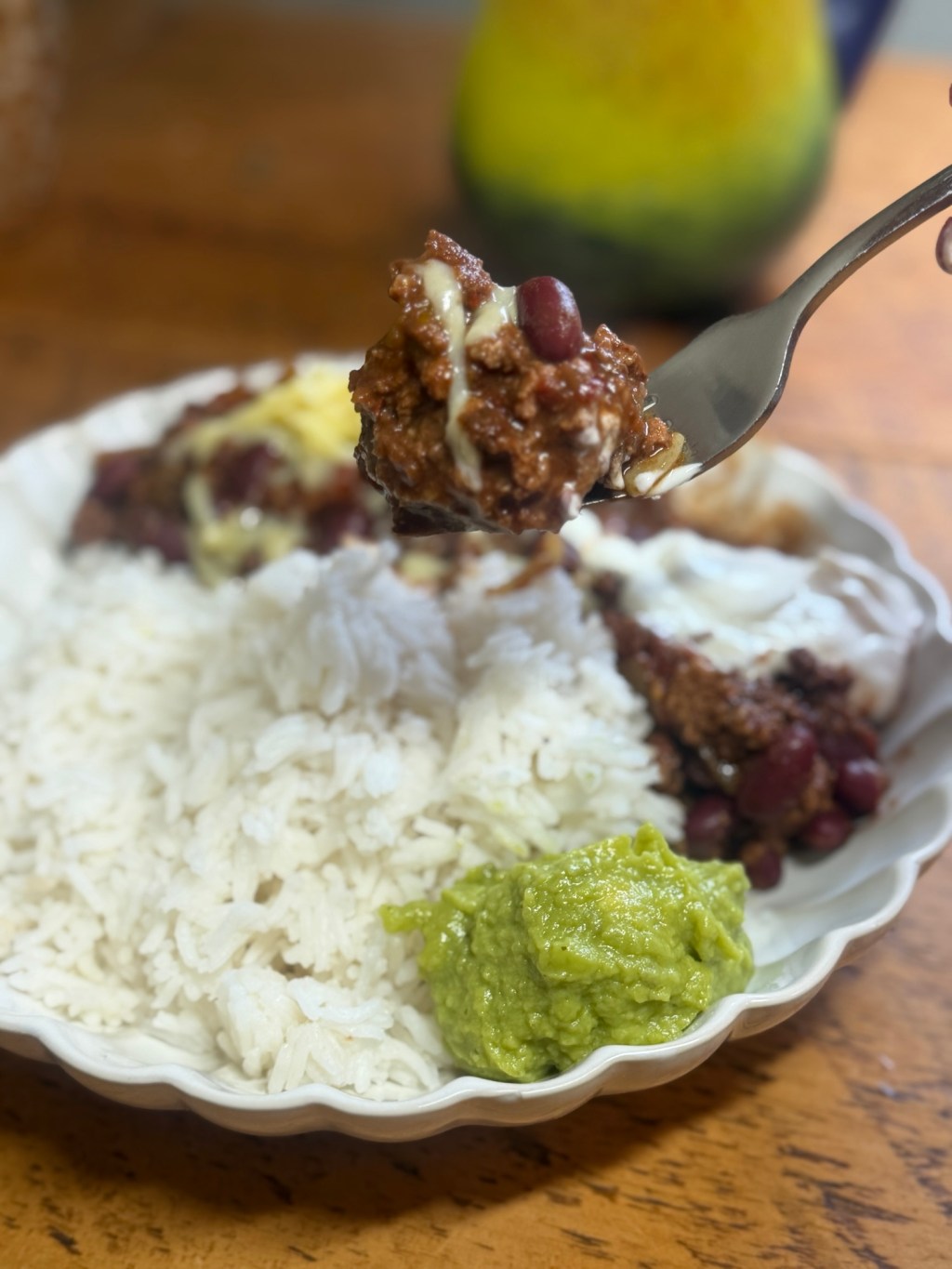
    I love this for “throw it in before you leave the house” days. You literally tip everything into the slow cooker, give it a stir, pop the lid on and walk away. By the time everyone’s asking what’s for tea, you’ve got a rich, gently spiced chilli ready to spoon over fluffy rice. Leftovers are even better the next day, so it’s great for meal prep too. I like it with rice and grated cheese – simple but so satisfying.

    Why You’ll Love This Slow Cooker Chilli
    • True dump‑and‑go – no faffing with browning, just throw it all in and switch on.
    • Budget‑friendly – mostly tins and store‑cupboard spices, but tastes like you’ve been cooking it low and slow all day.
    • Versatile – serve with rice, on jacket potatoes, on nachos, or stash portions in the freezer.

    • Family‑friendly spice – you control the heat, so it can be as mild or as fiery as you like.

    Ingredients
    Serves 4–6
    • 500 g beef mince (ideally lean)
    • 1 large onion, finely chopped
    • 1 red pepper, diced
    • 2 garlic cloves, crushed (or 2 tsp garlic granules)
    • 400 g tin chopped tomatoes
    • 2 tbsp tomato purée
    • 400 g tin kidney beans, drained and rinsed
    • 1 beef stock cube dissolved in 150 ml boiling water
    • 1 tsp smoked paprika
    • 1–2 tsp chilli powder or chilli flakes (to taste)
    • 1 tsp dried oregano
    • ½ tsp sugar (to balance the tomatoes)
    • 1–2 tbsp Worcestershire sauce
    • Salt and black pepper, to taste

    Optional but lovely:
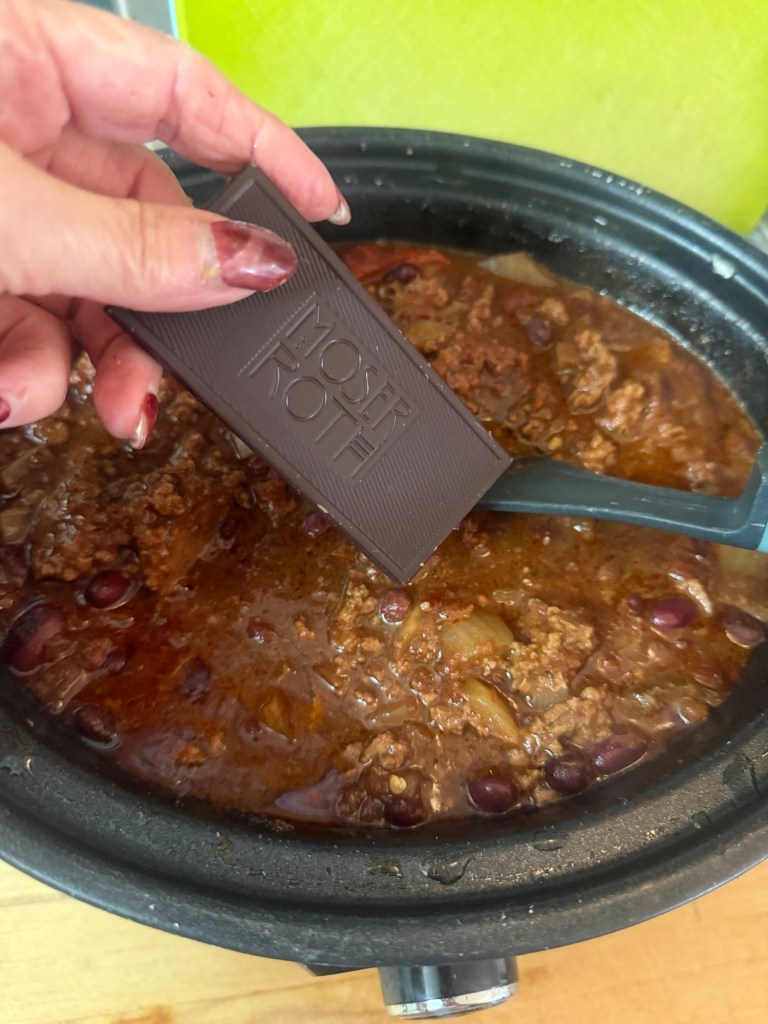
    • Around 25 g dark chocolate (70%) to stir in at the end for extra richness
    To serve:
    • Cooked rice (basmati or long‑grain work well)
    • Grated cheese (my favourite way to serve it)
    • Sour cream or yoghurt

    • Fresh coriander, lime wedges, tortilla chips

    Method (No Browning, Just Throw It In)

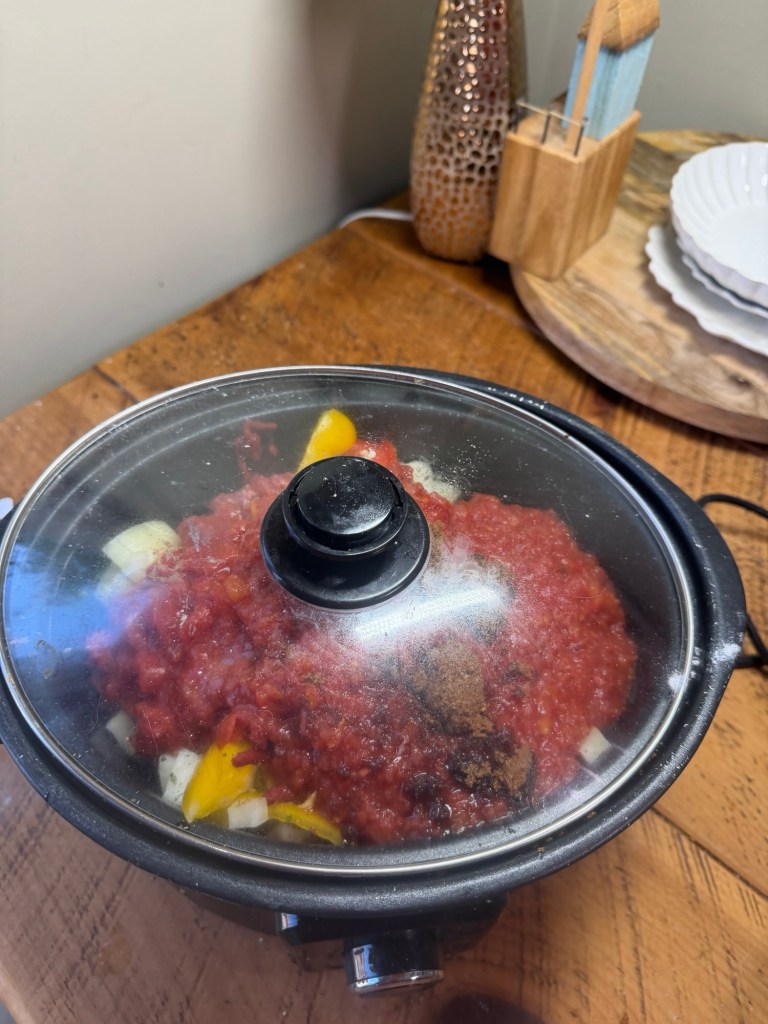
    Add everything to the slow cooker
    Put the raw beef mince straight into the slow cooker and break it up a little with a spoon or fork.

    Add the onion, red pepper, garlic, chopped tomatoes, tomato purée, sugar, stock, smoked paprika, chilli powder, oregano, and a good pinch of salt and pepper.
    Give everything a really thorough stir so the mince is broken up and coated in the sauce.

    Let the slow cooker do the work
    Pop the lid on and cook:
    • On LOW for 6–8 hours
    • Or on HIGH for around 4 hours

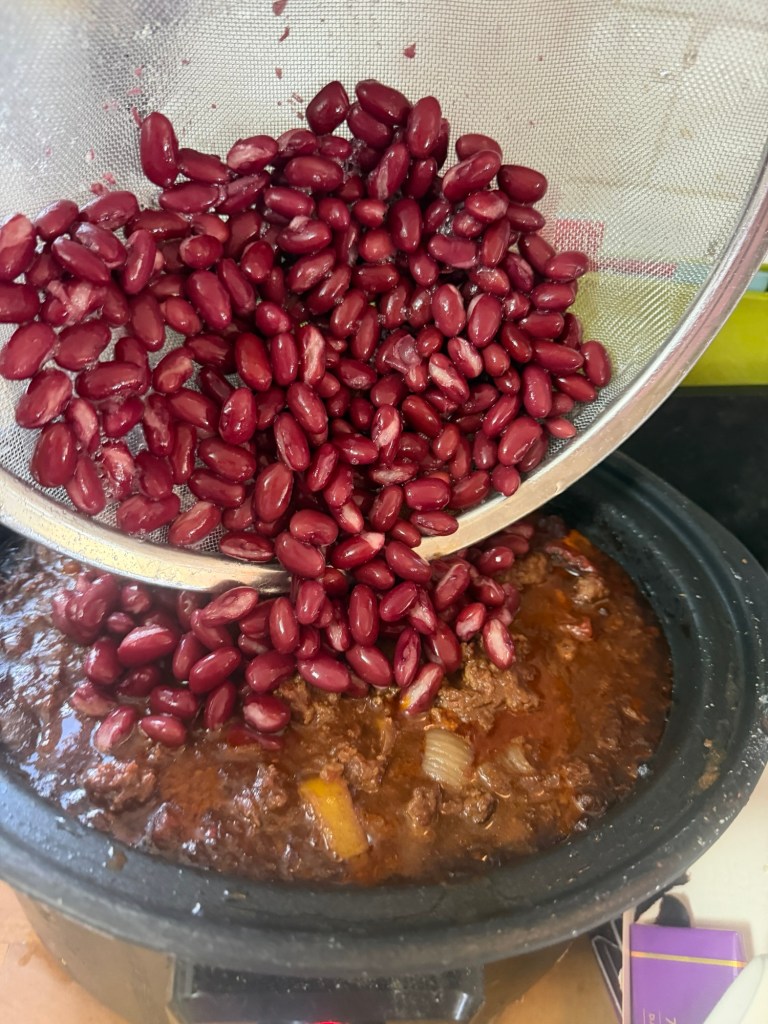
    30 minutes before it’s ready add the drained and rinsed kidney beans


    You’re looking for a thick, rich chilli with a glossy sauce. If it’s still a bit loose near the end, take the lid off and cook on high for another 20–30 minutes to reduce.

    Finish and serve
    If you’re using dark chocolate, stir it in right at the end until melted and fully incorporated.
    Taste and adjust the seasoning – add more salt, pepper, or chilli if you like extra heat.

    Serve generous spoonfuls over hot rice with a big handful of grated cheese on top, plus sour cream and any toppings you like. Leftovers keep well in the fridge for up to 3 days or can be frozen for future easy dinners.

    Serving Ideas and Leftovers
    • Spoon over jacket potatoes with cheese and spring onions.
    • Use as a topping for nachos – add cheese, pop under the grill, then finish with salsa and sour cream.
    • Stuff into wraps or tacos with lettuce and grated cheese for a “chilli burrito” style dinner.
    • Freeze in individual portions for easy grab‑and‑reheat lunches.

  • Accidental “I Just Threw It Together” Pasta

    Accidental “I Just Threw It Together” Pasta

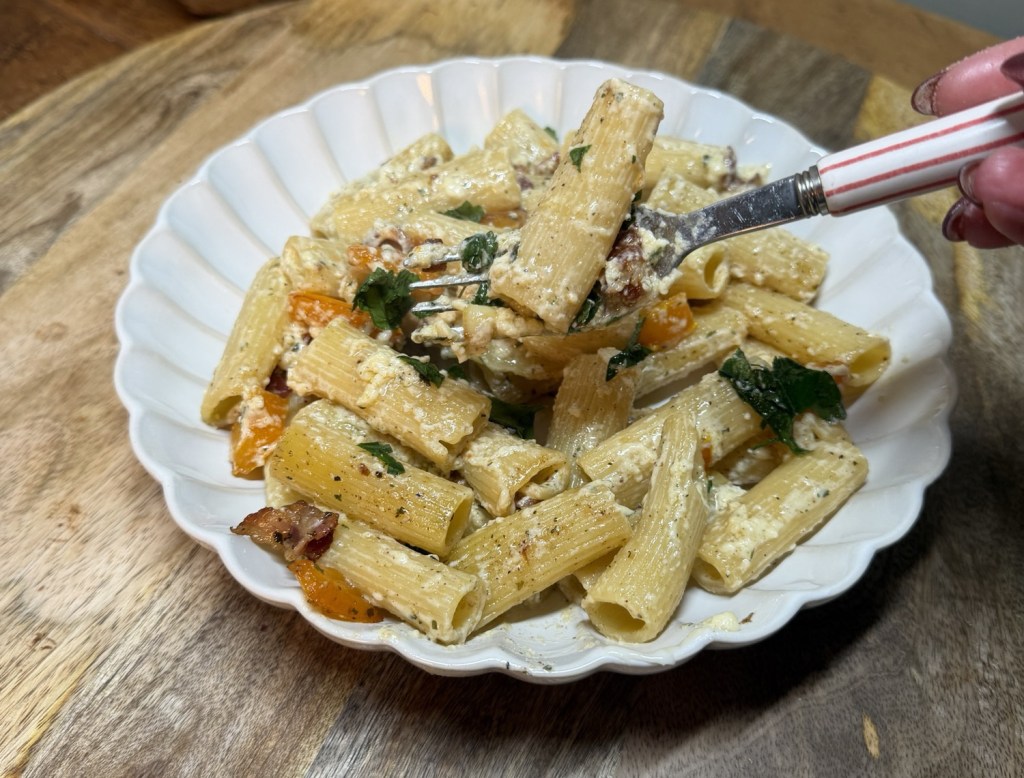
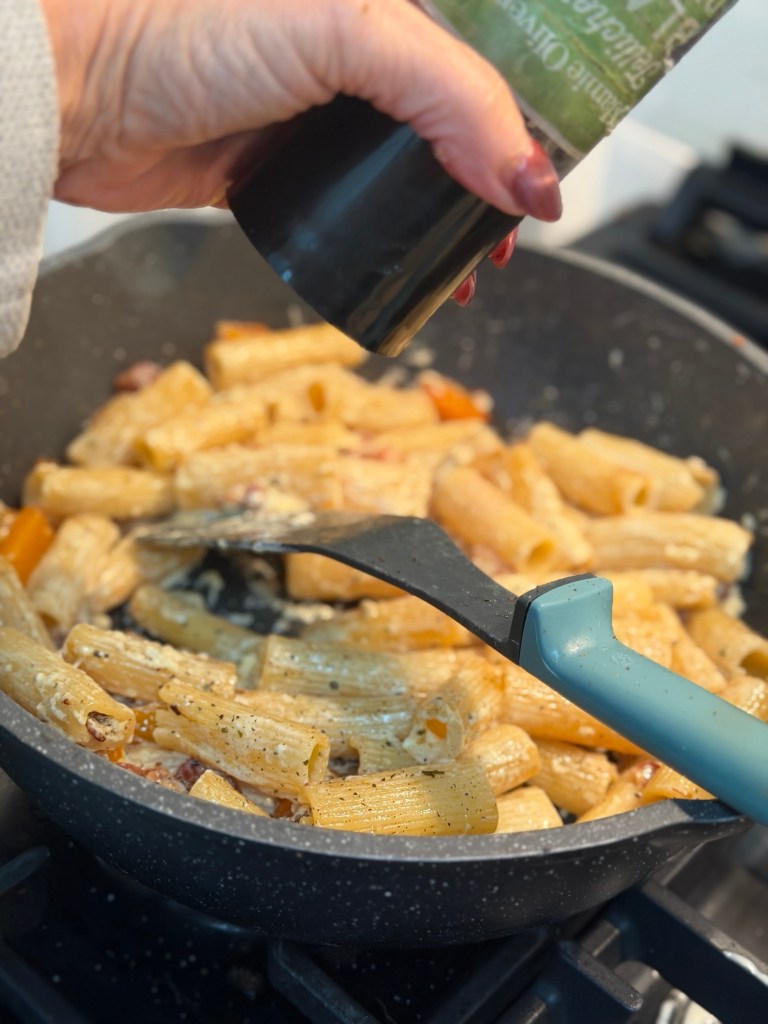
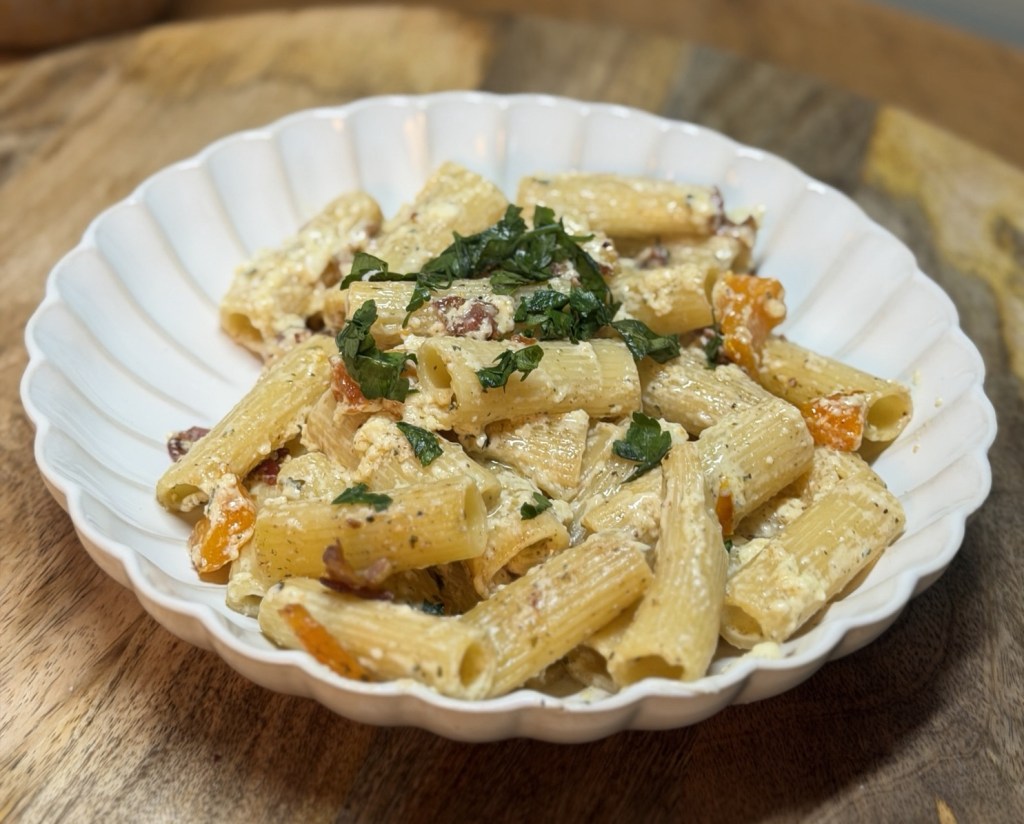
    Tonight’s dinner started with one question: “What on earth can I make with pasta, mascarpone, soft goat’s cheese, eggs, streaky bacon and a lonely pepper?”

    Spoiler: you can make the creamiest, boujiest mid‑week pasta that tastes like carbonara’s glam cousin who moved to Italy, discovered goat’s cheese and never looked back.

    The Accidental “I Just Threw It Together” Pasta
    Let’s be honest: this is classic “kitchen clear‑out” cooking.
    You know the vibe – a few rashers of bacon, half a tub of mascarpone from that “I’ll definitely make a dessert” phase, a soft goat’s cheese you bought because it looked fancy, and one pepper slowly giving you side‑eye from the veg drawer.
    Instead of letting any of it go sad and shrivelled, we’re turning it into a silky, glossy pasta for two that looks like you planned it. You absolutely did not, but we’ll keep that between us.
    This dish is:
    • Creamy without being heavy
    • Salty and smoky from the bacon
    • Tangy and lush from the goat’s cheese
    • A little bit sweet from the peppers

    • Ready in about 20 minutes if you can multitask like a pro (or just vaguely manage not to burn the bacon)

    Ingredients for 2 Hungry People
    • 180–200 g dried pasta (any shape you fancy)
    • 4–5 slices streaky bacon, chopped
    • 1 pepper, sliced or diced
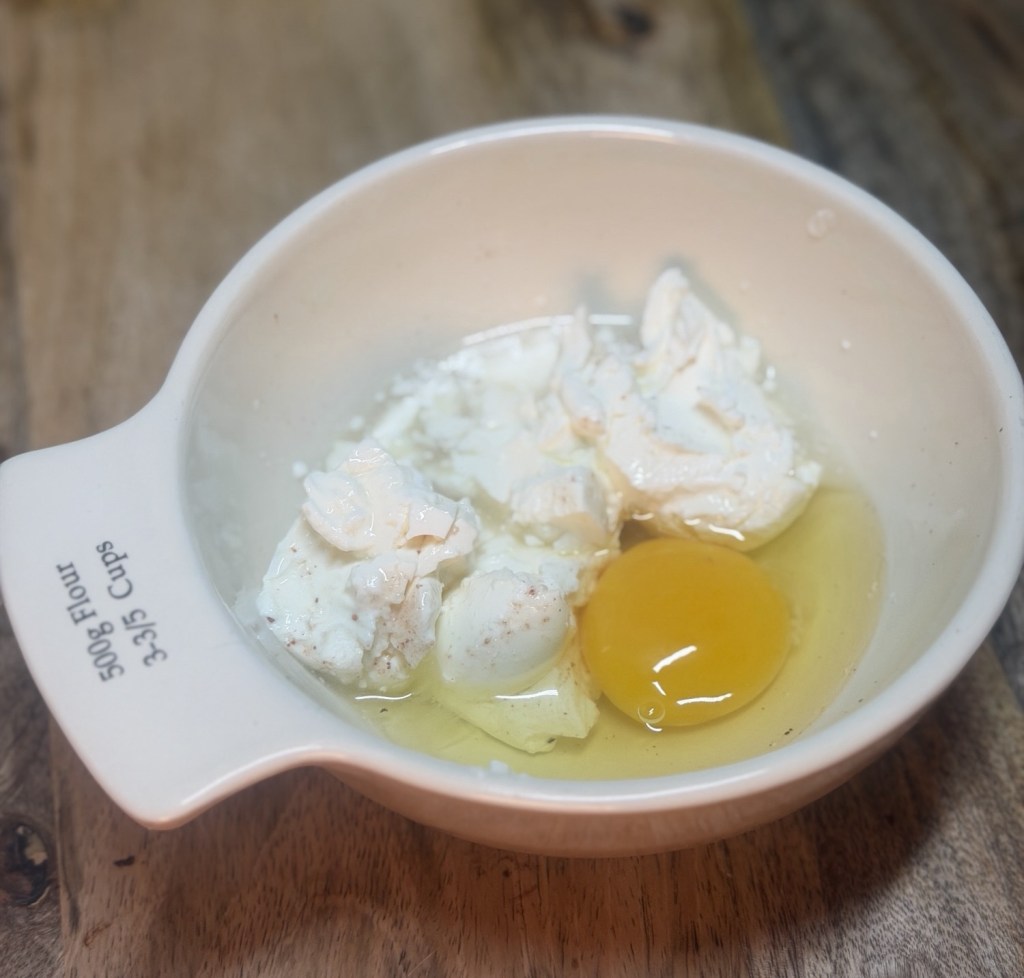
    • 3 heaped tbsp mascarpone
    • 40–50 g soft goat’s cheese
    • 1 egg
    • 1 small clove garlic, finely chopped (optional but lovely)
    • Salt and black pepper

    • A mug of pasta cooking water (liquid gold, don’t skip this)

    • Optional: pinch of chilli flakes, squeeze of lemon, or a grating of Parmesan if you’re feeling extra

    Step 1: Cook the Pasta (Yes, First)
    Yes, you cook the pasta first.
    No, we are not doing one‑pot chaos today.
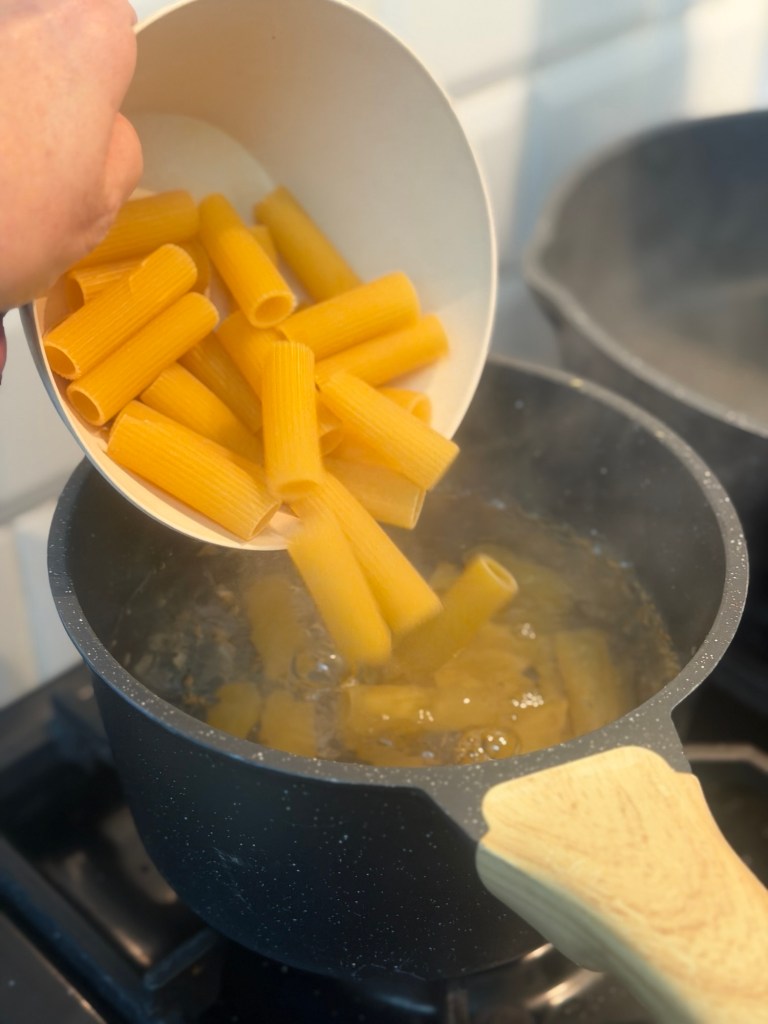
    Bring a big pan of well‑salted water to the boil – it should taste like the sea, not a faintly disappointed puddle. Add your pasta and cook it until just al dente. Don’t walk away “just to check TikTok” unless you’ve set a timer.

    Before you drain it, scoop out a mug of that starchy pasta water. This is the secret to sauces that cling rather than sulk at the bottom of the bowl. Then drain the pasta and keep it warm.

    Step 2: Crispy Bacon, Sweet Peppers
    While the pasta is doing its thing, grab a large frying pan.
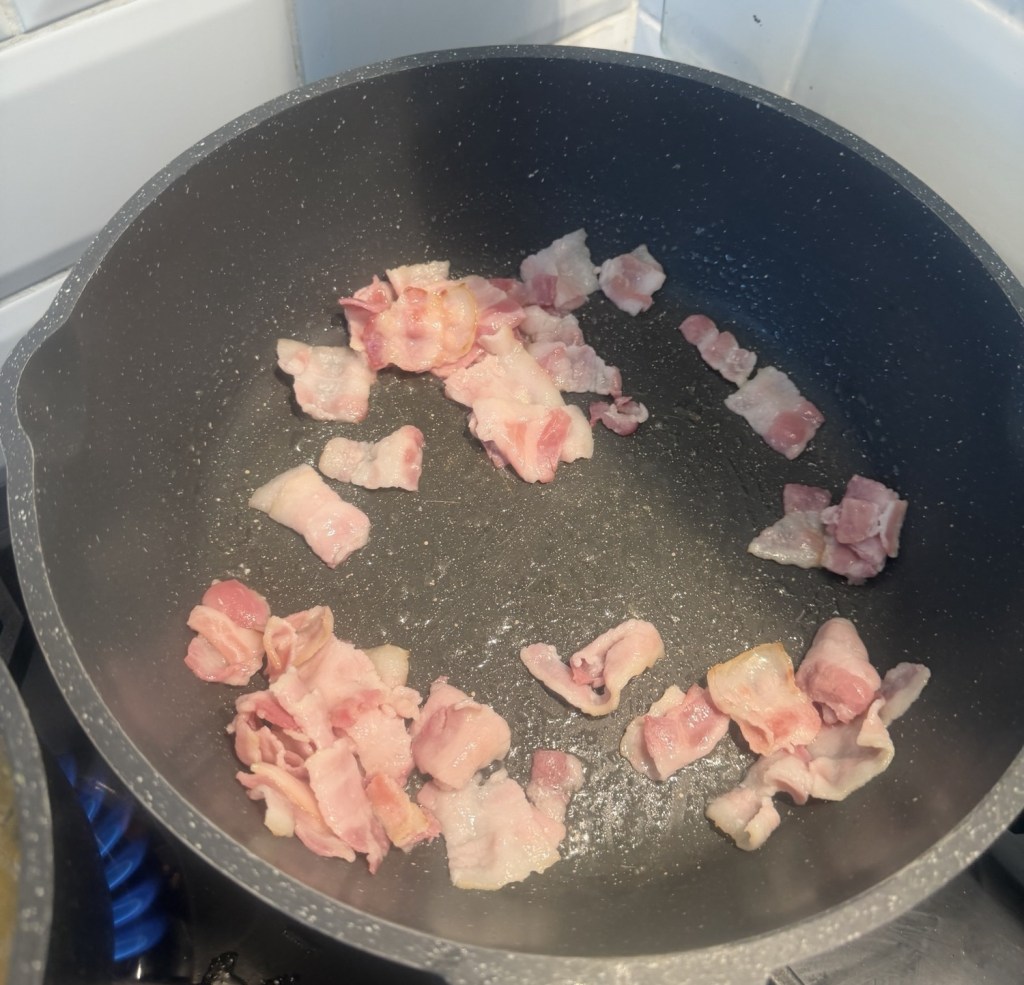
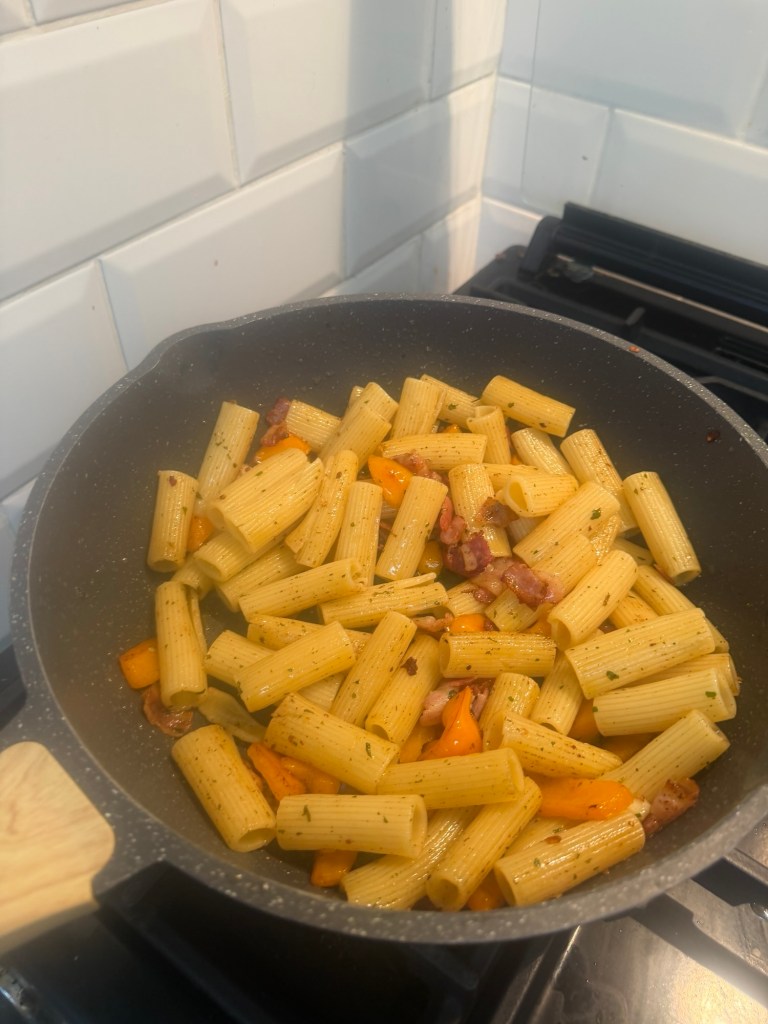
    • Add the chopped streaky bacon to a cold pan, then put it on medium heat. Starting it cold helps the fat render out slowly and makes everything extra crisp.
    • Fry until the bacon is golden and crisp. Try not to eat it all straight from the pan. (Good luck.)
    • Push the bacon to one side or lift it out onto a plate, leaving the glorious bacon fat in the pan.
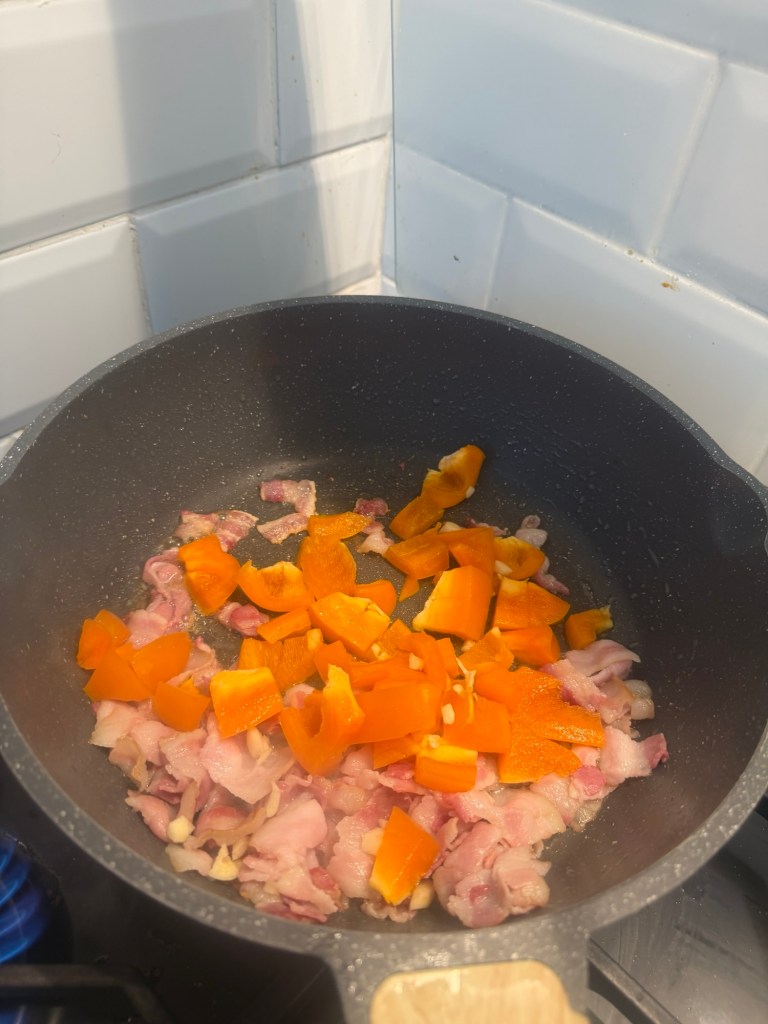
    • Add your sliced/diced pepper (and garlic if you’re using it) to the pan.
    • Cook until the peppers are soft and slightly charred at the edges. Season lightly with salt and black pepper.

    At this point your kitchen smells like you actually know what you’re doing.

    Step 3: The Silky Mascarpone & Goat’s Cheese Magic
    Now for the part that makes this feel restaurant‑level with almost zero effort.
    In a bowl, whisk together:
    • 3 heaped tbsp mascarpone
    • 1 egg
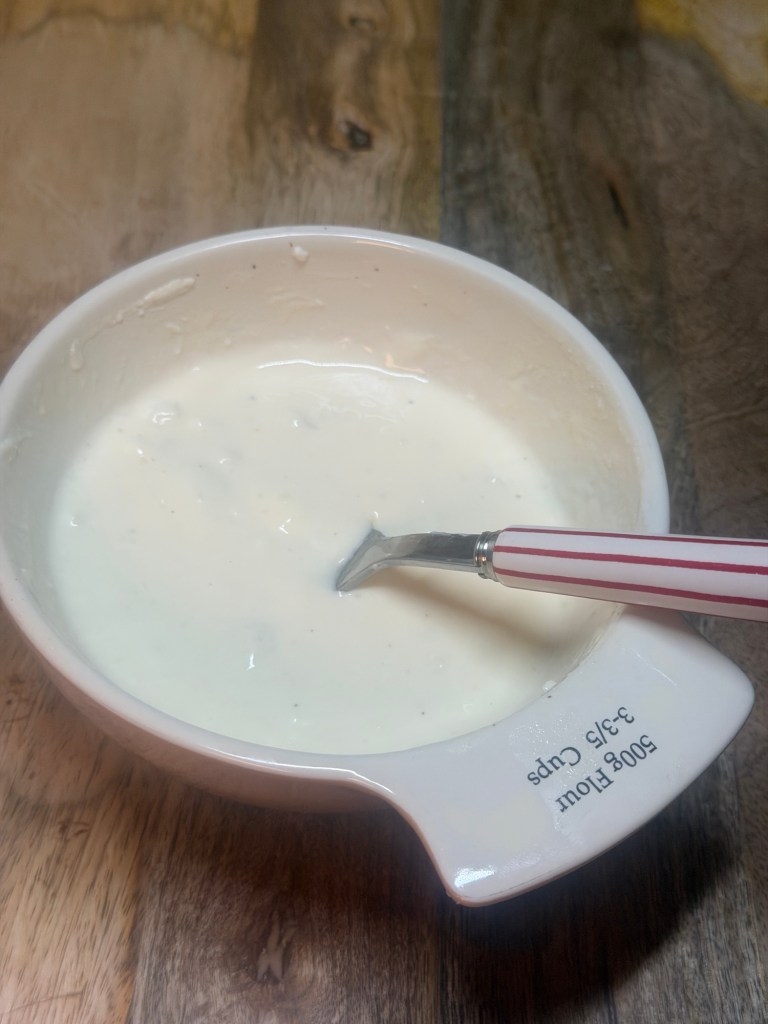
    • A splash or two of hot pasta water (start with 2 tbsp)
    • A pinch of salt
    • Plenty of black pepper
    You want a smooth, pourable mixture – not too thick, not too runny. Think “luxurious single cream”.

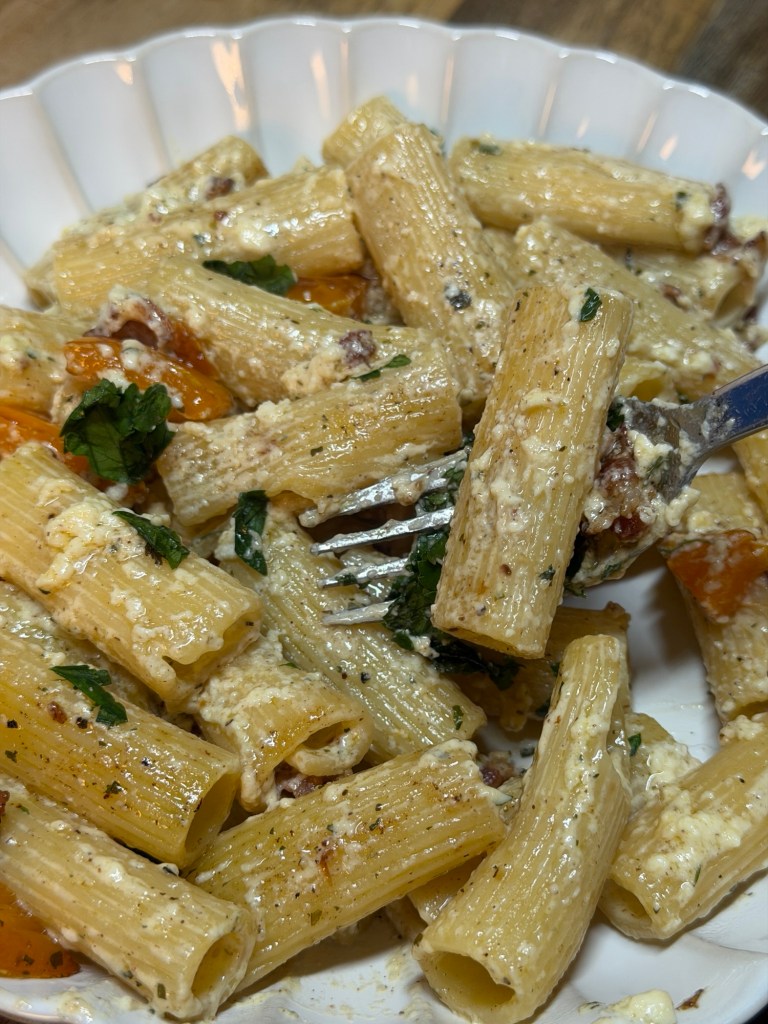
    Now crumble or dollop in about half your soft goat’s cheese and stir it through. It doesn’t need to be perfectly smooth; a few streaks and tiny lumps are perfect. That tangy goat’s cheese cuts through the richness of the mascarpone and stops the whole thing feeling heavy.

    Step 4: The Carbonara‑Style Moment (No Scrambled Eggs Allowed)
    This is where we channel carbonara energy without the stress.
    • Add your hot drained pasta into the pan with the peppers and bacon. Toss everything together so the pasta is well coated in the bacon fat and pepper juices.


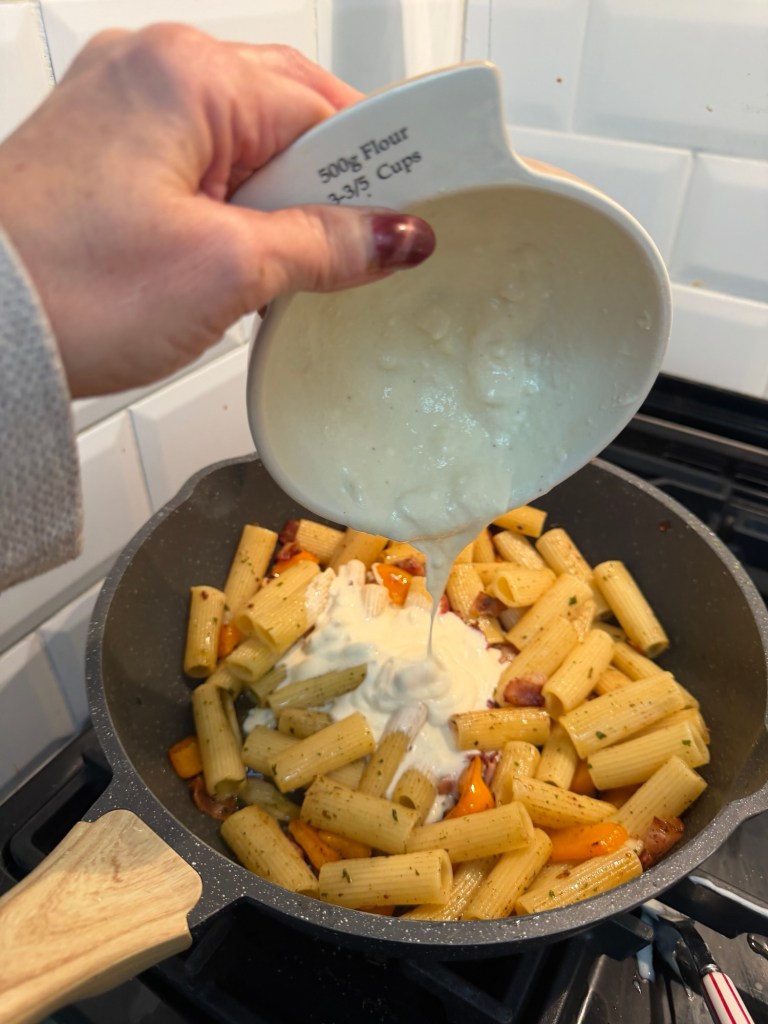
    • Turn the heat off under the pan. This is important. If it’s on, your egg mixture will scramble and you’ll have fancy breakfast pasta.
    • Pour over your mascarpone–egg–goat’s cheese mixture.


    • Toss and stir vigorously, like you mean it. Add splashes of your reserved pasta water as needed until the sauce turns glossy and coats every piece of pasta.

    The heat from the pasta and pan will gently cook the egg and melt the cheeses, giving you a beautifully creamy sauce instead of sad curds.

    Step 5: Finishing Touches (a.k.a. The Show‑Off Bit)
    Now taste it. This is your “what does it need?” moment.
    You can:
    • Add more black pepper
    • Add a tiny pinch more salt if needed
    • Squeeze in a bit of lemon for brightness
    • Sprinkle over some chilli flakes if you like a little kick
    Finally, dollop or crumble the remaining soft goat’s cheese over the top. You’ll get gorgeous little creamy, tangy pockets as you eat – like little surprise flavour bombs.

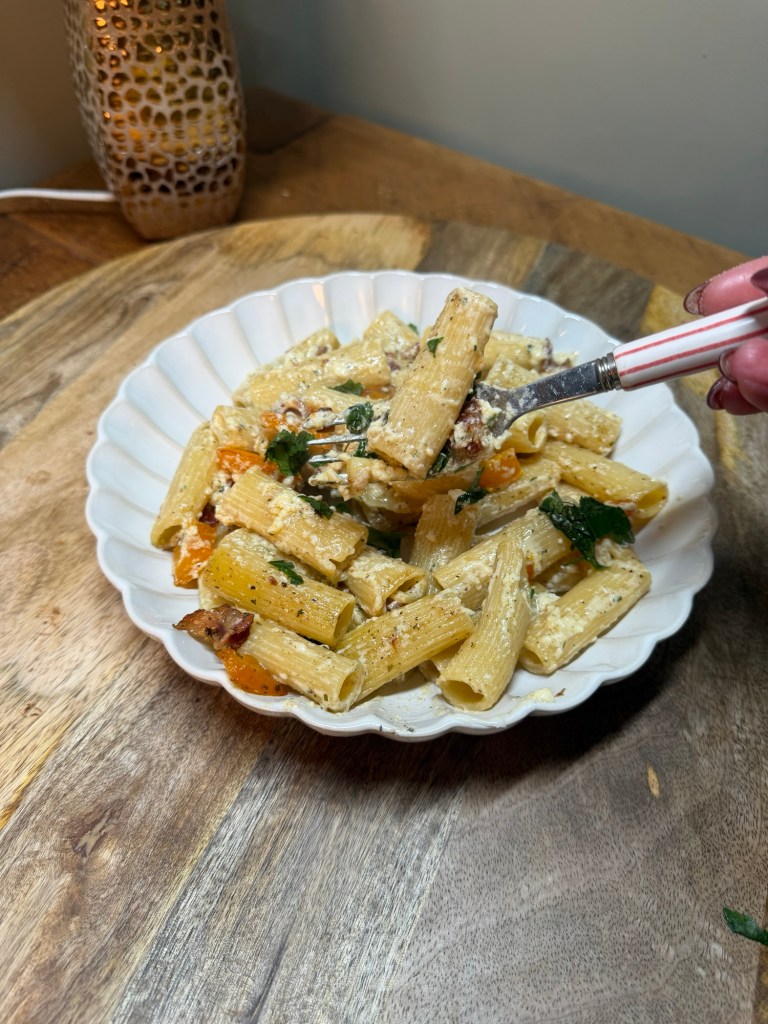
    Serve immediately in warm bowls, twirl it high for maximum drama, and pretend you haven’t just cooked this in 20 minutes using odds and ends from the fridge.

    Make It Extra (Optional Little Twist)
    If you want to take it to the next level:
    • Tip the finished pasta into a small oven dish.
    • Add a few extra blobs of goat’s cheese on top.
    • Pop it under a hot grill for a couple of minutes until you get golden, slightly toasted spots of cheese.

    Now it looks like a pasta bake that took an hour. You and I both know it absolutely did not.

    Why This Works So Well
    This little recipe hits that sweet spot between comfort food and “I could serve this to guests and not be ashamed”:
    • The mascarpone makes the sauce ultra velvety without faffing with flour or roux.
    • The egg gives you that carbonara‑style silkiness and richness.
    • Soft goat’s cheese adds tang and personality so it’s not just “creamy for the sake of it”.
    • Bacon brings salt, smoke and crunch.
    • Peppers add sweetness and colour, stopping it from being a beige bowl of doom.

    It’s the kind of meal you can throw together on a weeknight that still feels a bit special – like you’ve made an effort when you absolutely considered toast.

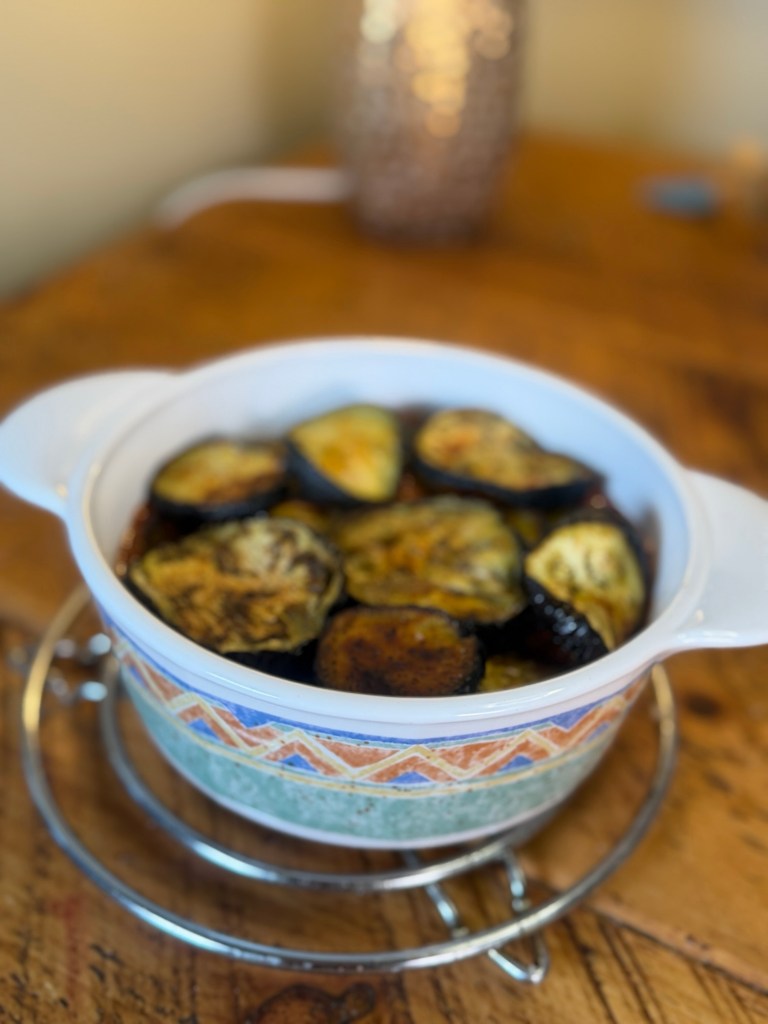
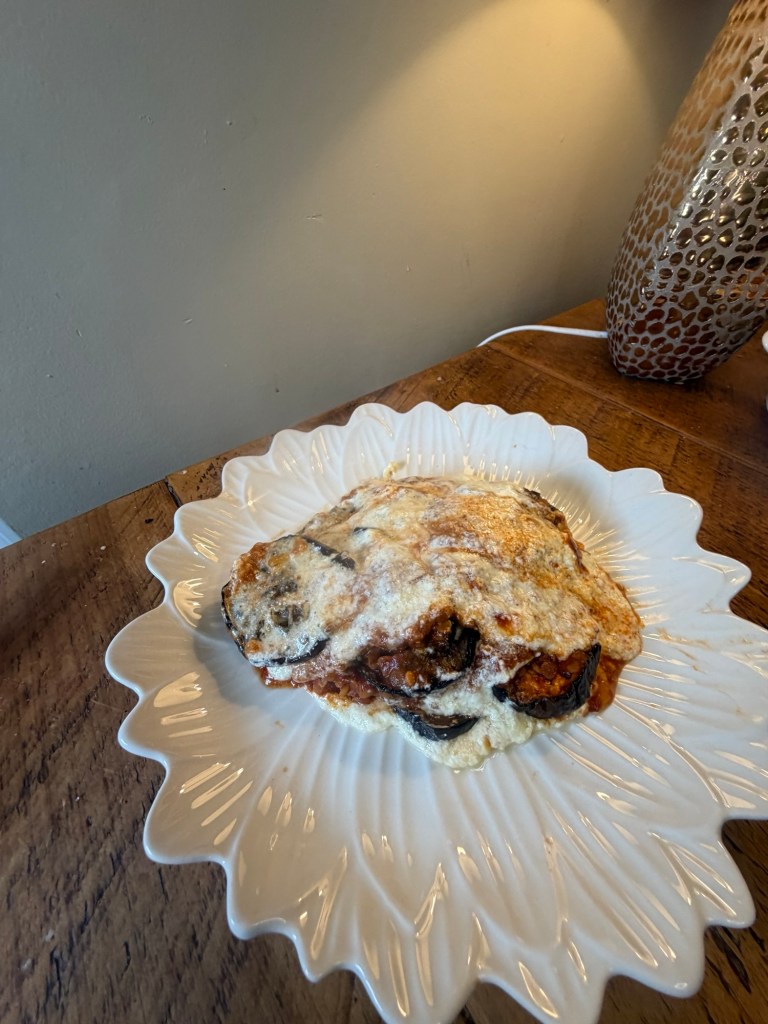
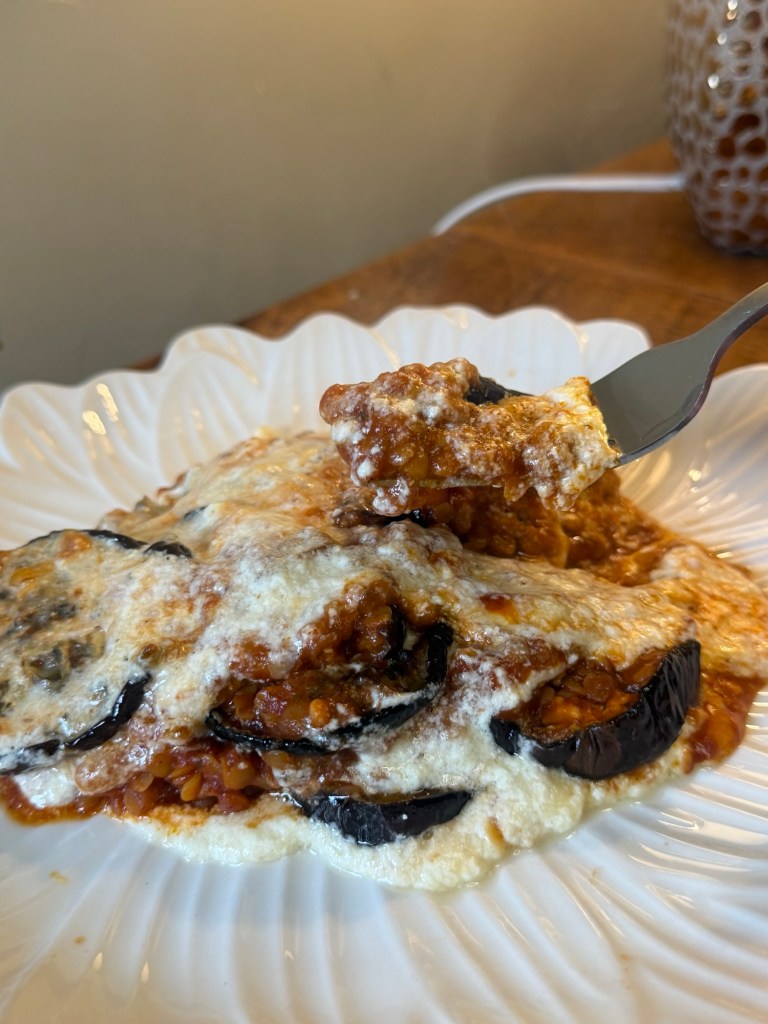
  • Easy Peasy Red Lentil and aubergine  Moussaka (Feeds 4)

    Easy Peasy Red Lentil and aubergine Moussaka (Feeds 4)


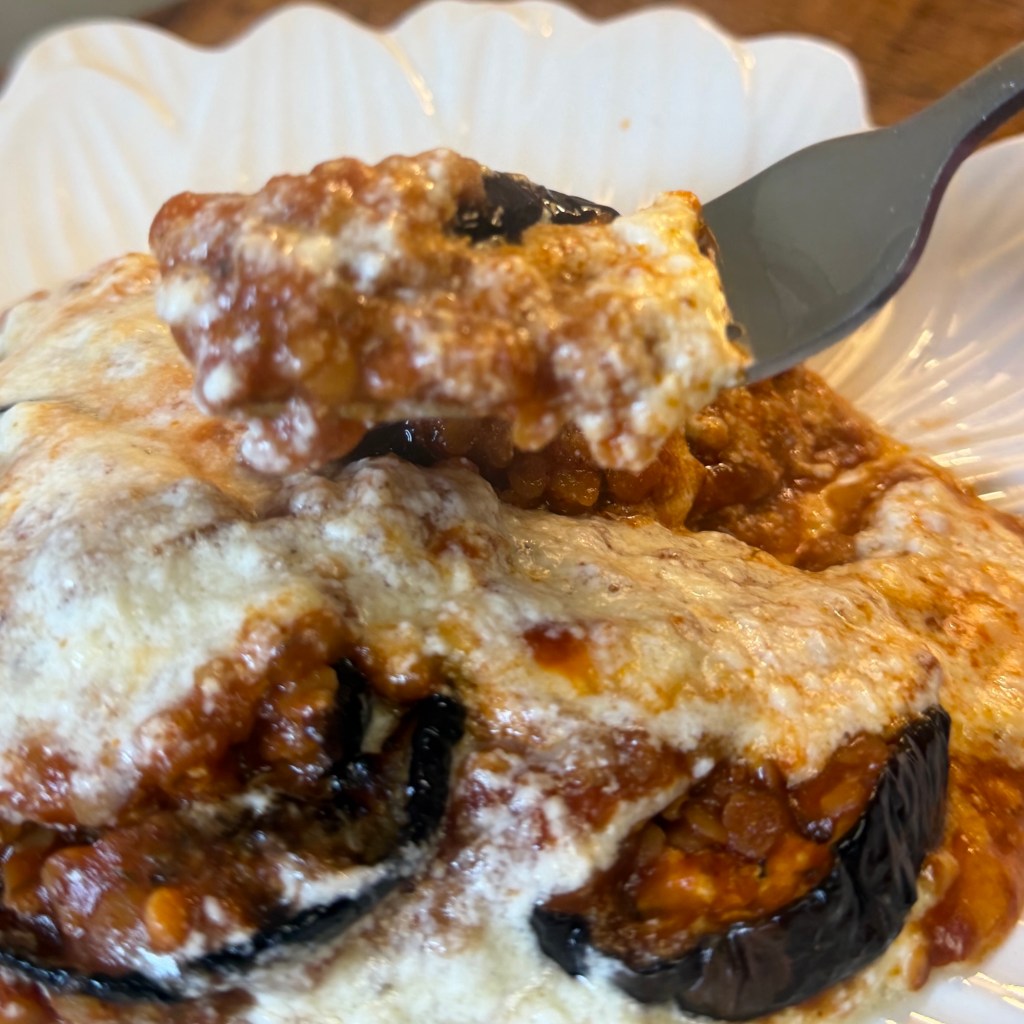
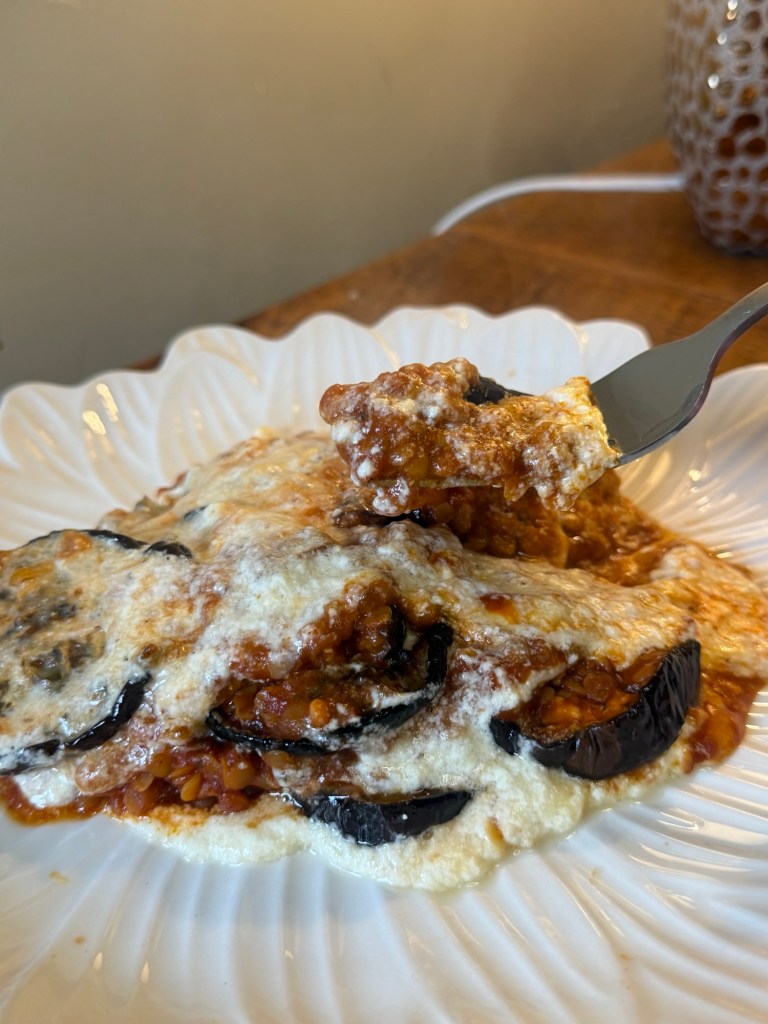
    If you love proper comfort food but don’t want to faff around with loads of ingredients, this Easy Red Lentil Moussaka is for you. It’s rich, cosy, uses simple store‑cupboard bits, and still feels a bit “special” when it comes out of the oven. Think soft layers of aubergine, a gently spiced red lentil base, and a creamy, golden top – but all very doable on a weeknight.
    Below is everything you need: ingredients, method, and a few little tips so it comes out perfect first time.

    Ingredients (serves 4)
    For the aubergine
    • 2 large aubergines, sliced into 1 cm rounds
    • 2 tbsp olive oil (for brushing)
    • Salt and pepper
    For the lentil layer
    • 2 tbsp olive oil
    • 4 garlic cloves, finely grated or crushed
    • 2 tsp dried oregano
    • 2 tsp ground cinnamon
    • 150 g dried red split lentils, rinsed
    • 2 tsp Worcestershire sauce (or a vegan alternative)
    • 20 g vegetable stock paste or 2 vegetable stock cubes
    • 2 × 400 g tins chopped tomatoes
    • 2 tsp sugar
    • 150 ml water – more if lentils look dry
    • Salt and pepper, to taste

    Method

    Get the aubergine going
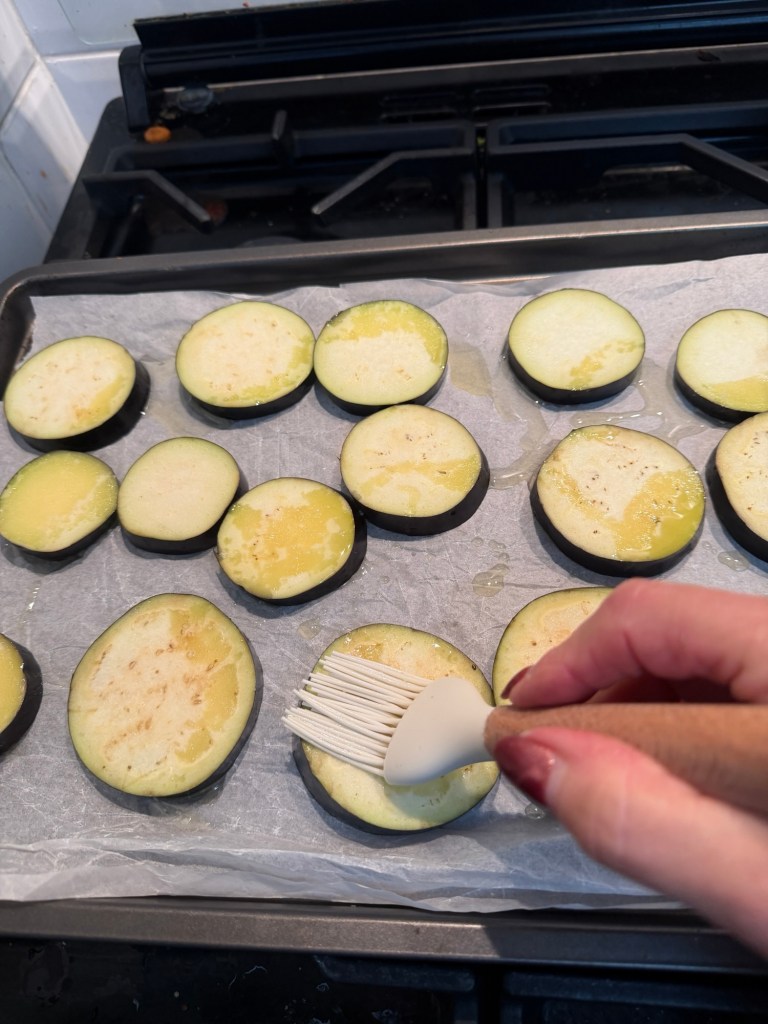
    Preheat your oven to 220°C / 200°C fan / gas 7. Line one or two baking trays with baking paper if you want easier washing up. Lay the aubergine slices out in a single layer, brush (or drizzle and rub) with olive oil on both sides, and season with salt and pepper.
    Roast for about 20–25 minutes, turning halfway, until the slices are soft, lightly golden and just starting to catch at the edges. You want them cooked through because they won’t get much more time in the oven later.

    Start the lentil base
    While the aubergine is roasting, heat 2 tbsp olive oil in a large pan over medium–high heat. Add the dried oregano, ground cinnamon and about half of your garlic. Cook for around 1 minute, stirring, just until everything smells fragrant – you don’t want the garlic to brown.
    This little step – toasting the herbs and spices – makes the whole dish taste warmer and more “slow‑cooked” than it really is.

    Add lentils and liquids
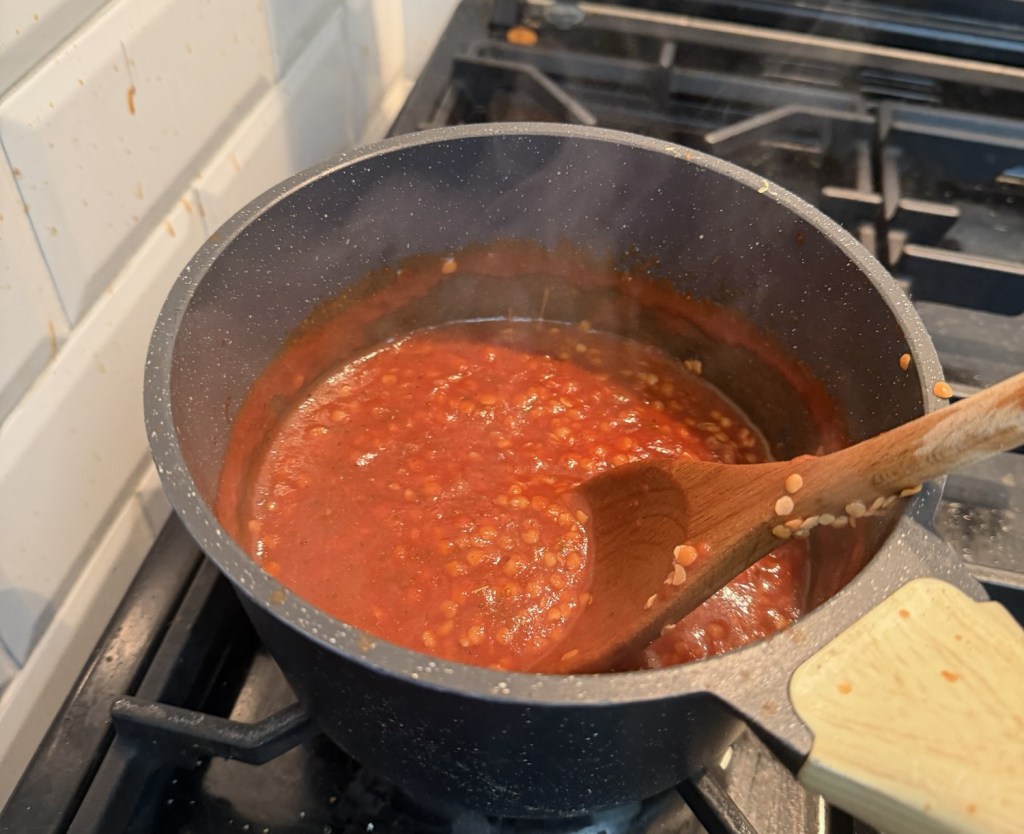
    Tip in the rinsed red lentils, Worcestershire sauce, stock paste or cubes, chopped tomatoes, sugar and the water. Give it all a good stir, scraping up anything that’s stuck to the bottom of the pan.
    Bring it up to the boil, then turn the heat down so it’s gently simmering. Leave it to bubble away for about 20–25 minutes, stirring occasionally. Red lentils break down and thicken as they cook; you’re aiming for a thick, spoonable sauce – not soupy, not dry.
    If it starts to look too thick before the lentils are soft, add a splash more water. If it’s still a bit runny at the end, just let it simmer with the lid off for a few extra minutes.

    Season properly
    When the lentils are soft and the sauce is nice and thick, stir in the remaining garlic and season really well with salt and pepper. Taste it – this is your moment to get the flavour right. The lentils should taste rich, tomatoey and slightly warm from the cinnamon, not flat or bland.
    Turn off the heat and set aside for a moment while you sort the topping.

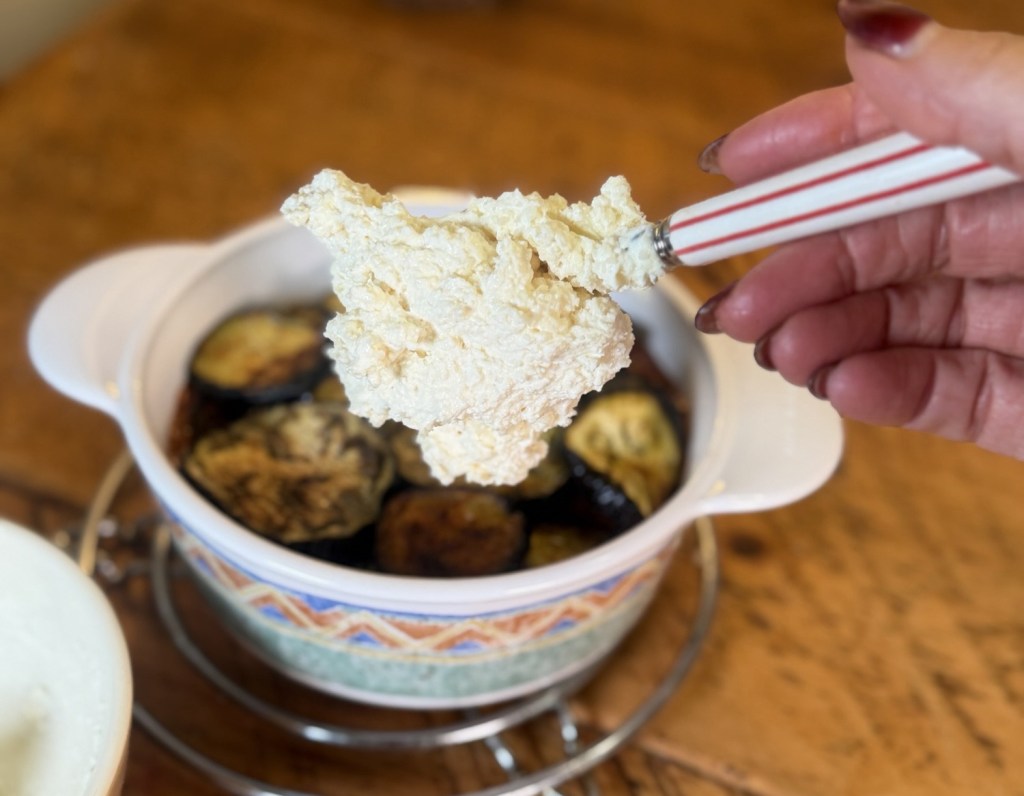
    Mix the creamy topping
    In a small bowl, stir together the crème fraîche and most of the grated cheese, keeping a little cheese back for sprinkling on top. Add a good grind of black pepper. You don’t need to overthink this – just mix until it’s smooth and combined.
    If you prefer a slightly looser topping, you can add a tablespoon or two of water or milk to loosen it slightly.

    Build your moussaka
    Tip the lentil mixture into a medium–large ovenproof dish and spread it out evenly. You want a reasonably thick layer, not too shallow.
    Lay the roasted aubergine slices over the lentils in a single layer, overlapping them slightly like roof tiles.

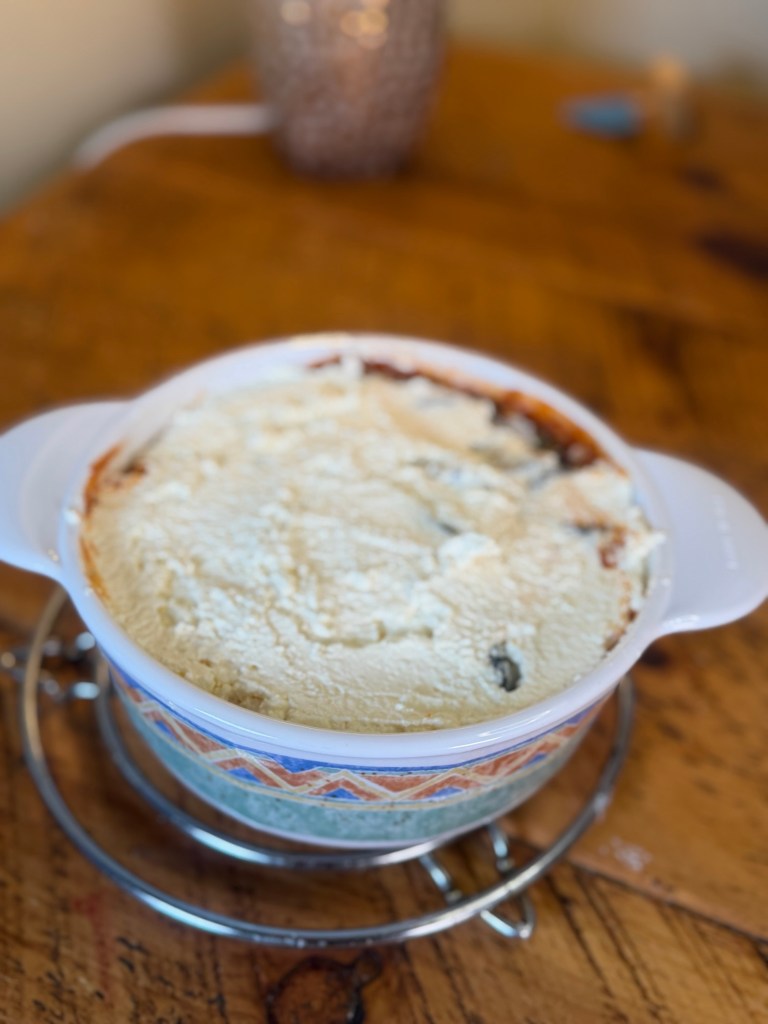
    Spoon the crème fraîche and cheese mixture over the top and gently spread it right to the edges. Sprinkle over the remaining cheese.

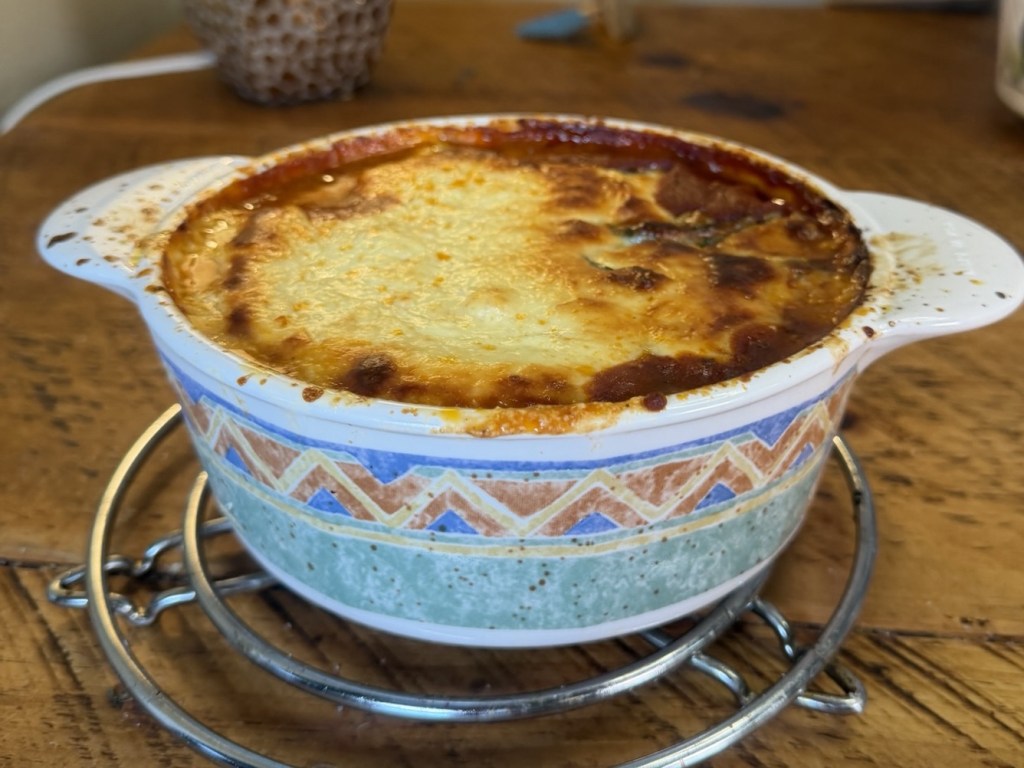
    You should now have three layers: lentils, aubergine, creamy top.

    Bake until golden
    Pop the dish under a hot grill or back into the oven (still at 220°C / 200°C fan) for about 5–8 minutes, just until the top is bubbling and golden in patches.

    Keep an eye on it – it can go from perfect to very dark quite quickly.

    Once it looks lovely and golden, take it out and let it sit for 5–10 minutes. This resting time helps it firm up so it’s easier to scoop or slice.

    Optional: quick garlic bread
    If you’re making the garlic bread, you can do this while the moussaka is having its little rest.

    Mix the grated garlic with olive oil and a pinch of oregano or za’atar. Spread the mixture onto your ciabatta slices. Grill or bake for a few minutes until crisp and lightly golden at the edges. Serve on the side to mop up all the lentil sauce.

    Little tips and swaps
    • Want it lighter? Use half crème fraîche and half fat‑free Greek yoghurt, or swap entirely to a thick yoghurt if you don’t mind a slightly tangier top.
    • Make it vegan: Use a plant‑based yoghurt instead of crème fraîche, a vegan cheese, and a vegan Worcestershire or a splash of soy sauce.
    • Spice it up: Add a pinch of chilli flakes when you add the cinnamon if you like a bit of warmth.
    • Prep‑ahead friendly: You can assemble the whole thing earlier in the day, keep it in the fridge, then bake until hot and golden when you’re ready to eat. Just give it a few extra minutes in the oven if it’s going in cold.

    This dish really feels like “home” to me – simple ingredients, nothing fancy, but so much love in the layers. I love that you can make it on a normal weeknight and it still feels like a little moment of care, whether you’re cooking just for yourself or feeding a full table. If you do make it, I hope it becomes one of those recipes you come back to on the days you need something warm, comforting and uncomplicated – the kind of meal that quietly looks after you while you get on with life.

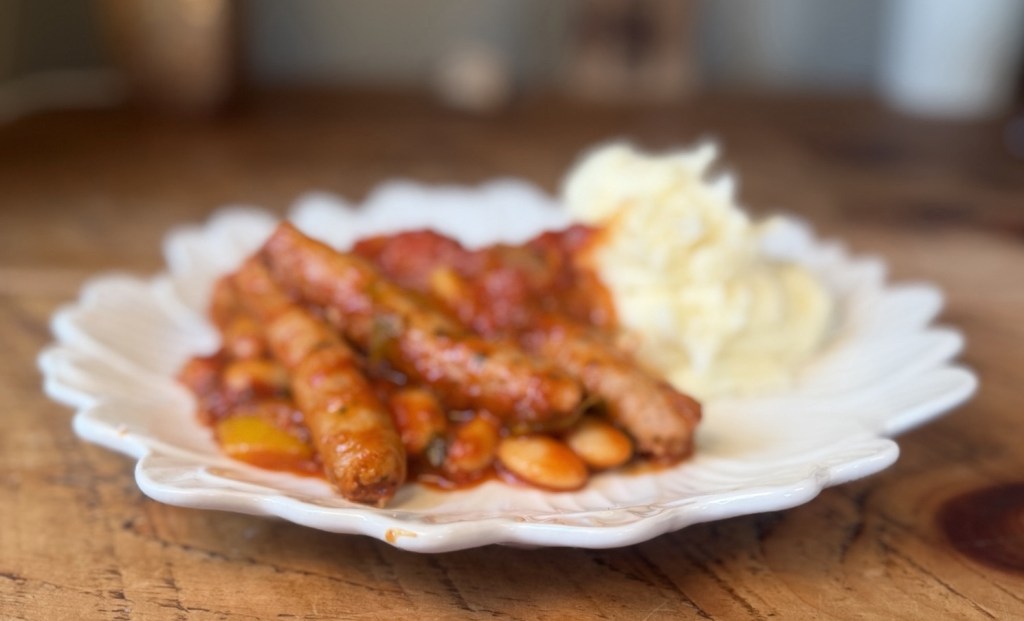
  • Sausage & Bean Casserole – The Ultimate Comfort One‑Pot

    Sausage & Bean Casserole – The Ultimate Comfort One‑Pot


    If there’s one dish that feels like a warm hug on a plate, it’s this sausage and bean casserole. It’s the kind of meal that looks after you, feeds leftovers into lunches, and makes the house smell like proper home cooking. I always make enough to feed a family of four with plenty left over for tomorrow’s lunch tucked neatly in the freezer.


    What I Use


    For me, getting the base ingredients right makes all the difference. I’ll usually grab:
    • Good quality pork sausages (I always go for Heck chipolatas because they’re 97% pork and packed with flavour, not additives).
    • Rashers of rindless streaky bacon for that savoury, salty hit.
    • A couple of onions, a good handful of garlic, and the soft bits from the fridge that need using.
    • A tin of chopped tomatoes plus a dollop of tomato purée for depth.
    • A tin of butter beans (or mixed beans) and some good chicken stock.
    • Fresh herbs, a pinch of chilli or smoked paprika, and those little extras that make it feel like yours.
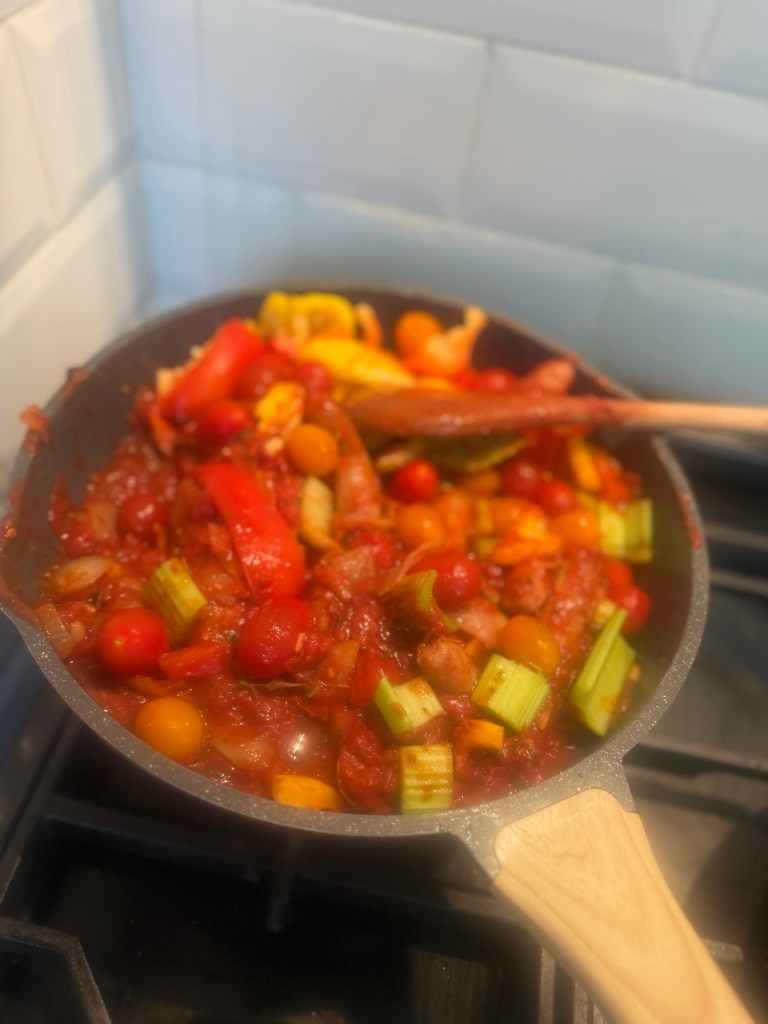
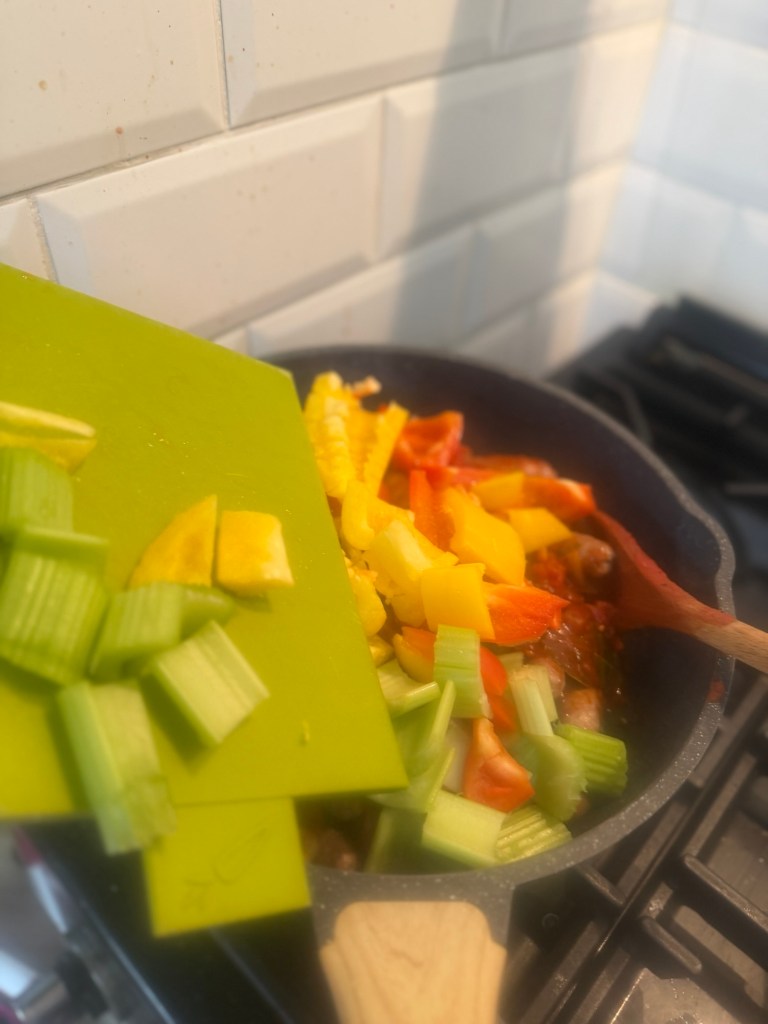
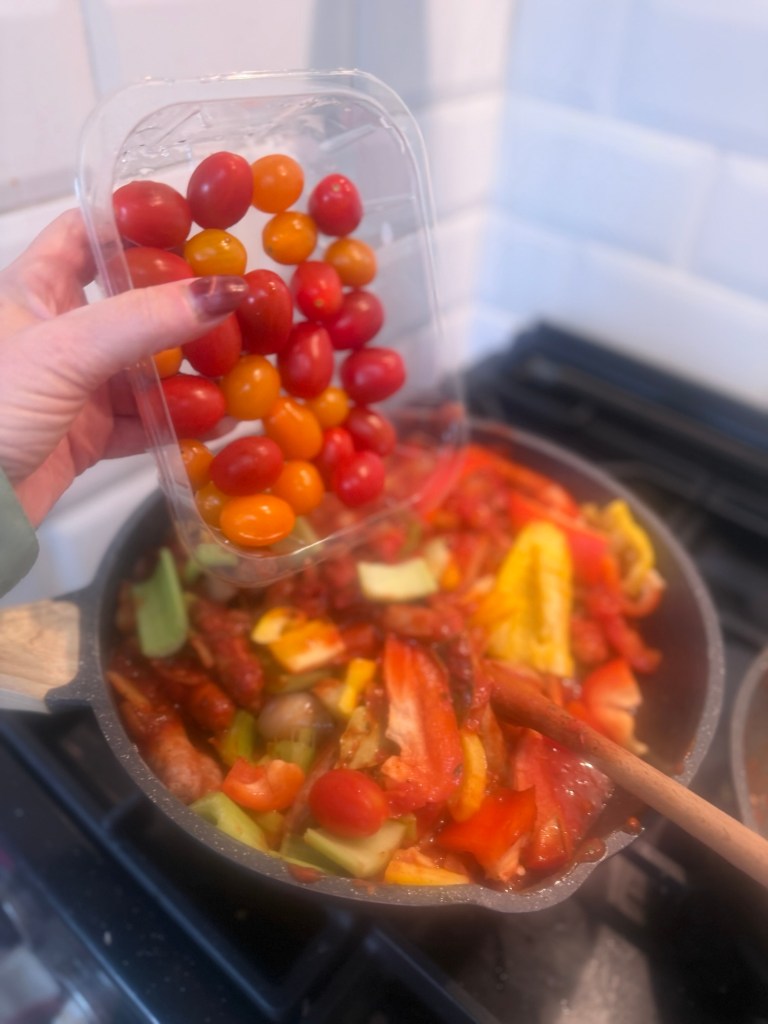
    On this particular day, I had 1 red pepper and 2 sticks of celery, plus a big bunch of flat leaf parsley sitting in the fridge, all begging to be used. If there are any soft cherry tomatoes lurking at the back, I’ll chop them up and throw them in too—no waste, all flavour.

    Ingredients

    • 12 good pork sausages (I use Heck chipolatas, 97% pork)
    • 6 rashers rindless streaky bacon, chopped into small pieces
    • 2 onions, sliced or finely chopped
    • 1 red pepper, sliced or diced
    • 2 sticks of celery, finely chopped
    • 3–4 garlic cloves, finely chopped
    • 1 tbsp cooking oil (sunflower or olive)
    For the sauce:
    • 1 tbsp tomato purée
    • 1 × 400 g tin chopped tomatoes
    • 300 ml chicken stock (about ½ bottle)
    • 1 tbsp Worcestershire sauce
    • 1 tbsp dark brown sugar or muscovado sugar
    • ½–1 tsp chilli powder or 1 tsp smoked paprika (adjust to taste)
    • ¼ tsp dried marjoram
    • ¼ tsp dried basil
    • ¼ tsp dried oregano
    • ¼ tsp dried thyme
    • 2 bay leaves
    • A few fresh thyme sprigs (optional, but lovely if you have them)
    For the beans & finish:
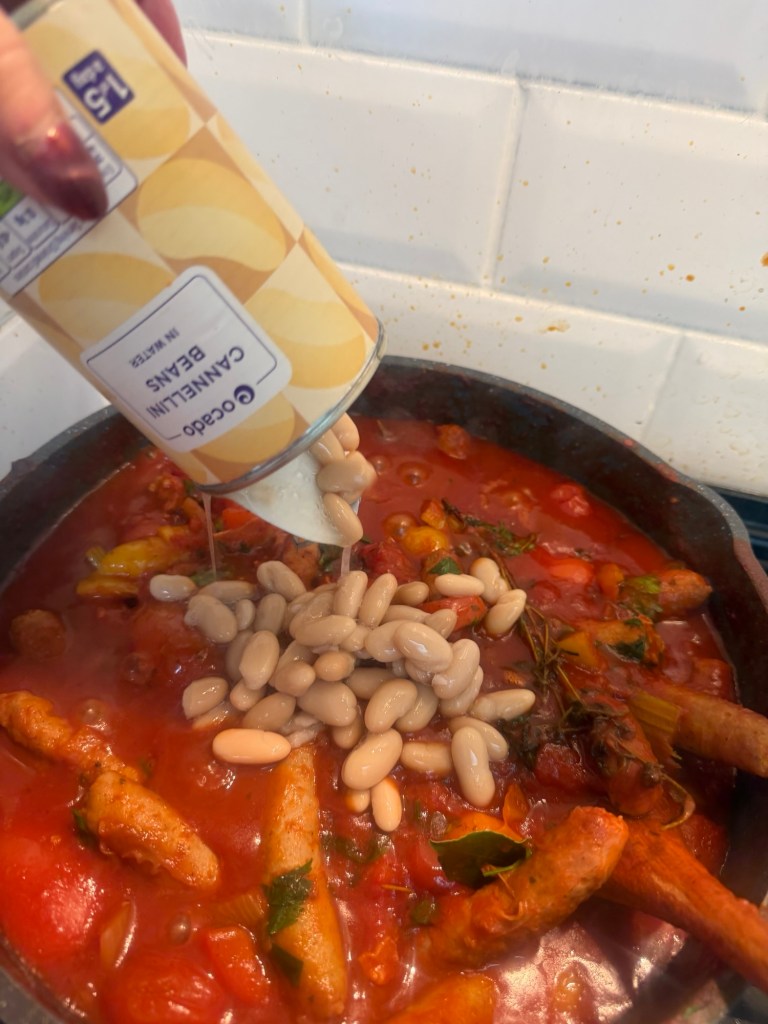
    • 1 × 400 g tin butter beans or mixed beans, drained and rinsed
    • A big bunch of flat leaf parsley, chopped (plus a little extra to sprinkle on top)
    • Salt and freshly ground black pepper, to taste
    Optional but encouraged:
    • Any soft or slightly over‑ripe cherry tomatoes from the fridge, chopped (toss in with the sauce)

    My Method (In My Kitchen)

    1. Brown the meat
      I start by heating a little oil in a big frying pan or my cast‑iron casserole dish. The sausages go in first. I like to brown them all over so they get a little golden crust without drying out. Then they go into the casserole while I cook the bacon in the same pan until it’s crisp and golden. All that tasty bacon fat stays in the pan—that’s the start of flavour magic.
      Top tip: Always buy more sausages than you think you’ll need. It’s hard not to eat one here, one there as you’re cooking, and by the end you’ll still want plenty in the pot!

    Soft veg base
    In a separate pan go the onions, I let them cook down slowly until they’re soft and starting to caramelise. When they’re ready, I add the garlic, stirring for just a minute so it doesn’t burn. If I have any soft cherry tomatoes, I’ll add them now too—they’ll break down into the sauce and give it a lovely natural sweetness.

    Build the sauce
    Next I stir in a bit of chilli powder or smoked paprika (enough so you can feel it but not so much it takes over), then the chopped tomatoes, a tablespoon of tomato purée, and enough chicken stock to just cover the bottom of the pan. A splash of Worcestershire sauce and a teaspoon of brown sugar help balance the acidity, and in go my dried herbs—usually a mix of marjoram, basil, oregano and thyme, plus bay leaves and a few sprigs of fresh thyme if I have them.
    Once it’s bubbling gently, I pour everything into the casserole with the sausages and bacon. Everything simmers together, the sausages soaking up all that rich, tomato‑y goodness. I put in the celery, tomatoes and chopped peppers then combine.

    The gentle simmer
    I cover the pot loosely and let it simmer for about 20 minutes on a low heat. I’ll give it the occasional stir to stop anything catching, but otherwise it pretty much looks after itself. This is when the house really starts to smell amazing.

    Add beans and finish


    After the sauce has thickened slightly, I stir in the drained beans and let it all go for another 10 minutes until the sausages are cooked through and the casserole feels thick and comforting. If the sauce is a touch too thin, I’ll let it bubble uncovered for a few extra minutes; if it’s too thick, a splash of stock or water sorts it out.


    Right at the end, I pull out the bay leaves, tear in the flat leaf parsley, and give it one final stir. The result is a deep, hearty casserole with soft veg, tender beans, and juicy sausages coated in a rich, glossy sauce.

    How I Serve It
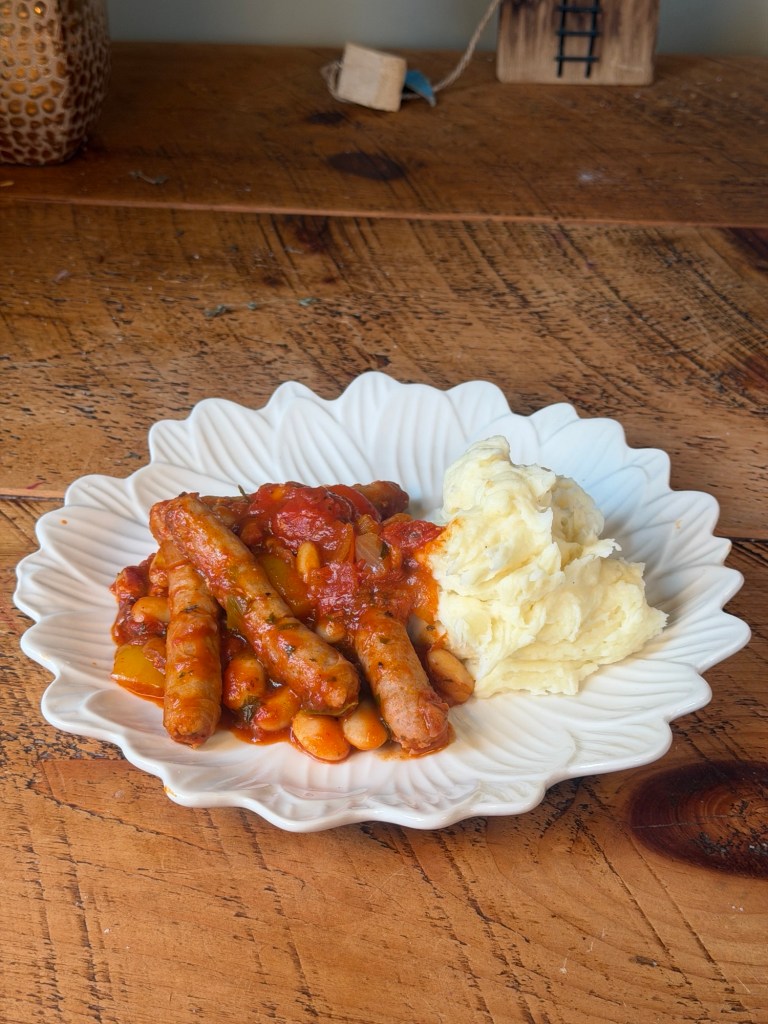
    I live for this served with creamy mashed potato—it soaks up the sauce beautifully and makes it feel like proper comfort food. If you’re in a rush, a spoonful over rice or alongside crusty bread works just as well.

    Leftovers heat up brilliantly and taste even better the next day, and the whole thing freezes really well in portion‑sized containers.

    If you’re batching this into content‑ready dinners, freeze it flat in freezer‑safe containers so it thaws faster and stacks neatly in the freezer. It’s my go‑to “no‑stress” family meal that still looks and tastes like love on a plate.