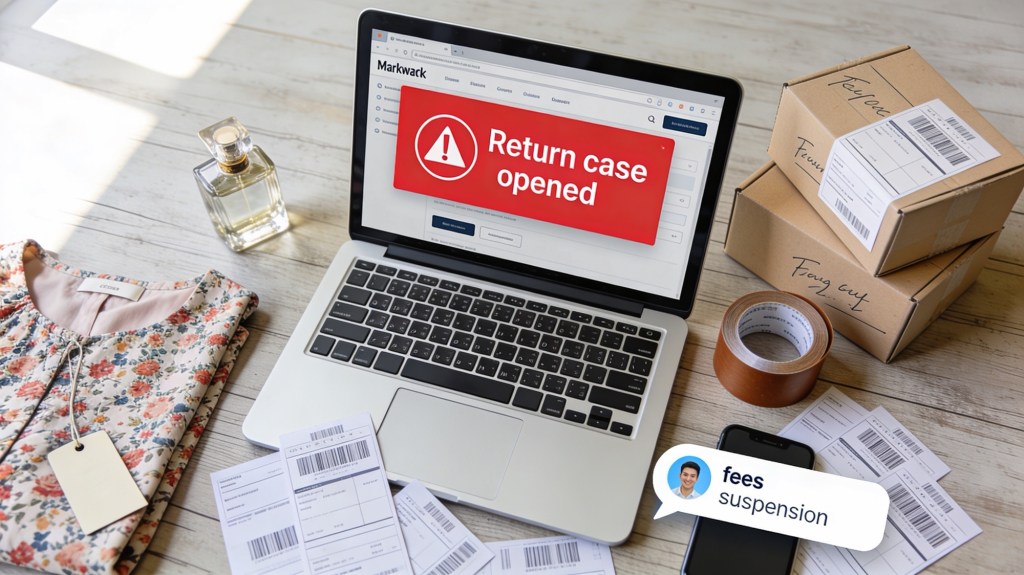
If you talk to regular UK resellers, you’ll hear the same thing on repeat: eBay just doesn’t feel like a level playing field anymore. Between the fees, promoted listings, returns and buyer protection, the platform feels heavily weighted towards keeping buyers happy – even when that comes at a real cost to the people actually supplying the stock.
I’ve sold on eBay for years, alongside other platforms like Vinted and Depop, and I can honestly say the gap between how buyers and sellers are treated has never felt wider.
Buyer Protection Everywhere, Seller Protection Nowhere
eBay leans hard into reassuring buyers. The Money Back Guarantee is splashed all over the site, and there are all kinds of safety nets if you’re the one doing the shopping.
If you’re selling, it looks and feels very different:
• A buyer can open a case if an item doesn’t arrive or they say it’s “not as described”.
• They usually have a generous window to do this, long after you’ve mentally moved on from that sale.
• Even if you don’t offer returns, a buyer can effectively force one by choosing the right reason when they open a case.
On paper, there is “seller protection”. In reality, it often feels like you’re starting from a weaker position. The default seems to be: believe the buyer, then see if the seller can somehow prove otherwise. You can upload photos, screenshots, tracking – the lot – and still find yourself on the losing side.
Spend five minutes in any seller group and you’ll see the same stories: buyers pressing the right buttons, using the right language, and the refund going straight through regardless of how careful the seller has been.
The Perfume Problem – Free Samples At The Seller’s Expense
Nowhere have I felt this imbalance more than with perfume.
For a while I regularly listed sealed, genuine perfumes – all high‑street names like Marks & Spencer and Zara that most people in the UK would recognise. The listings were clear, the bottles were sealed, and everything was exactly as shown in the photos.
Here’s what kept happening:
• A buyer would purchase a perfume, open it, “test” it at home, decide they didn’t like the fragrance, and then open an “item not as described” case.
• Some would go further and claim the perfume must be fake, even though it was completely genuine and bought from a normal shop, just so they could get a refund and avoid paying return postage.
Because “item not as described” is treated as a protected reason, I was expected to accept the return, refund the buyer and, in many cases, cover the return postage as well. I’d end up:
• Out of pocket on the product.
• Out of pocket on the original postage.
• Out of pocket on the return postage.
• Stuck with an opened, used perfume that I couldn’t resell as new.
In other words, some buyers were treating eBay like a free sample counter, and I was the one funding it. Yes, there are rules about items coming back in the same condition, but in practice, getting any kind of support on that front is exhausting and often not worth the energy.
And it isn’t just perfume. I’ve even had completely ordinary items flagged as “counterfeit” and removed – things as ridiculous as a Marks & Spencer mug and a roll of wallpaper. When perfectly normal, branded homeware is being treated like dodgy designer fakes, it really hammers home how jumpy the system is about protecting buyers and brands, and how little faith it places in honest small sellers.
The New Trick: AI‑Generated “Damage” Photos
As if all that wasn’t enough, there’s a newer problem creeping in thanks to AI – and that’s buyers using AI‑generated or heavily edited photos to fake damage.
It goes something like this:
• The buyer receives an item that’s absolutely fine.
• They don’t want to pay to send it back, or they’ve changed their mind.
• They then send through photos showing dramatic scratches, cracks, stains or dents that simply aren’t there in real life.
With AI image tools now everywhere, it’s frighteningly easy for someone to create a “damaged” version of your item in a few taps. From your side, you know the thing you sent was in great condition. From eBay’s side it just looks like a customer showing “evidence” and a seller saying, “No, honestly, that’s not right.”
And again, the system tends to lean towards the buyer. It’s all about “protecting the customer”, but there’s very little in place to protect you from people abusing that trust, especially when the tools they’re using are getting more convincing by the day.
Fees On Top Of Fees: Promoted Listings As A Hidden Tax
Then we have the joy of fees.
As a UK seller, once you add everything up – final value fees, the flat per‑order fee, and the various extras – eBay can easily swallow a chunky percentage of your sale. And that’s before you even talk about promoted listings.
Promoted listings are pitched as an optional extra, a way to boost your visibility if you’re happy to pay a bit more. In reality, they’re starting to feel like a hidden tax on being seen at all.
You set a promoted rate – often a few percent on top of the normal fees – and eBay uses that to push your listings further up in search. The issue is:
• If you don’t promote, it can feel like your items are buried.
• If you do promote, a huge proportion of your sales end up coming through as “promoted”, so you’re paying the extra on almost everything.
So you’re already paying high basic fees, then on top of that you’re nudged into paying extra just to get in front of buyers. It doesn’t feel like optional advertising; it feels like paying twice for the same sale.
Slower Than Vinted: Same Dress, Two Very Different Outcomes
The other big change I’ve noticed is speed, particularly for fashion.
I often list the same item on both platforms – for example, a dress:
• I’ll photograph it once.
• Write one description.
• List it on Vinted and eBay at the same time.
Again and again, that dress will sell on Vinted before anyone has even properly looked at it on eBay. Vinted feels busier and faster for clothing, especially everyday brands and high‑street pieces. It’s very mobile‑first, the app is simple, and crucially, there are no selling fees taken from your side as the seller. The buyer pays a small service fee; you don’t.
On eBay, by the time you’ve thought about fees, promoted listings and the risk of returns, the whole thing feels heavier and slower. For casual clothes and mid‑range fashion, Vinted often wins on both speed and simplicity.
But Vinted Isn’t Perfect Either
That said, Vinted is far from flawless.
One of the biggest issues on Vinted is the way accounts can be banned or suspended with little warning and very little explanation. People wake up to “You’ve been suspended” messages and genuinely don’t know what they’ve supposedly done wrong.
The customer service can be equally frustrating:
• Replies that feel copy‑and‑paste.
• Long waits for any kind of response.
• Very little flexibility or willingness to properly look at individual situations.
So while Vinted can be quicker and cheaper for clothing, it can also feel incredibly fragile. You can be doing everything right, building up a lovely little income stream, and then suddenly find yourself locked out with no clear way to appeal.
Depop: Dead As A Doornail
I’ve also tried Depop, and honestly, for me it’s been absolutely dead as a doornail.
The app looks trendy, it’s popular with a younger crowd, and in theory it should be a great place to move fashion. In reality:
• Views are painfully slow.
• Offers are rare.
• Sales are few and far between.
It might work if you’re in a very specific niche or have the right kind of following, but for the average UK reseller trying to move normal, everyday pieces, it feels pretty hopeless compared to Vinted and even eBay on a good day.
The Lost Human Touch In The Age Of AI
What all three platforms – eBay, Vinted and Depop – seem to have lost is the human touch and basic common sense.
More and more decisions feel automated, driven by algorithms, flags and AI systems rather than real people using their heads. It’s “computer says no” – or worse, “computer says banned” – with very little room for nuance.
The impact of that on small sellers is huge:
• A perfectly normal listing can be removed as “counterfeit” because it matches some over‑sensitive filter.
• A genuine seller can be suspended because too many automated flags stacked up in the background.
• Whole income streams can vanish overnight, with no warning and no straightforward way to speak to someone who can actually fix it.
In the world of AI and automation, these platforms are so focused on protecting themselves and smoothing the buyer experience that they’ve forgotten there are real people on the other side trying to pay their bills. There’s no allowance for common sense, no space for “Let’s actually look at this specific situation.”
So Why Bother With These Platforms At All?
With all of that, you might ask: why stay on eBay or Vinted at all?
The honest answer is that they still have their uses:
• eBay has huge reach, auctions and a big audience for collectables and niche items.
• Vinted is brilliant for moving clothing and shoes quickly without having fees sliced off your side of the deal.
• Depop might work if you hit the exact right niche and aesthetic, even if it’s been a damp squib for me.
But I no longer see any of them as somewhere to put all my eggs.
For me, the sensible approach now is:
• Use eBay selectively, for the right categories, and price with the fees and return risk in mind.
• Use Vinted for fashion and lighter‑weight items, but be aware the rug can be pulled at any time.
• Treat Depop as a nice extra if it ever picks up, not something to rely on.
• Spread stock across multiple platforms so no single site can cut off your income overnight.
Most importantly, remember that none of these platforms are truly on the seller’s side. They will protect their own brand and their buyers first. Your job is to use them while they work for you, keep good records, and never rely on just one site for your entire livelihood.


Leave a Reply