What are your best healthy eating habits? working out on empty and eating at 1.00
You can orchestrate food to sit in a 14-16 hour fast window. And establish a habit that empowers your energy and pulls back the tiredness naturally.
We learned we can be empowered on empty and still kick ass in the gym we attended each morning. It helps if you have a beautiful protein shake and avocado on sour dough, complete with an açai bowl of yogurt with neatly laid out chia seeds, peanut butter and raspberries complete with chopped bananas.
If you had to get a tattoo right now, what would it be and why?
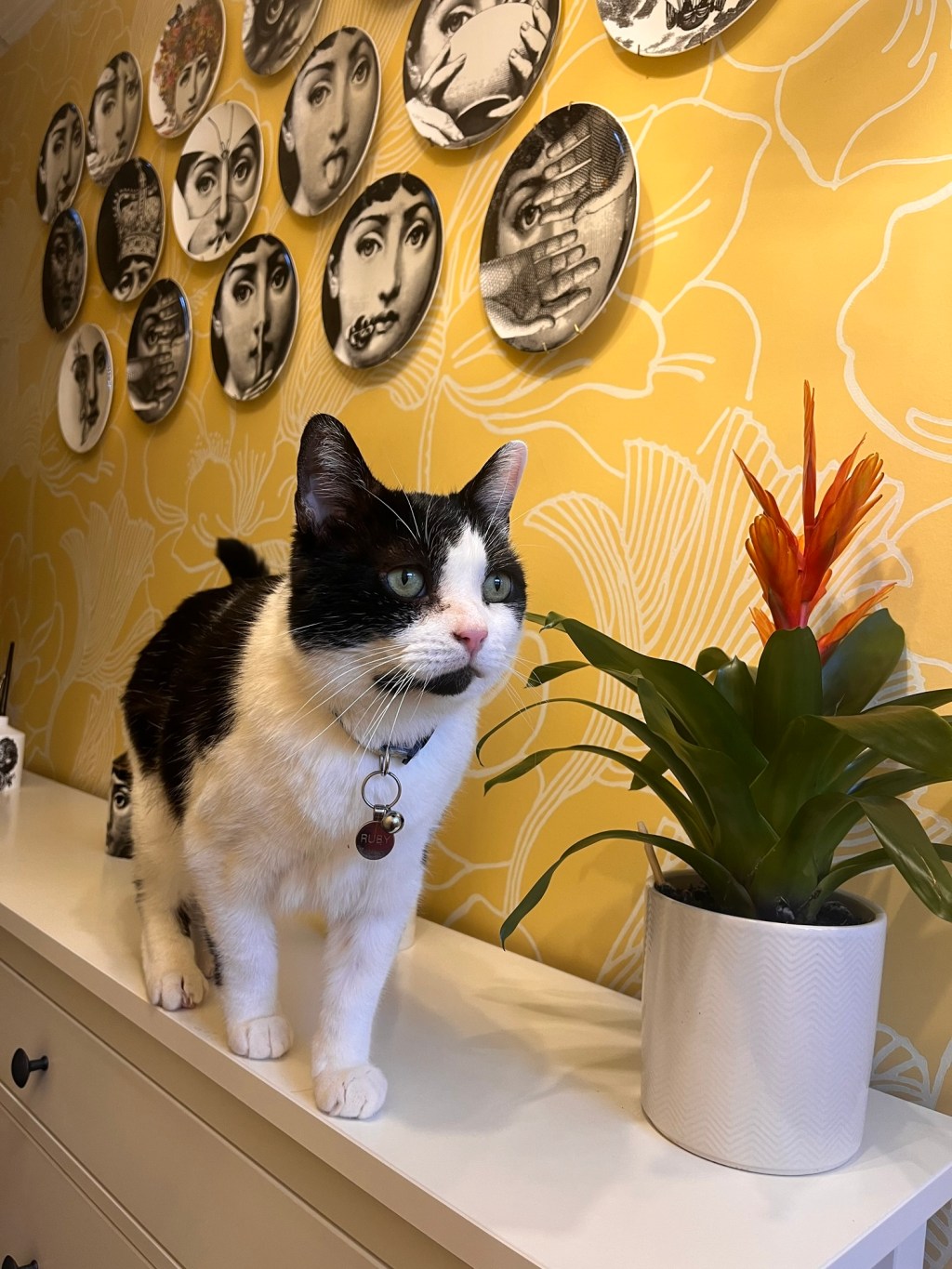
If I had to get a tattoo right now, there wouldn’t even be a second thought—it would be Ruby’s paw print. We sadly lost our beautiful Ruby earlier this year, and honestly, not a day goes by where we don’t miss her. She was such a huge part of our lives and home; from her little quirks and cuddles to simply having her nearby, she made every day better. A tiny paw print might seem simple, but it would mean absolutely everything to me. It would be a little piece of Ruby that I could carry with me forever—a reminder of how loved she was, how much joy she brought us, and how deeply she is still missed every single day.
Share a photo of your pet and tell us one thing that makes them uniquely them.
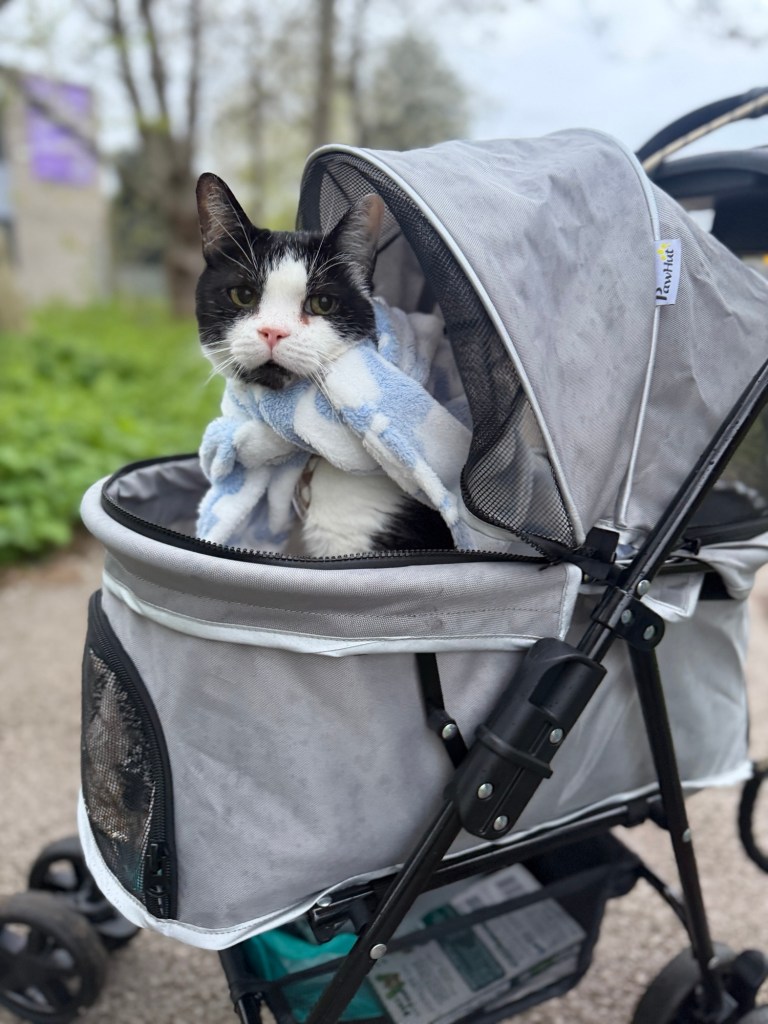
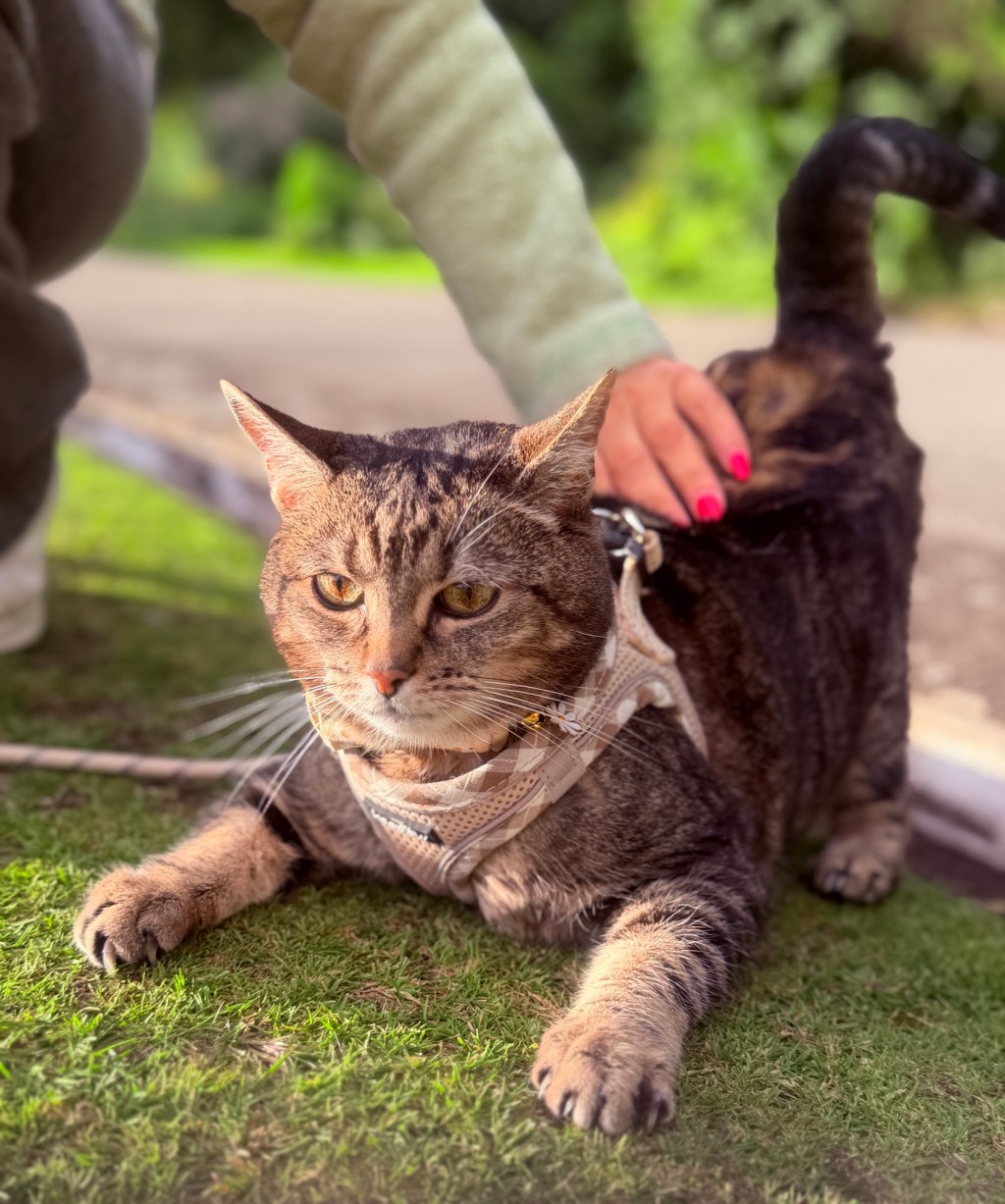
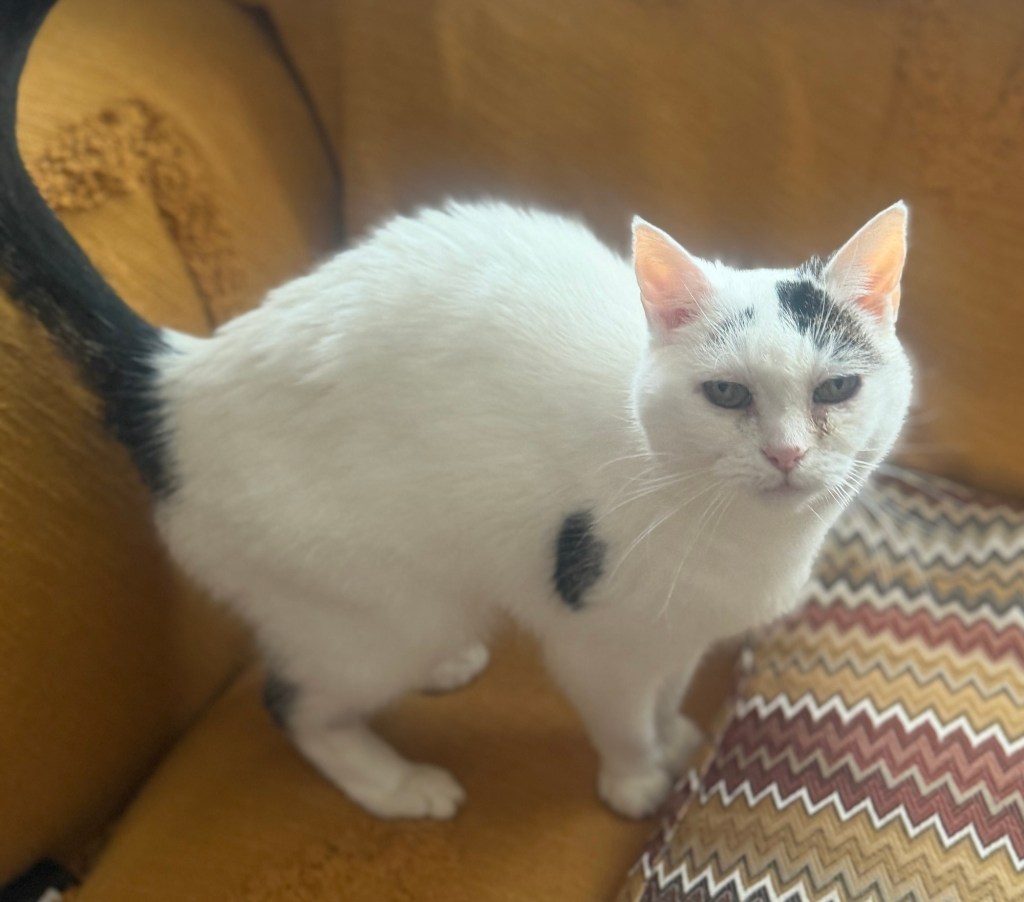
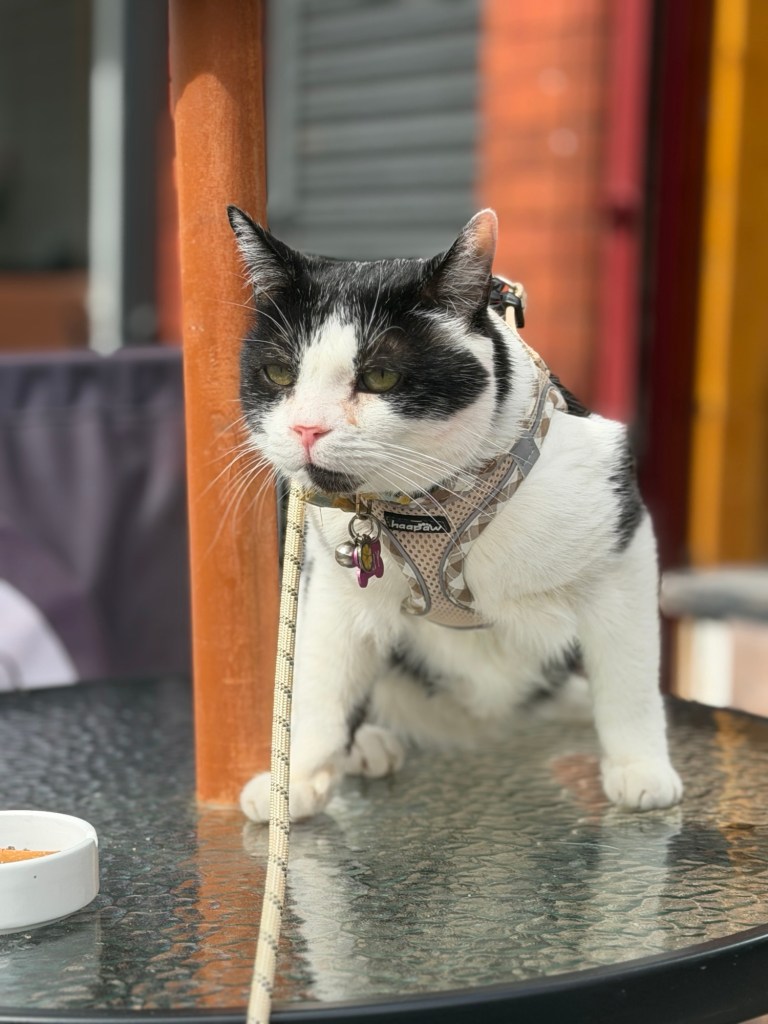
We got Tommy aka Tommy fang 4 weeks ago . He was the cat of my daughters boyfriends grandfather who had unfortunately gone into hospital and subsequently passed away . We were told Tommy was 7… a trip to the vets indulged us he was 14 or 15…. Then whilst clearing grandads house they found paperwork saying he is in fact 18 in September … 89 in human years !! He is adorable .. grumpy very vocal which we love but his outstanding feature is his fangs !!!
Do you think we’re shaped more by our experiences or by who we are?
From where I’m standing now, my answer is: • In youth, it feels like experiences shape us most. • In midlife and beyond, it becomes clear that who we are has been shaping our experiences all along. The job titles change, the houses change, the platforms change, the people around us change – but certain things stay steady: the way we love, what we value, how we respond when life is kind and when it’s cruel.
Ageing doesn’t erase the impact of our experiences. It simply puts them in perspective. It lets us see them as chapters rather than verdicts, catalysts rather than cages.
And in that calmer, wiser space, self‑discovery becomes less about “finding a new you” and more about finally recognising the old you – the one who has been there since the beginning, quietly guiding you home.
A Gentle Prompt For You If you’re reading this in your own midlife, I’d love you to spend a moment with this question: • What has stayed the same about you, no matter what life has thrown at you? Is it your humour? Your creativity? Your sense of responsibility? Your love for animals? Your loyalty? Your curiosity?
That’s the climate of your life. The rest is weather.
Let’s Talk About It I’d love to hear your take on this. • Do you feel more shaped by what’s happened to you, or by who you’ve always been? • Has ageing changed the way you answer that question? Share your thoughts in the comments – and if you’re on TikTok, duet or stitch this idea with your own story about self‑discovery in midlife. Let’s start a conversation about ageing that feels honest, gentle and deeply human.
If you had to be an animal for a week, which one would you be and why?
There’s a question that does the rounds online every so often — if you had to be an animal for a week, which one would you be and why? — and I’ve been thinking about it more than I probably should. So here’s my proper answer.
My Pick: A Cat
Hands down, no contest. If I only had seven days to live as another creature, I’d choose a cat. And not just any cat — a well-loved, slightly spoilt house cat with a sunny windowsill and a human who knows exactly how to scratch behind the ears.
Here’s why. Eighteen Hours of Sleep, Guilt-Free As a content creator who posts three times a day, the idea of sleeping for most of the day with absolutely zero guilt is honestly intoxicating. Cats don’t lie awake at 2am wondering whether they scheduled the Reel. They don’t check their analytics. They curl into a tight little croissant and switch off the world. One week of that would do me the power of good. Curiosity Without Consequences Cats get to investigate everything — boxes, cupboards, the inside of a wardrobe, a paper bag — and nobody calls it nosy. It’s just being a cat. I’ve always loved poking around new places (resort grounds in Mexico, unfamiliar kitchens, other people’s bookshelves), and a week of exploring with no social obligations attached sounds like pure joy. The Window-Watching Life This is the bit I’m most drawn to. A cat perched on a sunny sill, watching the world go by — birds, neighbours, the weather changing — is living a slow, mindful life that we humans keep having to remind ourselves to do. Cats don’t need a meditation app. They just are.
You Get to Be Loved Without Performing The thing about being online is you’re always sort of “on.” A cat is loved just for existing. You don’t have to be funny or useful or productive. You just have to show up, purr occasionally, and be soft. There’s something deeply restful about that. The Honest Bit I think the reason this question sticks with me is that the animal you choose says a lot about what you’re craving. A cat week would be a week of rest, warmth, observation, and quiet affection — which, if I’m being honest, is exactly the gear I’m sometimes missing between the recipe shoots and the travel vlogs and the comment-replying. So that’s my answer. A cat. A warm windowsill. A nap that nobody judges.
What about you — what animal would you be, and why? I’d genuinely love to know.
If you’ve ever looked around your kitchen mid‑recipe and thought, “This is absolute madness,” you’re not alone. Life rarely runs in a straight, neatly labelled line, and our days tend to look more like a stack of half‑finished to‑do lists than a perfectly colour‑coded planner. The big question is whether that low‑level chaos is harming us… or quietly helping us become more resilient, creative humans. When everything in our lives is tightly controlled, we can become rigid and anxious about change. A little unpredictability forces us to problem‑solve, re‑prioritise and accept that “good enough” can still be pretty brilliant. Moderate challenge and novelty often go hand in hand with better mood, stronger coping skills and a sense of achievement – all things we don’t get if every day is perfectly smooth. Think of a busy morning: you’re juggling breakfast, messages, maybe a last‑minute plan change. It feels messy, but it’s also proof that your brain can pivot quickly, make decisions and keep going. That kind of everyday chaos, in small doses, works like strength training for your nervous system. Creativity rarely comes from sitting in silence waiting for the “perfect” idea. It usually arrives when life is slightly noisy: multiple projects on the go, a few deadlines, and a brain that’s buzzing with inputs. Exposure to new, unexpected situations helps us make fresh connections and come up with more original ideas. For content creators, cooks and anyone running a home, that’s good news. The recipe you invent because you “just used what was in the fridge” or the TikTok you film in a stolen ten minutes between tasks often ends up being more engaging, more real and more relatable than anything over‑planned. A bit of chaos shakes us out of autopilot and pushes us to experiment. Of course, not all chaos is helpful. Constant stress, zero boundaries and feeling permanently overwhelmed are not badges of honour; they’re warning lights. The sweet spot is “optimal challenge” – enough unpredictability to keep us engaged, but not so much that we tip into burnout. Helpful chaos looks like a busy but meaningful day with pockets of rest built in, a little mess in the house while you prioritise the things that matter more, and new projects and ideas with realistic expectations and deadlines. Harmful chaos feels like never switching off, living in permanent crisis mode with no plan to slow down, and saying yes to everything and resenting it later. Instead of waiting for the day when everything is perfectly organised, we can learn to work alongside our everyday chaos. Accept that some mess is the price of a full, interesting life. Anchor your day with a few non‑negotiables: movement, decent food, and moments of quiet. Treat interruptions and surprises as prompts rather than problems – a chance to flex your adaptability muscles. Use chaos as data: if the same situation overwhelms you every week, it’s a cue to simplify or set a boundary. So, is a little chaos actually good for us? Yes, as long as it stays in the “small, manageable, meaningful” category rather than the “constant emergency” one. A touch of mess keeps us flexible, a dash of unpredictability keeps us curious, and a slightly crowded calendar reminds us we’re living, not just existing. The art is in choosing which chaos to invite in and which to lovingly show the door. If you were to describe the level of chaos in your life right now, would you say it’s “comfortably busy”, “borderline overwhelming”, or “calm but a bit too quiet”?
When Your Brain Thinks Bedtime Is Showtime You know that moment when your head hits the pillow and suddenly your brain goes: “Right. Now we plan our entire life, relive every awkward conversation since 1998, and maybe redesign the kitchen.” Lovely. Some people drift off peacefully. Meanwhile, the rest of us are hosting a full-blown TED Talk in our own heads at 2am. And if, like me, it runs in the family — well, it’s basically genetic chaos. My dad has it. My daughters have it. We don’t pass down jewellery or heirlooms… we pass down overthinking. Honestly, it’s the bane of my life. Tried It All? Same. Meditation? Done it. Warm bath? Boiled myself like a human teabag. Reading? Finished three chapters and somehow became more awake. Herbal tea? At this point I could open my own apothecary. Essential oils? I smell incredible. Still not asleep. At some stage, you just lie there thinking: “Right. Sleep is clearly in the lap of the gods. I’ll just… wait here then.” The Plot Twist No One Tells You The harder you try to sleep, the less it happens. It’s like your brain senses desperation and goes, “Oh, you need sleep? Absolutely not.” So instead of trying to switch my brain off (impossible), I’ve started… distracting it like a toddler. What Actually Helps (Somewhat — Let’s Be Real)
The “Get It Out of My Head” List Before bed, I write everything down. And I mean everything. Jobs, worries, random thoughts, “buy dishwasher tablets,” all of it. It’s basically telling your brain: “You can stand down now. I’ve saved the file.”
Background Noise for the Overthinking Olympics Silence is dangerous. That’s where the thoughts get loud. I stick on a podcast or audiobook I’ve already heard — nothing gripping, just enough to gently hijack my brain. Think “mildly interesting, not life-changing.”
Stop Checking the Time Like It Owes You Money Nothing good has ever come from looking at the clock at 2:17am. It’s always just: “Fantastic. I’ve got 3 hours and 12 minutes left to panic about not sleeping.” Avoid.
Get Up (Yes, I Know. Annoying.) If it’s really not happening, I get out of bed. Low lights, no drama, something boring. It stops your brain associating bed with frustration… and mild rage.
Accept That Some Nights Are Just a Write-Off This one’s a game-changer. Some nights, sleep just doesn’t happen properly. And fighting it only makes it worse. Oddly, the minute you stop trying so hard, your body sometimes goes, “Oh… we’re relaxed now? Great. Lights out.” The Family Curse (or Superpower?) Having a brain that won’t switch off is exhausting… but it’s also the same brain that thinks creatively, solves problems, and comes up with ideas at lightning speed. Shame it chooses 1:43am to do its best work. Final Thought If you’re lying there night after night thinking you’re the only one — you’re not. There’s a whole club of us, wide awake, overthinking, rearranging our lives in the dark. We’re just… very, very tired.
What do you love now, that you hated when you were younger?
Silence is my answer – and that’s the whole point. The question that stopped me The question was simple enough: “What do you love now, that you hated when you were younger?” My honest reply? Silence. Not a clever punchline, not a neat life lesson. Just the very thing I used to resist: quiet, stillness, the gaps in the noise. When I was younger, silence felt uncomfortable, even threatening. If things were quiet, it meant something was wrong, or I should be doing more, talking more, proving more. I filled every space with distraction, background sound, or busyness – anything to avoid sitting with myself. Now, I love what I used to run from. Learning to be at peace with quiet Silence, for me, has become a kind of peace – not the dramatic, cinematic kind, but the everyday version that sneaks in between tasks. It’s the moment before I pick up my phone. The pause before I react. The stillness in my breathing when I go for a walk and finally stop narrating everything in my head. I used to think peace meant finishing everything on the to‑do list, fixing every problem, or keeping everyone happy. It sounded like a distant destination: “When life calms down, then I’ll feel peaceful.” What I’ve come to realise is that peace is often found in tiny pockets of silence, within a life that’s still busy, imperfect and noisy. It’s not that my world has gone quiet – it hasn’t. I create content, share recipes, and live online. But the inner demand to fill every second with sound has softened. I no longer panic when there’s nothing playing in the background or nobody speaking. I let the quiet be there. Mindfulness as an old enemy turned friend If silence was the thing I avoided, mindfulness was the word I rolled my eyes at. Years ago, mindfulness sounded to me like a fad – a buzzword that belonged on wellness posters and meditation apps, but not in “real life”. I didn’t want to sit still and watch my thoughts; I wanted to outrun them. Staying busy felt safer than paying attention. The shift didn’t happen overnight. It came in small moments: noticing my breath when I was anxious, paying attention to how my body felt after certain meals, catching myself before I spiralled into an automatic reaction. Those little pauses were my first clumsy attempts at mindfulness. Now, mindfulness isn’t about performing calmness or being perfectly serene. It’s about noticing. Noticing that I’m overwhelmed. Noticing that I’m tired. Noticing that I’m content, even if nothing “big” is happening. It’s being present enough to taste my food instead of inhaling it, and aware enough to enjoy a quiet room instead of racing to fill it. Mindfulness invited me to step into the silence I used to hate – and realise it wasn’t empty after all. Silence in a noisy, online life There’s an irony here: I live and work in spaces that thrive on noise – feeds, notifications, comments, videos, posts. The online world is designed to be loud, fast and constant. In that environment, silence can feel like absence or failure: if we’re not posting, are we falling behind? If we’re not talking, are we being left out? But silence can be a choice, not a gap. Choosing not to respond immediately. Choosing not to share every thought. Choosing not to comment on everything. Choosing a mindful break before creating or consuming more. In my own routine, that looks like: • Sitting quietly with my morning drink before I film anything. • Taking a silent walk without headphones, just listening to the world as it is. • Allowing myself a few breaths between tasks, instead of leaping straight into the next thing. These aren’t dramatic lifestyle changes; they’re tiny acts of resistance against the pressure to be “on” all the time. They’re my way of saying: I can live a visible life and still honour invisible moments. The gift of not answering So when I read the question, “What do you love now, that you hated when you were younger?”, my answer being silence felt strangely right. Silence is no longer the enemy. It’s the space where I feel most at peace, the doorway into mindfulness, and the reminder that I don’t have to narrate or justify every part of my life. Sometimes not having a clever story is the story. Perhaps the real shift isn’t that I now “love” silence in the same way I love my favourite foods or places. It’s that I’m no longer afraid of it. I can sit in it. I can let it hold me. I can trust it. And in a world that constantly asks us to explain, perform and produce, choosing silence as an answer might be the most mindful response of all.
What’s something you used to believe as a kid that seems ridiculous now?
As a kid, I had it all planned out. The moment I became an adult, life would simply fall into place. I would eat cake for breakfast if I wanted to. I would stay up as late as I liked. Nobody would tell me what to do, where to be, or when to go to bed. I would be completely, gloriously free. I could not wait. And then adulthood arrived. And with it came taxes, alarm clocks I set for myself, and the inexplicable urge to go to bed at 9pm voluntarily. Nobody asked me to. I just… wanted to. What happened to me? I also discovered that “eating whatever you want” as an adult means standing in front of the fridge at 11pm eating leftovers over the sink because you forgot to plan dinner. Living the dream, truly. The worst part? I used to watch adults stress about boring things like mortgages and grocery bills and think “that will never be me.” Reader, it is absolutely me. I have entire conversations about the price of olive oil now and I cannot be stopped. Here is the truth nobody tells you as a child: adults are just children who got taller and started paying for their own biscuits. We are all equally clueless, just pretending otherwise with varying degrees of confidence. So if you are a kid reading this thinking adulthood is the answer — bless your heart. Enjoy your naps while someone else pays the bills. You have no idea what is coming. And if you are an adult reading this? You already know. Pour yourself a cup of tea. We are in this together.
What’s something you used to believe as a kid that seems ridiculous now?
As a kid, I had it all planned out. The moment I became an adult, life would simply fall into place. I would eat cake for breakfast if I wanted to. I would stay up as late as I liked. Nobody would tell me what to do, where to be, or when to go to bed. I would be completely, gloriously free. I could not wait. And then adulthood arrived. And with it came taxes, alarm clocks I set for myself, and the inexplicable urge to go to bed at 9pm voluntarily. Nobody asked me to. I just… wanted to. What happened to me? I also discovered that “eating whatever you want” as an adult means standing in front of the fridge at 11pm eating leftovers over the sink because you forgot to plan dinner. Living the dream, truly. The worst part? I used to watch adults stress about boring things like mortgages and grocery bills and think “that will never be me.” Reader, it is absolutely me. I have entire conversations about the price of olive oil now and I cannot be stopped. Here is the truth nobody tells you as a child: adults are just children who got taller and started paying for their own biscuits. We are all equally clueless, just pretending otherwise with varying degrees of confidence. So if you are a kid reading this thinking adulthood is the answer — bless your heart. Enjoy your naps while someone else pays the bills. You have no idea what is coming. And if you are an adult reading this? You already know. Pour yourself a cup of tea. We are in this together.