Category: #reselling

  • The Ultimate UK Resale Guide 2026: Turning Household Clutter into Cash

    The Ultimate UK Resale Guide 2026: Turning Household Clutter into Cash

    Whether you’re clearing out your wardrobe or finally shifting those leftover rolls of wallpaper, the UK’s second-hand market is thriving. To make the most money with the least stress, you need to understand the unique cultures of eBay, Vinted, and the platforms you should probably avoid.

    1. Choosing Your Platform: Fees & Visibility

    • eBay (The Powerhouse): eBay is now free for private sellers (no final value fees). However, they heavily push you to Promote your listings for a percentage fee. Without this, your items can easily get buried. It is the gold standard for “searchable” items like home goods, tools, and niche hobby gear.  

    • Vinted (The Community): Vinted is free for sellers, but if you have a lot of stock, the Showcase feature is a game-changer. For around £10 a week, it highlights your entire wardrobe to buyers.

    • The Ones to Avoid: * Whatnot: We tried it and hated it. You have to be “on-air” live, and the audience expects items for £1. For the stress and low returns, you’re better off just donating to a charity shop.

    • Depop: Now a ghost town. Sales are slow and the volume is very low; don’t waste your energy here.

    2. Mastering the Logistics: Shipping & Labels

    Both platforms generate pre-paid posting labels, but how you use them matters:

    • InPost Warning: I strongly suggest printing off your labels rather than just using the QR code to stick items in a locker. Mix-ups are frequently reported on social media where couriers apply the wrong label to the wrong “blank” parcel.

    • Vinted & Royal Mail: If you use Royal Mail, they often provide a QR code. I always print this off and stick it on the parcel myself. At the very least, write the name of the buyer on the parcel so you don’t get them mixed up at the drop-off point.  
    • The InPost App: Lockers get full quickly. Download the app to check live availability before you leave the house so you don’t make a wasted journey.
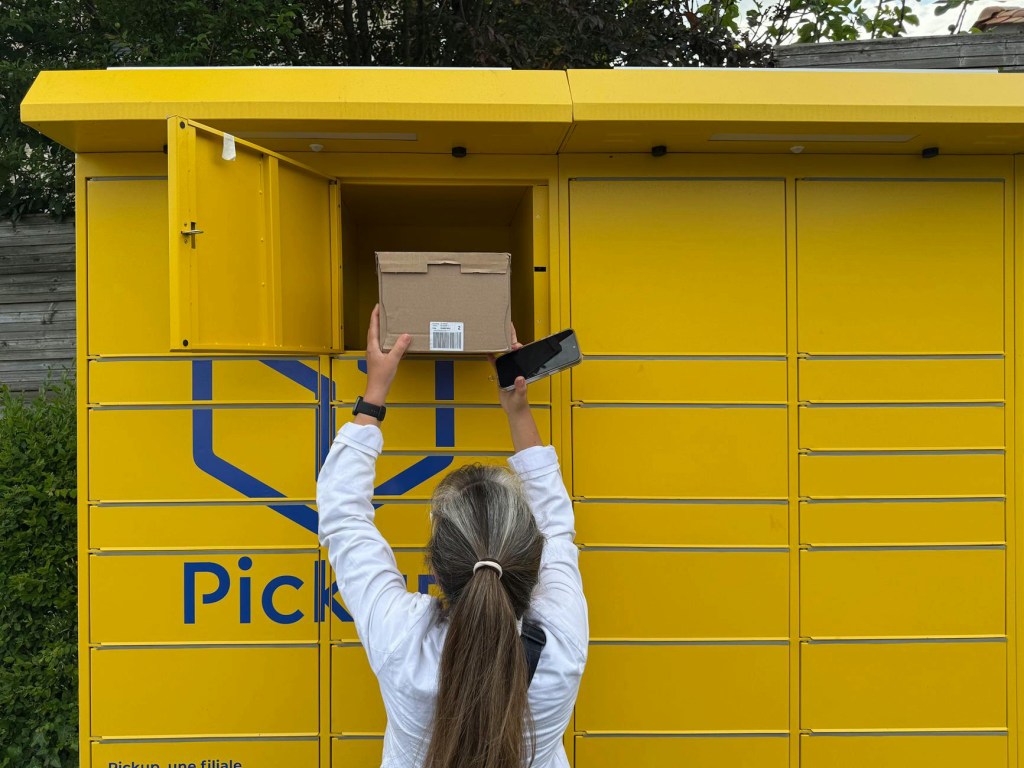
    • Local Hubs: Many Post Offices now take Evri parcels as well as Royal Mail. Turn on as many postage options as possible on Vinted to maximise sales, but disable any that aren’t convenient for you.  

    3. The “Hidden Gold” in Your Home

    Don’t just sell clothes! There is a massive market for household “odds and ends”:

    • Wallpaper: Leftover odd rolls are gold dust for small DIY projects or upcycling furniture.

    • Bedding & Curtains: Quality linens and heavy curtains sell brilliantly on eBay.

    Mugs . Yes you read that right . People break their favourite mugs and NEED a replacement. Your junk could be someone’s holy grail. I’ve lost count of of the number of times someone has contacted me because they have broken mum/dad/ girlfriends favourite . You could be a lifesaver !

    Crockery

    Though this can be a nightmare to package we have done really well on odd plates dishes etc . If you break one item from a dinner set you have to buy a new one. EBay can be the way to sell your own odd plates to complete someone else’s

    I went on eBay years ago because I lost a part on my then baby daughters steriliser and eBay found me one ! So don’t throw this type of things out they sell !

    • Presentation: Ensure clothes are freshly laundered and ironed for photos. My rule of thumb: “Would I be happy to receive this?” If you hesitate when looking at a flaw, don’t list it.

    4. Buyer Protection: What You Need to Know

    • eBay: Robust and automatic. Buyers pay a Buyer Protection Fee (included in the price). If an item is “not as described,” the seller must pay for return postage. Offers on eBay are binding—payment is taken immediately when you accept.  

    • Vinted: Buyers pay a fee at checkout but only have 48 hours to report an issue once delivered. Crucially, the buyer usually pays for return postage. Offers here are non-binding—people “ghost” all the time, so only celebrate once the label is generated.

    5 Pricing

    2. Price Research: Don’t Guess, Use the Data

    Before you list on eBay, you need to know what your item is actually worth—not just what people are dreaming of getting.

    • Sold vs. Active: Never base your price on current “Active” listings. Someone might be asking £50 for a vase that only ever sells for £10.  

    • How to check: On the eBay app, search for your item, then tap Filter and scroll down to toggle on “Sold Items.” * The “Green” Numbers: This will show you the “Completed” listings. Prices in green are what the item actually sold for. If the price is in black, it ended without a buyer. This is the only way to see the true market value.  Be realistic it’s better to sell and get the item sold than have it In the death pile on the spare bedroom!

    6. Final Pro-Tips

    • Double Listing: You can list on both platforms at once, but delete the listing on the other platform immediately when it sells. Getting caught out is a nightmare for your ratings!

    • Photos & AI: Vinted is strict—no AI-generated images or stock photos or you risk a ban. eBay allows AI background tools but still bans stock photos for used items.

    The Verdict

    While eBay is the best place to get top dollar for niche household items and branded curtains, Vinted is my personal favourite. Even though you might not sell items for quite as much as you would on eBay, they tend to move much quicker. The whole experience feels more laid back and social—it’s just a much easier way to clear your clutter without the corporate pressure . Any questions let me know !!

  • The Vinted Wild West: Why People Send Insulting Offers (And Then Disappear)

    The Vinted Wild West: Why People Send Insulting Offers (And Then Disappear)

    Whether you’re clearing out your wardrobe for some extra holiday cash or you’re a seasoned “pro-seller” trying to shift a designer gem, the Vinted “ping” is a sound that brings a mix of hope and immediate, soul-crushing frustration.

    You open the app, expecting a notification that your item has sold. Instead, you find an offer so low it feels like a personal attack on your character—or even worse, you accept a fair offer within thirty seconds and then… tumbleweeds.

    If you’ve ever found yourself shouting, “Why even send the offer if you aren’t going to buy it?!” at your phone while your dinner gets cold, this post is for you. Let’s dive into the chaotic psychology of the Vinted buyer.

    1. The “Car Boot Sale” Delusion

    We have to remember that Vinted isn’t a high-street shop, and it’s not even really eBay anymore. It has morphed into a giant, global, 24/7 digital car boot sale.

    At a physical car boot sale, people don’t just want the item; they want the thrill of the steal.

    • The Sport of Haggling: For a lot of buyers, the “Make an Offer” button is basically a game of Deal or No Deal. They aren’t thinking about your profit margin; they’re chasing the hit of dopamine that comes from “winning” a negotiation.

    • The “Cheeky” Punt: Let’s be real—sometimes lowballing works. A seller who is moving house or just desperately needs space might say “fine, just take it” to a 60% discount. Buyers send “stupid” offers because, once in a blue moon, someone is tired enough to say yes.

    2. The “Hidden Fee” Panic

    As a seller, you see a £10 item. You think, “That’s a bargain!” But the buyer’s brain is doing some very stressful “Vinted Math.” By the time they click through, the screen looks like this:

    • Item: £10.00

    • Buyer Protection Fee: £1.10

    • Shipping (Standard): £3.29

    • Total: £14.39

    Suddenly, that “tenner” purchase is nearly £15. Many buyers send a lowball offer not because they think your item is worthless, but because they are trying to “cancel out” the fees and shipping costs to bring the total back down to the price they saw on the thumbnail.

    3. The “Offer and Ghost”: What’s Actually Happening?

    This is the one that truly grinds our gears. Why send an offer, wait for the seller to accept, and then disappear into the void?

    The “Safety Net” Strategy

    Think of this as the “dating app” approach to shopping. A buyer might find five different pairs of black Levi’s they like. They send a £20 offer to all five sellers simultaneously. The first seller to accept “wins” the buyer, and the other four sellers are left shouting into the abyss. It’s cold, it’s calculated, and it’s incredibly annoying.

    The Impulse Cool-Down

    We’ve all been there. It’s 11:30 PM, you’ve had a glass of wine, and you desperately need a vintage leather jacket. You send the offer. By the time the seller accepts the next morning, the “buying fever” has broken. You’ve realized you have three jackets already and you probably shouldn’t spend the money. On Vinted, because an accepted offer isn’t a binding contract (unlike eBay), it’s way too easy to just… walk away.

    Window Shopping 2.0

    For some, making an offer is just a way of “super-favouriting” an item. They’re testing the waters. They want to see if you’re a “flexible” seller just in case they decide to buy it next payday. They aren’t ready to commit; they’re just flirting with your listing.

    How to Keep Your Sanity

    Look, Vinted is a wild west. To survive without throwing your phone out the window, try these three rules:

    • Don’t take it personally: A £2 offer on a £10 item isn’t a comment on your fashion sense. It’s just a stranger in their pajamas trying their luck.

    • The “Counter-Offer” is your best friend: Never just decline. Even if their offer is insulting, counter-offer with your lowest price (or even just 50p off the original). It keeps the door open and reminds them that there’s a real person on the other end.

    • The “Expect Nothing” Mantra: Until you see the notification that says “Download Shipping Label,” the sale does not exist. Don’t start looking for a mailing bag or imagining what you’ll spend the profit on until the money is actually in the “Pending” bin.

    The bottom line? Vinted is a marketplace of human whims, late-night boredom, and bargain hunting. For every ten “ghosts” and lowballers, there’s one dream buyer who pays full price and leaves a 5-star review. You just have to wade through the “Is this still available?” messages to find them!

    What’s the most “creative” lowball offer you’ve ever received? Drop a comment and let’s commiserate!

  • From “Pile on the Floor” to Pro Seller: Our 20-Year Guide to Mastering Vinted & eBay

    From “Pile on the Floor” to Pro Seller: Our 20-Year Guide to Mastering Vinted & eBay

    After over 20 years as resellers, my partner and I have seen it all. We’ve watched platforms rise and fall, but the current “Vinted vs. eBay” era is a whole new ballgame. While we love the thrill of the sale, reselling in 2026 requires more than just a camera and a spare afternoon—it requires a strategy. I started like most people selling my girls old baby clothes to fund the purchase of larger ones

    If you want to turn your wardrobe into a genuine side hustle, here is the “battle-tested” blueprint we use to keep our shop running like a boutique.

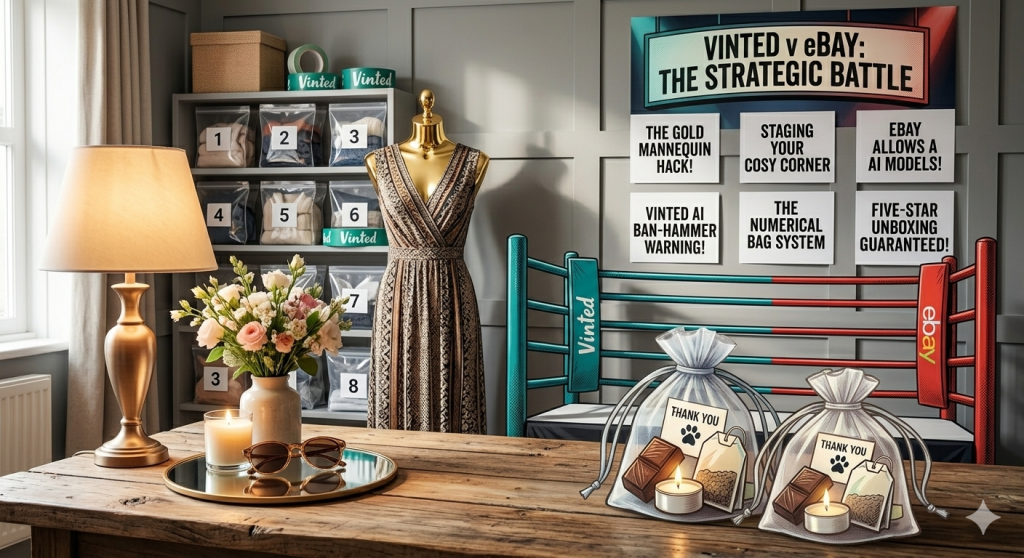
    1. The Secret Weapon: The Half-Body Mannequin

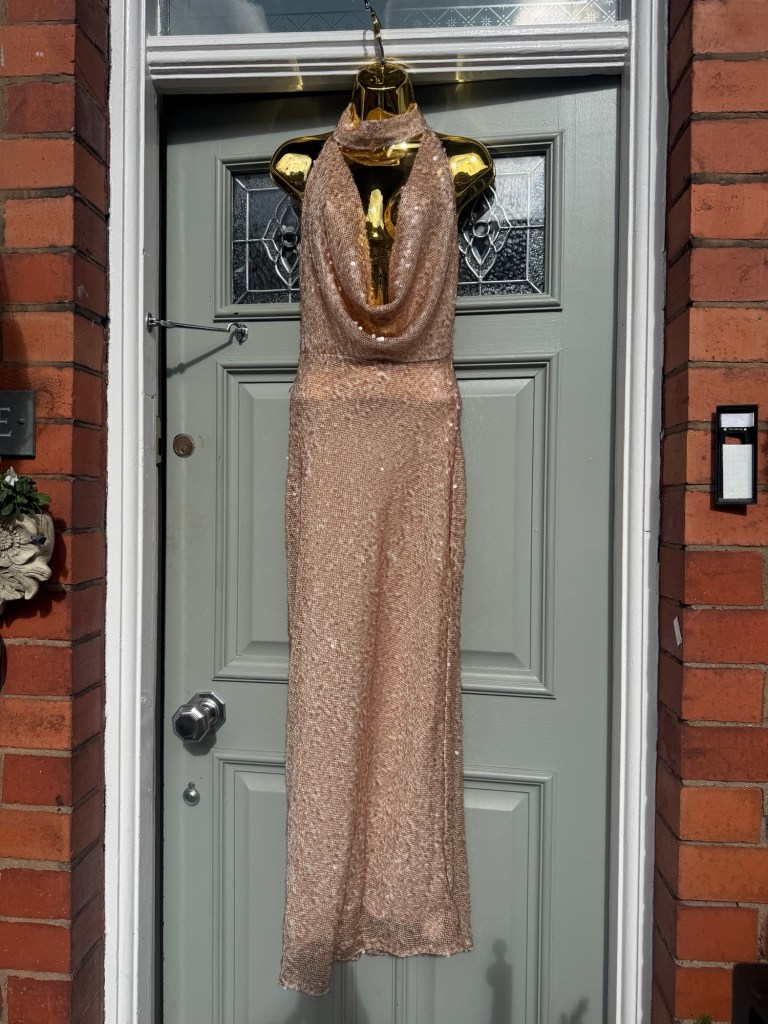
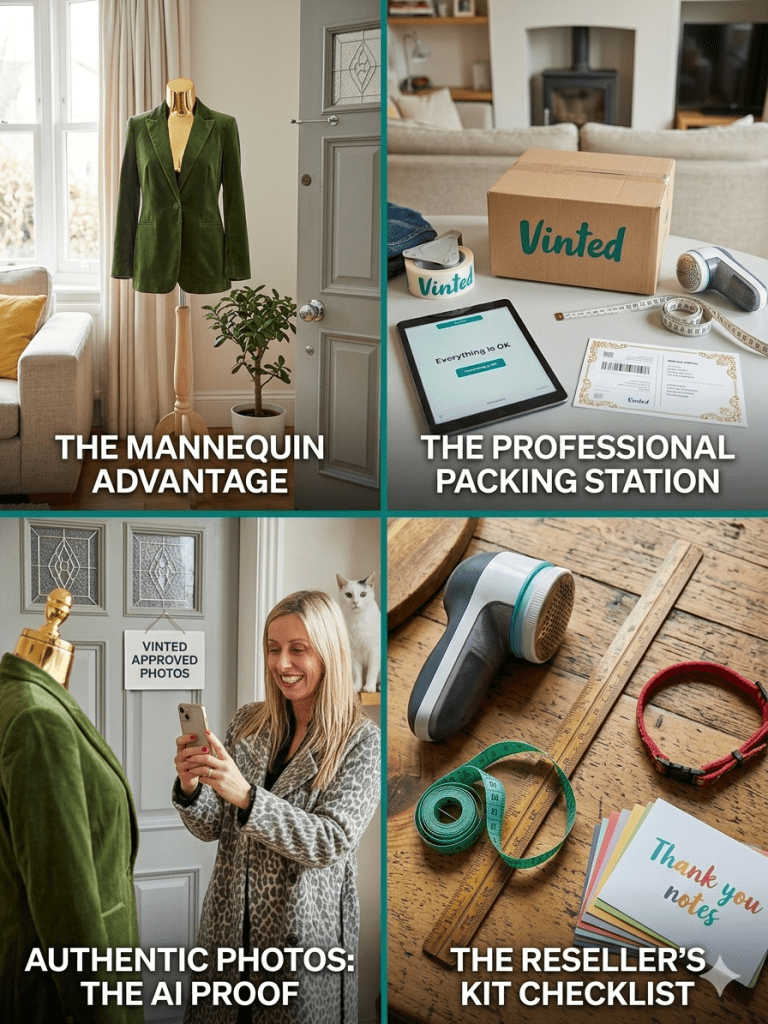
    If you want to stop being a “casual seller,” invest in a half-body torso mannequin. We use a female form with a distinct gold neck and top section.

    Flat-lays on the carpet are a thing of the past though I do still do this for trousers .

    A mannequin allows buyers to see exactly how a garment drapes and saves you from the hassle of “modeled” shots. Plus, that gold finish makes colors like black and white pop, giving your items a premium feel that justifies a higher price point.

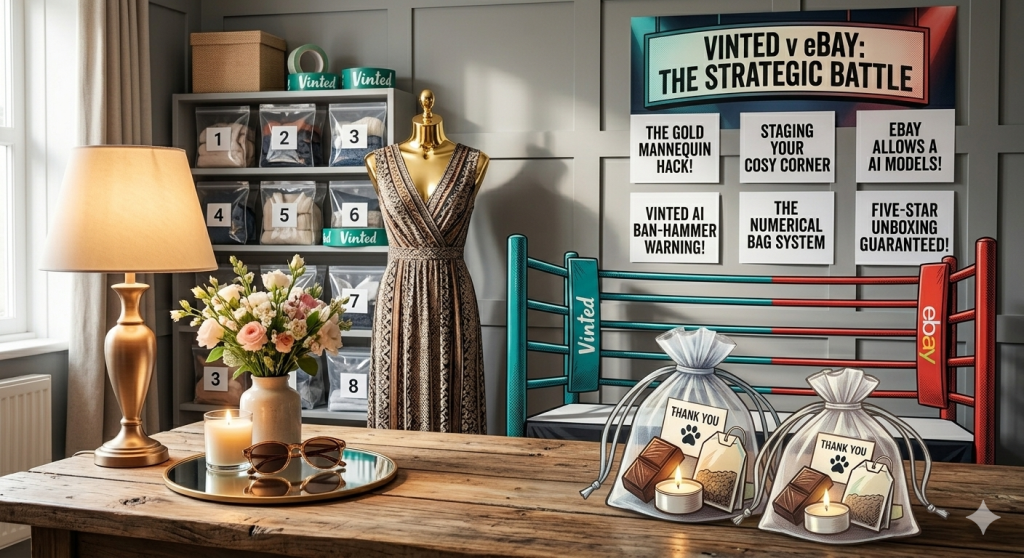
    2. Staging a “Cosy Corner” for Small Items

    For accessories, shoes, or beauty products, a mannequin isn’t enough. You need a dedicated cosy corner for staging.

    • The Vibe: Use a warm, nice lamp and a vase of flowers to create a “lifestyle” aesthetic.

    • The Reflection Trick: I highly recommend using a circular candle mirror plate. Placing small items on a reflective mirror base catches the light beautifully and makes even a budget item look high-end.

    • Lighting is King: Ensure your corner has excellent lighting; natural light is best, but a soft-tone lamp can help create that inviting “homely” glow that Vinted buyers love.

    3. Beating the Vinted “AI Photo Trap”

    One of the biggest frustrations for beginners is Vinted’s aggressive AI.

    • Never use stock images: If you use photos from a retailer’s website, Vinted will remove your listing. If you ignore the warnings, they will ban your account.

    • Proof of Life: We take photos against our signature grey door. This “human touch” proves to the AI that the photo is yours and the item is real.

    • Real Models: While eBay now allows (and even encourages) AI model-generated photos to showcase fit, Vinted is the opposite—they want authentic photos. If you have a photo of yourself wearing the item, use it! It builds trust instantly.

    4. The “Measurement” Rule (Trust Us)

    After two decades of this, we’ve learned that “Size 12” means something different to every brand. Always measure your items.

    • Include pit-to-pit, waist, and length measurements in the description.

    • Taking a photo of the tape measure against the garment is the ultimate “real-world” evidence for the AI and saves you from answering endless “Is it true to size?” messages.

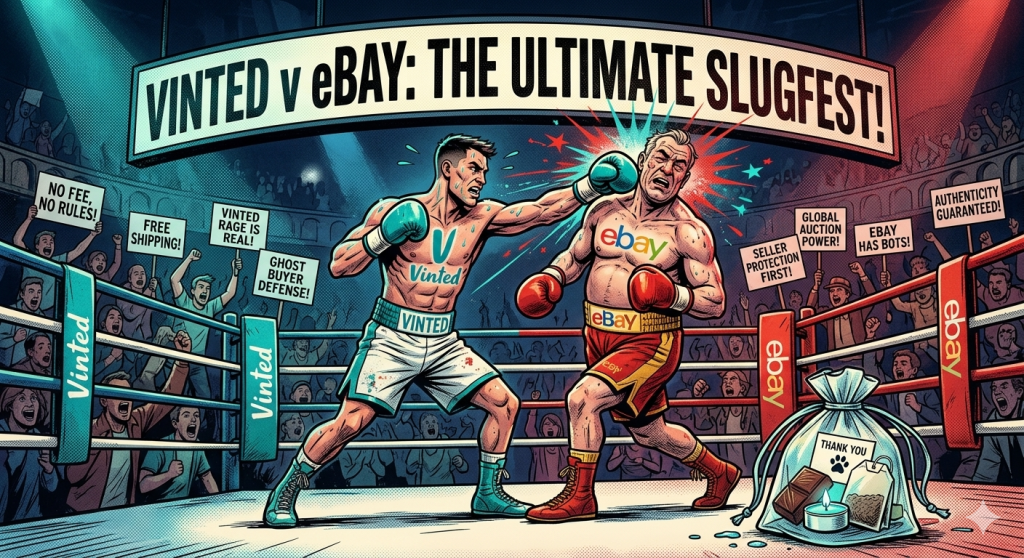
    5. Vinted vs. eBay: Choosing Your Battlefield

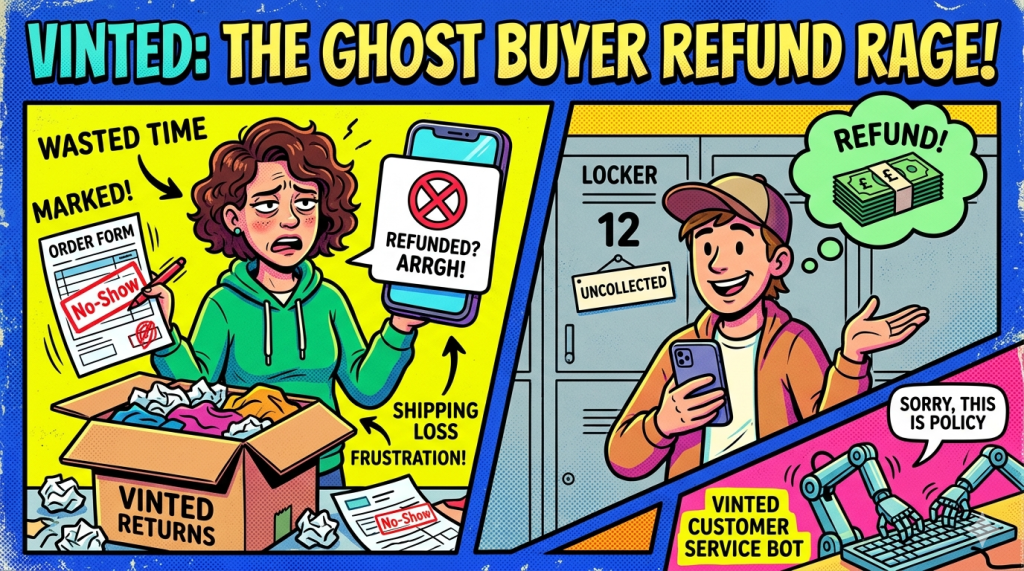
    • Vinted: Best for high-street basics. It’s fee-free, but be warned: the etiquette can be shocking. Between the lowball offers and the “Ghost Buyers” who don’t collect parcels (and get a full refund while your item is held hostage!), Vinted is definitely the “wild west.” You have to price competitively but items do sell very quickly . Allow a little wriggle room and be prepared for low ball / insulting offers

    • eBay: Our go-to for designer gear. It’s more professional, offers better seller protection, and their tools for higher-volume sellers are much more advanced. It’s easier to edit and easier to search and has a much wider international market

    6. Logistics & The “Five-Star” Unboxing

    Don’t let your inventory take over your life. As soon as an item is photographed, we place it into a clear, sealed bag with a unique number on it. When it sells, we aren’t digging through a “death pile”; we just grab “Bag #42” and ship it out. It keeps the clothes dust-free and organized. We post our items in mailing bags and double bag them.

    A quick google search will show you some legendary Vinted packaging materials such as crisp packets, corn flake boxes .. I kid you not ! keep any good quality boxes you have from your own online orders to reuse for your Own parcels – it will save you a fortune.

    If you have fragile items invest in bubble wrap and use the philosophy if you drop the item from a two storey building will it survive as there is a good chance it may get thrown about by couriers. After many years we decided to invest in a label printer , we put it off for ages but it has paid for itself . No paying for printer toner, paper and sticking on with sellotape- gives a much more professional finish . Most couriers offer a print in shop option but I avoid this because it’s easy to get muddled as to what’s in each parcel if you anything like me dashing around all the time

    To ensure great feedback and quick “Everything is OK” clicks, we enclose a small organza bag in every parcel including:

    • A personalized thank you card.

    • A tea light candle and an herbal tea bag (for a “moment of calm”).

    • A little chocolate treat.

    This small investment has earned us incredible feedback and turned one-off buyers into loyal followers!

    Shop My Reseller Setup – these are affiliate links so I may earn a tiny amount if you buy

    If you want to recreate my “Cosy Corner” or my professional mannequin setup, here are the links to the exact items I use:

    • My Gold-Neck Torso Mannequin – Perfect for showing garment fit.

    https://amzn.to/4cL82bM

    • Circular Mirror Candle Plate – The best hack for reflecting light on small items.

    https://amzn.to/4wcMb4O

    • Professional Staging Lamps – For that perfect soft-glow lighting I’d photographing indoors

    https://amzn.to/4epOWcs

    • Organza Gift Bags & Tea Lights – Everything you need for your thank-you bundles.

    Bags

    https://amzn.to/3OZkBXG

    Tealights

    https://amzn.to/4utBzg8

    Thank you cards

    https://amzn.to/4uo7Epx

    Chocolate – decent size and individually wrapped

    https://amzn.to/4tZoQ4I

    Herbal teabags

    https://amzn.to/4epWJqM

    Mailing bags – these look lovely and are really good quality – they fit tops trousers etc but you would need something larger for jackets, coats bedding etc

    https://amzn.to/49bkgYR

    Bubble wrap

    https://amzn.to/4cMjBPU

    Packing tape

    https://amzn.to/4d181zj

    Fragile tape

    https://amzn.to/4tO1eAh

    Tape measure

    https://amzn.to/4dkosrD

    Label printer

    https://amzn.to/4ekDuPh

    Clear bags for storing clothes

    https://amzn.to/3OCEZhq

    Self adhesive numbers for bags

    https://amzn.to/4tQegND

    What’s your biggest reselling win (or fail)? Let’s swap stories in the comments!

  • The Vinted “Ghost” Buyer: When Your Parcel Comes Crawling Back

    The Vinted “Ghost” Buyer: When Your Parcel Comes Crawling Back

    We’ve all been there. You spend your Sunday afternoon de-bobbling a sweater, photographing it in the “good” light, and carefully wrapping it like a precious artifact. You trek to the parcel shop, send it off with a little wave, and wait for that sweet “Item Delivered” notification.

    Then… nothing.

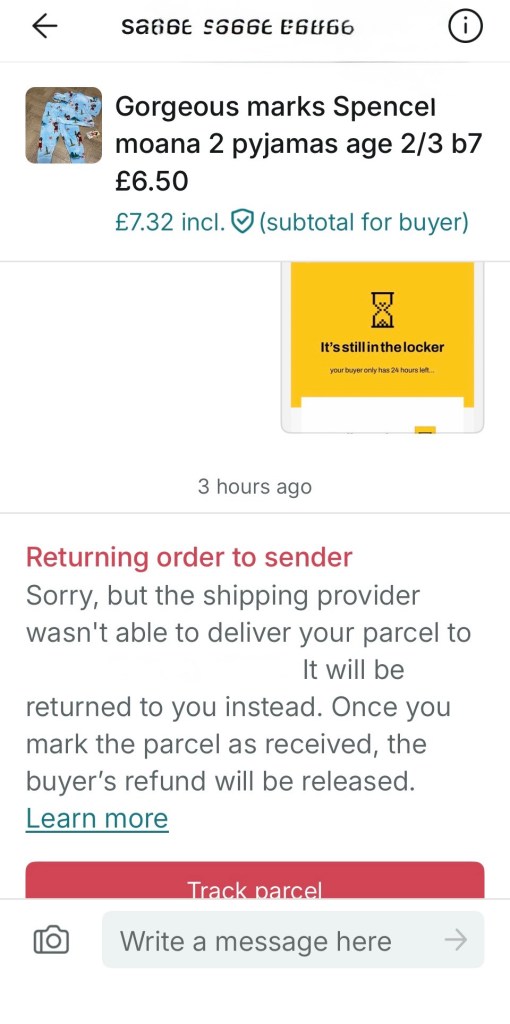
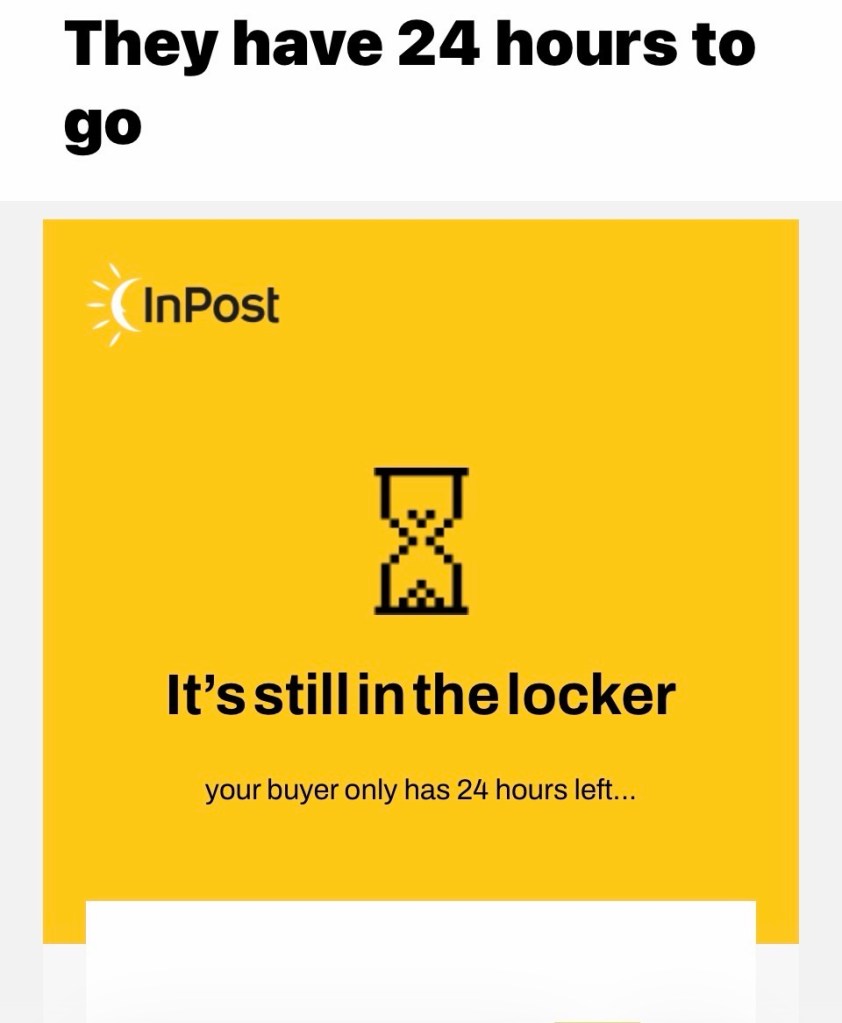
    The parcel sits in a locker. The days tick by.

    You message the buyer—“Hey! Just checking you saw your parcel is ready!”—only to be met with radio silence or a promise to collect. Finally, the dreaded notification hits: “The buyer didn’t collect the parcel. It is being returned to you.”

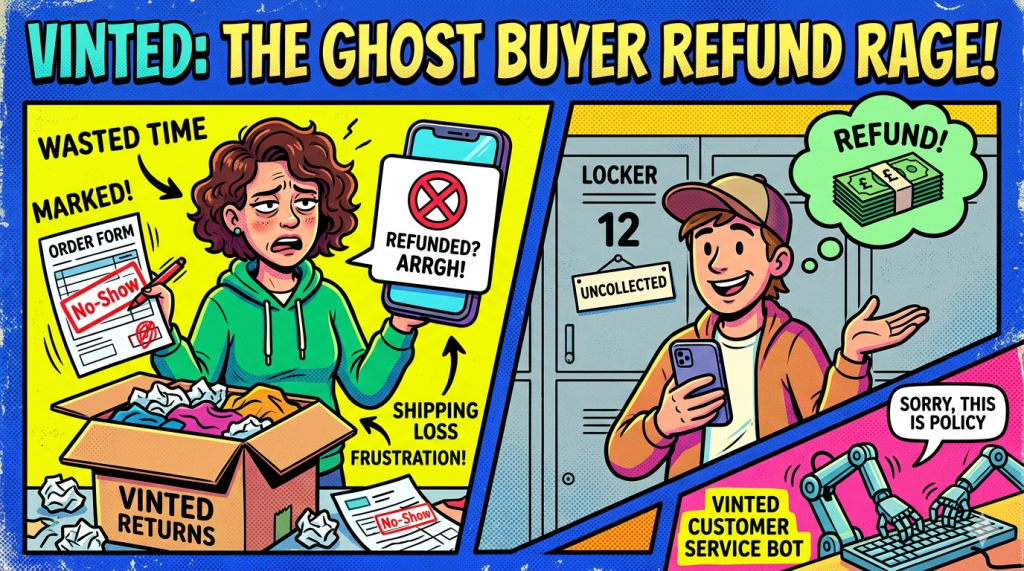
    And here is where the “Vinted rage” truly kicks in: the buyer gets a full refund, and you get your item back, often weeks later, having gained nothing but a headache and a wasted trip to the post office.

    The Unfairness of the “No-Show” Refund

    Let’s be real: why is there no penalty for a buyer simply changing their mind via laziness? On almost any other marketplace, if you fail to collect an item, you’re at least liable for the shipping costs. On Vinted, the buyer walks away scot-free.

    • Your time isn’t free: You spent time listing, packing, and driving to a drop-off point.  

    • The “Held Hostage” Factor: While that item was sitting in an inpist locker for 3 days depending on (plus the 5 days it takes to travel back), then you have to go ando collect it , it wasn’t available for someone else to actually buy and keep.

    • Packaging waste: That mailer you paid for? It’s now covered in return stickers and probably ready for the bin.

    It feels like the “Buyer Protection” fee we hear so much about is actually a “Buyer Can Do No Wrong” policy.

    The Customer Service “Black Hole”

    If you’ve ever tried to complain about this to Vinted, you’ll know that their customer service can be… let’s say, challenging.

    Trying to get a human response often feels like trying to explain color to a thermostat. You usually start with a bot that gives you a “pre-packaged” answer that doesn’t quite fit your problem. When you finally do get through to a human, the response is often a polite version of: “This is our policy, and we cannot deviate from it.”

    It’s incredibly frustrating when you feel like a valued member of a community, yet you’re treated like a ticket number in a system that favors the buyer’s convenience over the seller’s effort.

    Is There a Silver Lining?

    To be fair to the “other side,” things happen. Lockers break, people get sick, or life just gets in the way. Sometimes a buyer wants the item but physically can’t get to the pickup point.

    However, the lack of a “restocking fee” or even an automatic one-star review for uncollected items feels like a major loophole. Currently, the only “punishment” for the buyer is that they don’t get the item. Big deal—they have their money back!

    What Can We Do?

    Until Vinted decides to tweak the rules, we sellers have to stick together. Here are a few “pro-tips” to keep your sanity:

    • Check Reviews: If a buyer has several “Auto-feedback: Order cancelled” reviews, they might be a serial non-collector.

    • The Block Button is Your Friend: If someone wastes your time by not picking up a parcel without a word of apology, block them. You don’t need their “business” twice.

    • Keep Your Packaging: If you can carefully open the returned parcel, reuse that mailer for the next (hopefully better) buyer!

    What do you think? Should Vinted start deducting shipping costs from refunds for uncollected items? Let’s vent in the comments!

  • Is eBay Rewarding False INAD Claims?

    Is eBay Rewarding False INAD Claims?


    I have sold on eBay for years, both as a private seller and through business selling, but a recent experience has left me asking a serious question: is eBay’s returns system now encouraging buyers to misuse “item not as described” claims?


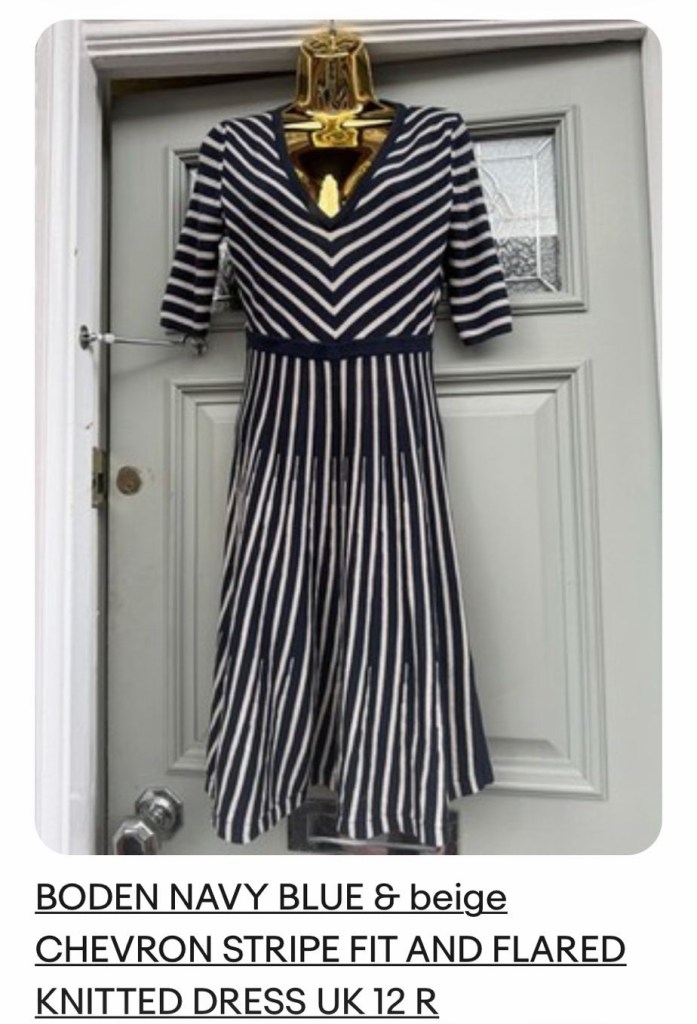
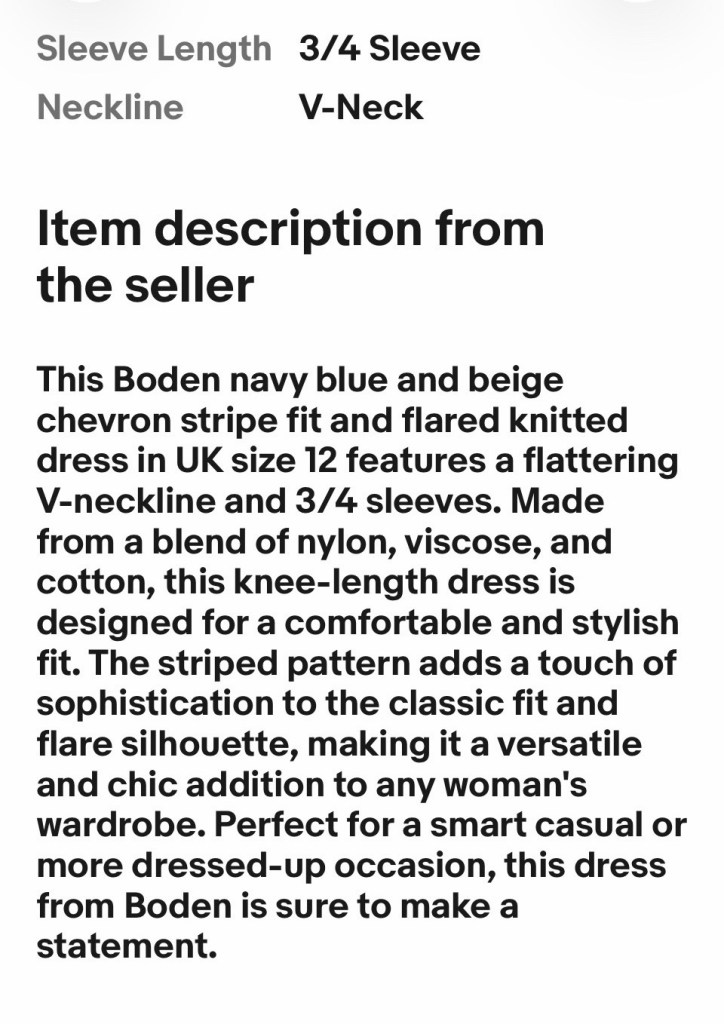
    This particular sale was not from my business account. It was one of my own old dresses, sold privately. The listing was for a Boden navy blue and beige chevron stripe fit and flared knitted dress, UK size 12. The colours were clearly stated in the title and again in the description: navy blue and beige.
    The photos also showed the dress clearly from several angles.

    The item description specifically said:
    “This Boden navy blue and beige chevron stripe fit and flared knitted dress…”


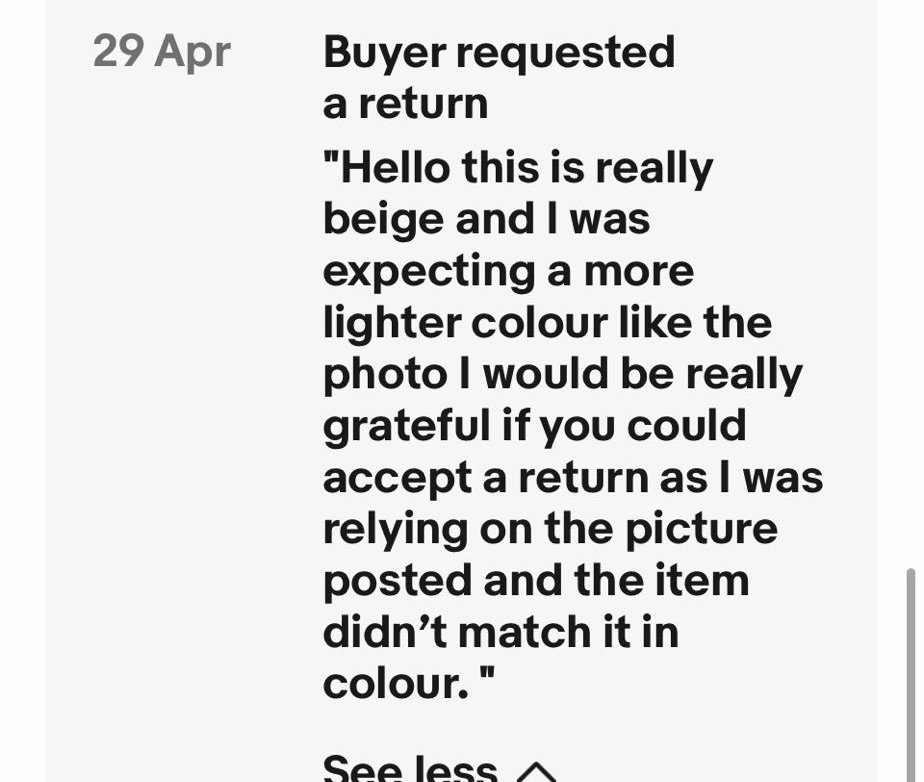
    Yet the buyer opened an INAD, claiming the dress was “really beige” and that they had expected “a more lighter colour like the photo.” There had been no clarification sought from the buyer prior to purchase.

    In other words, the reason given was about the colour, even though beige was clearly mentioned in the listing.


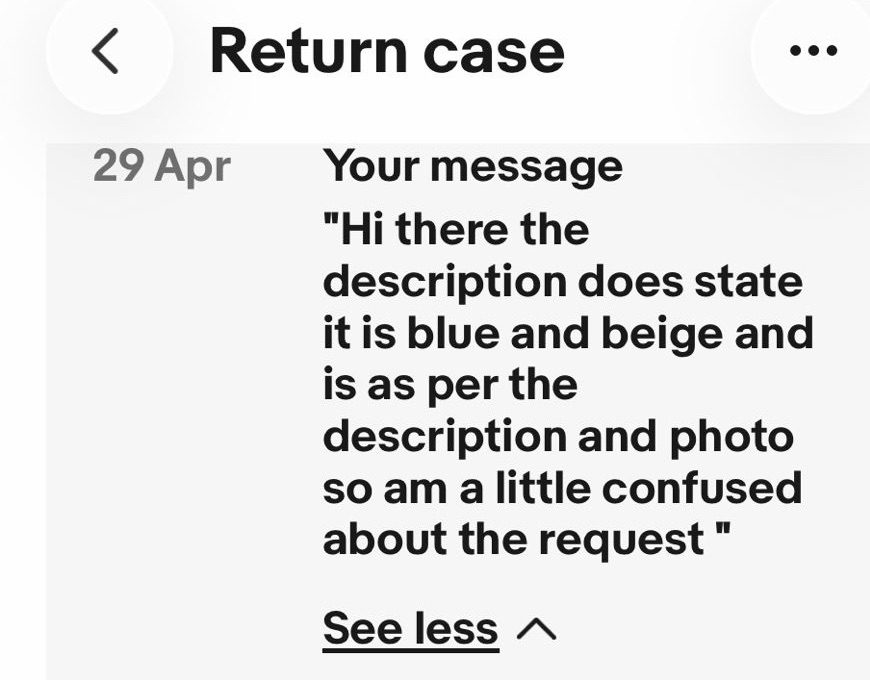
    I replied to the buyer pointing out that the description did state the dress was blue and beige, and that the item matched the description and photographs.

    I was confused as to why this was being treated as “not as described” when the colour they objected to was actually written in the listing. Absolutely no reply.

    I contacted eBay, and to their credit, they agreed with me. They found in my favour and released my funds. That should have been the end of the matter.

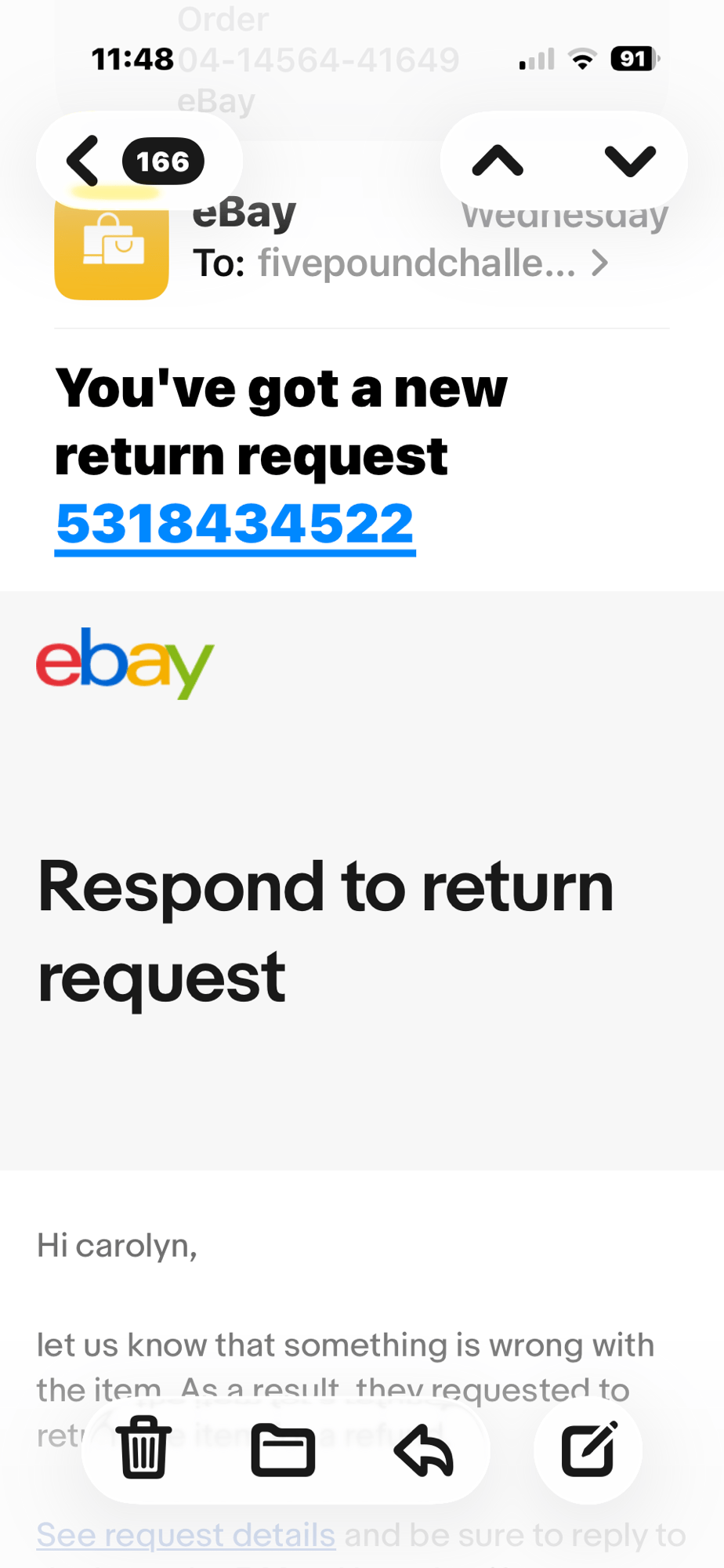
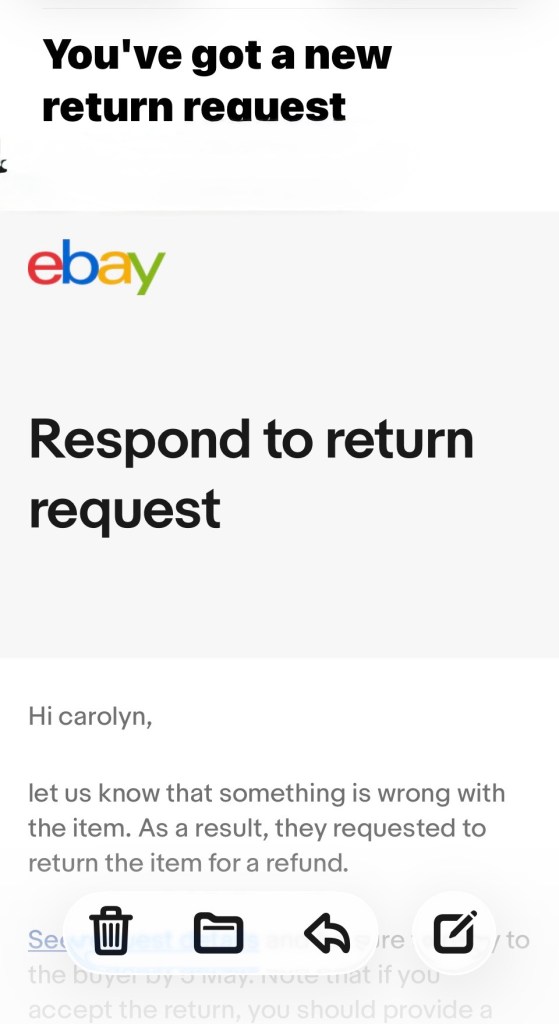
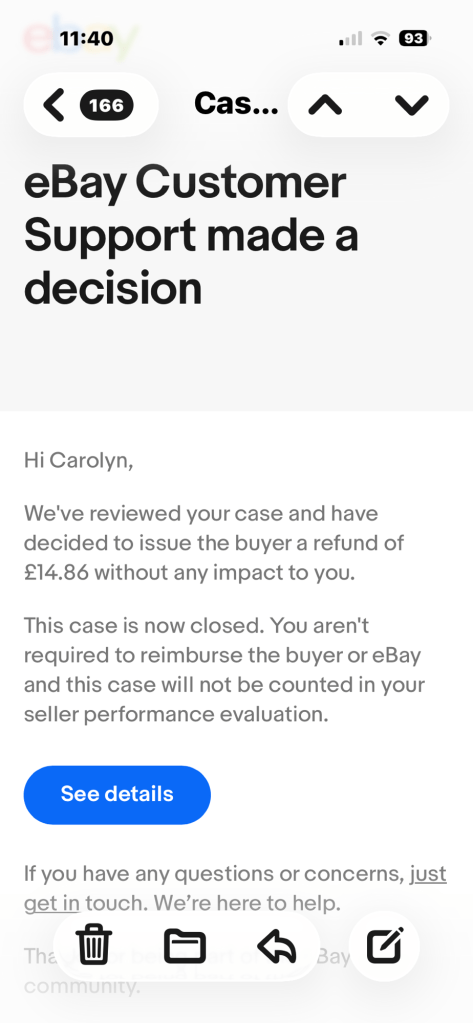
    But here is the sting in the tail – I then get this email

    eBay also refunded the buyer and allowed them to keep the dress.

    So what message does that send?


    If a buyer can open a false “item not as described” case, lose the case, still receive a refund, and keep the item, how does that encourage honesty? Surely it does the opposite. It tells people that there may be a way to get around the system, keep the goods, and get their money back anyway.
    This is especially frustrating for private sellers. This was not a business transaction from a shop with endless stock and profit margins. It was one of my own dresses from my personal wardrobe. I listed it accurately, photographed it properly, described the colours clearly, and still ended up watching the buyer be refunded and allowed to keep the item.
    I understand that eBay wants to protect buyers. Nobody wants buyers to be stuck with genuinely misdescribed goods. But seller protection has to mean something too. If eBay agrees the seller did nothing wrong, then why reward the buyer with both a refund and the item?
    This type of decision risks encouraging more false claims. It makes honest sellers feel vulnerable, and it makes dishonest buyers realise that using the “not as described” route can sometimes result in a free item. You can judge for yourself whether this was genuinely “not as described” or whether the system is being used in a way that disadvantages sellers.
    eBay needs to look seriously at how these cases are handled. If sellers are doing everything correctly, accurate titles, honest descriptions, clear photographs, and prompt communication, they should not be left feeling that the platform is rewarding the very behaviour it claims to protect against.
    Buyer protection matters. But so does seller protection. At the moment, cases like this make it feel as though honest sellers are being asked to pay the price for a system that scammers can too easily exploit. What are your thoughts ? Has this happened to you ? Let me know in the comments!

  • Is eBay Now More Geared Towards Buyers Than Sellers?

    Is eBay Now More Geared Towards Buyers Than Sellers?


    If you talk to regular UK resellers, you’ll hear the same thing on repeat: eBay just doesn’t feel like a level playing field anymore. Between the fees, promoted listings, returns and buyer protection, the platform feels heavily weighted towards keeping buyers happy – even when that comes at a real cost to the people actually supplying the stock.

    I’ve sold on eBay for years, alongside other platforms like Vinted and Depop, and I can honestly say the gap between how buyers and sellers are treated has never felt wider.

    Buyer Protection Everywhere, Seller Protection Nowhere
    eBay leans hard into reassuring buyers. The Money Back Guarantee is splashed all over the site, and there are all kinds of safety nets if you’re the one doing the shopping.
    If you’re selling, it looks and feels very different:
    • A buyer can open a case if an item doesn’t arrive or they say it’s “not as described”.
    • They usually have a generous window to do this, long after you’ve mentally moved on from that sale.
    • Even if you don’t offer returns, a buyer can effectively force one by choosing the right reason when they open a case.
    On paper, there is “seller protection”. In reality, it often feels like you’re starting from a weaker position. The default seems to be: believe the buyer, then see if the seller can somehow prove otherwise. You can upload photos, screenshots, tracking – the lot – and still find yourself on the losing side.

    Spend five minutes in any seller group and you’ll see the same stories: buyers pressing the right buttons, using the right language, and the refund going straight through regardless of how careful the seller has been.

    The Perfume Problem – Free Samples At The Seller’s Expense
    Nowhere have I felt this imbalance more than with perfume.
    For a while I regularly listed sealed, genuine perfumes – all high‑street names like Marks & Spencer and Zara that most people in the UK would recognise. The listings were clear, the bottles were sealed, and everything was exactly as shown in the photos.
    Here’s what kept happening:
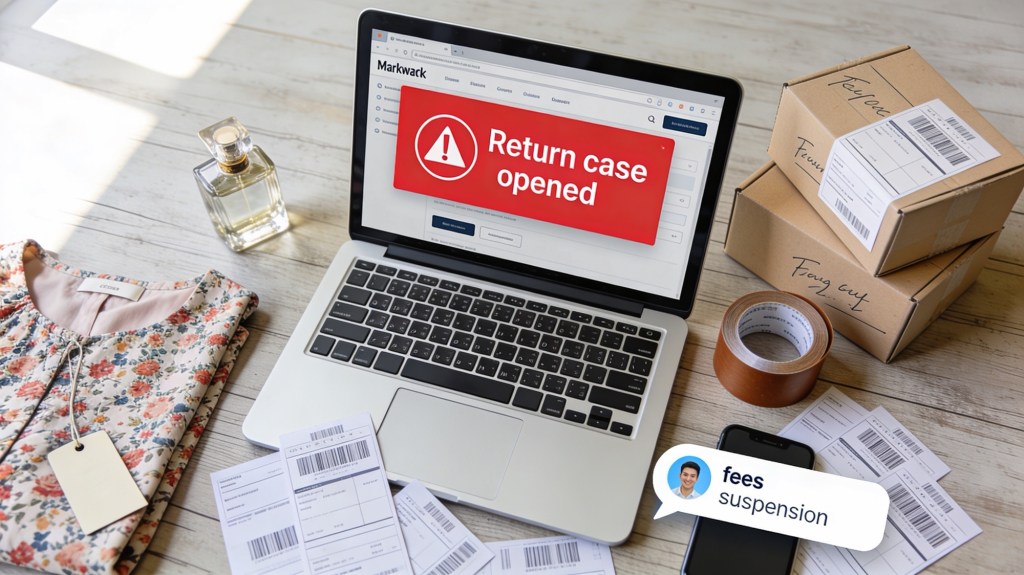
    • A buyer would purchase a perfume, open it, “test” it at home, decide they didn’t like the fragrance, and then open an “item not as described” case.
    • Some would go further and claim the perfume must be fake, even though it was completely genuine and bought from a normal shop, just so they could get a refund and avoid paying return postage.
    Because “item not as described” is treated as a protected reason, I was expected to accept the return, refund the buyer and, in many cases, cover the return postage as well. I’d end up:
    • Out of pocket on the product.
    • Out of pocket on the original postage.
    • Out of pocket on the return postage.
    • Stuck with an opened, used perfume that I couldn’t resell as new.
    In other words, some buyers were treating eBay like a free sample counter, and I was the one funding it. Yes, there are rules about items coming back in the same condition, but in practice, getting any kind of support on that front is exhausting and often not worth the energy.

    And it isn’t just perfume. I’ve even had completely ordinary items flagged as “counterfeit” and removed – things as ridiculous as a Marks & Spencer mug and a roll of wallpaper. When perfectly normal, branded homeware is being treated like dodgy designer fakes, it really hammers home how jumpy the system is about protecting buyers and brands, and how little faith it places in honest small sellers.

    The New Trick: AI‑Generated “Damage” Photos
    As if all that wasn’t enough, there’s a newer problem creeping in thanks to AI – and that’s buyers using AI‑generated or heavily edited photos to fake damage.
    It goes something like this:
    • The buyer receives an item that’s absolutely fine.
    • They don’t want to pay to send it back, or they’ve changed their mind.
    • They then send through photos showing dramatic scratches, cracks, stains or dents that simply aren’t there in real life.
    With AI image tools now everywhere, it’s frighteningly easy for someone to create a “damaged” version of your item in a few taps. From your side, you know the thing you sent was in great condition. From eBay’s side it just looks like a customer showing “evidence” and a seller saying, “No, honestly, that’s not right.”

    And again, the system tends to lean towards the buyer. It’s all about “protecting the customer”, but there’s very little in place to protect you from people abusing that trust, especially when the tools they’re using are getting more convincing by the day.

    Fees On Top Of Fees: Promoted Listings As A Hidden Tax
    Then we have the joy of fees.
    As a UK seller, once you add everything up – final value fees, the flat per‑order fee, and the various extras – eBay can easily swallow a chunky percentage of your sale. And that’s before you even talk about promoted listings.
    Promoted listings are pitched as an optional extra, a way to boost your visibility if you’re happy to pay a bit more. In reality, they’re starting to feel like a hidden tax on being seen at all.
    You set a promoted rate – often a few percent on top of the normal fees – and eBay uses that to push your listings further up in search. The issue is:
    • If you don’t promote, it can feel like your items are buried.
    • If you do promote, a huge proportion of your sales end up coming through as “promoted”, so you’re paying the extra on almost everything.

    So you’re already paying high basic fees, then on top of that you’re nudged into paying extra just to get in front of buyers. It doesn’t feel like optional advertising; it feels like paying twice for the same sale.

    Slower Than Vinted: Same Dress, Two Very Different Outcomes
    The other big change I’ve noticed is speed, particularly for fashion.
    I often list the same item on both platforms – for example, a dress:
    • I’ll photograph it once.
    • Write one description.
    • List it on Vinted and eBay at the same time.
    Again and again, that dress will sell on Vinted before anyone has even properly looked at it on eBay. Vinted feels busier and faster for clothing, especially everyday brands and high‑street pieces. It’s very mobile‑first, the app is simple, and crucially, there are no selling fees taken from your side as the seller. The buyer pays a small service fee; you don’t.

    On eBay, by the time you’ve thought about fees, promoted listings and the risk of returns, the whole thing feels heavier and slower. For casual clothes and mid‑range fashion, Vinted often wins on both speed and simplicity.

    But Vinted Isn’t Perfect Either
    That said, Vinted is far from flawless.
    One of the biggest issues on Vinted is the way accounts can be banned or suspended with little warning and very little explanation. People wake up to “You’ve been suspended” messages and genuinely don’t know what they’ve supposedly done wrong.
    The customer service can be equally frustrating:
    • Replies that feel copy‑and‑paste.
    • Long waits for any kind of response.
    • Very little flexibility or willingness to properly look at individual situations.

    So while Vinted can be quicker and cheaper for clothing, it can also feel incredibly fragile. You can be doing everything right, building up a lovely little income stream, and then suddenly find yourself locked out with no clear way to appeal.

    Depop: Dead As A Doornail
    I’ve also tried Depop, and honestly, for me it’s been absolutely dead as a doornail.
    The app looks trendy, it’s popular with a younger crowd, and in theory it should be a great place to move fashion. In reality:
    • Views are painfully slow.
    • Offers are rare.
    • Sales are few and far between.

    It might work if you’re in a very specific niche or have the right kind of following, but for the average UK reseller trying to move normal, everyday pieces, it feels pretty hopeless compared to Vinted and even eBay on a good day.

    The Lost Human Touch In The Age Of AI
    What all three platforms – eBay, Vinted and Depop – seem to have lost is the human touch and basic common sense.
    More and more decisions feel automated, driven by algorithms, flags and AI systems rather than real people using their heads. It’s “computer says no” – or worse, “computer says banned” – with very little room for nuance.
    The impact of that on small sellers is huge:
    • A perfectly normal listing can be removed as “counterfeit” because it matches some over‑sensitive filter.
    • A genuine seller can be suspended because too many automated flags stacked up in the background.
    • Whole income streams can vanish overnight, with no warning and no straightforward way to speak to someone who can actually fix it.

    In the world of AI and automation, these platforms are so focused on protecting themselves and smoothing the buyer experience that they’ve forgotten there are real people on the other side trying to pay their bills. There’s no allowance for common sense, no space for “Let’s actually look at this specific situation.”

    So Why Bother With These Platforms At All?
    With all of that, you might ask: why stay on eBay or Vinted at all?
    The honest answer is that they still have their uses:
    • eBay has huge reach, auctions and a big audience for collectables and niche items.
    • Vinted is brilliant for moving clothing and shoes quickly without having fees sliced off your side of the deal.
    • Depop might work if you hit the exact right niche and aesthetic, even if it’s been a damp squib for me.
    But I no longer see any of them as somewhere to put all my eggs.
    For me, the sensible approach now is:
    • Use eBay selectively, for the right categories, and price with the fees and return risk in mind.
    • Use Vinted for fashion and lighter‑weight items, but be aware the rug can be pulled at any time.
    • Treat Depop as a nice extra if it ever picks up, not something to rely on.
    • Spread stock across multiple platforms so no single site can cut off your income overnight.
    Most importantly, remember that none of these platforms are truly on the seller’s side. They will protect their own brand and their buyers first. Your job is to use them while they work for you, keep good records, and never rely on just one site for your entire livelihood.